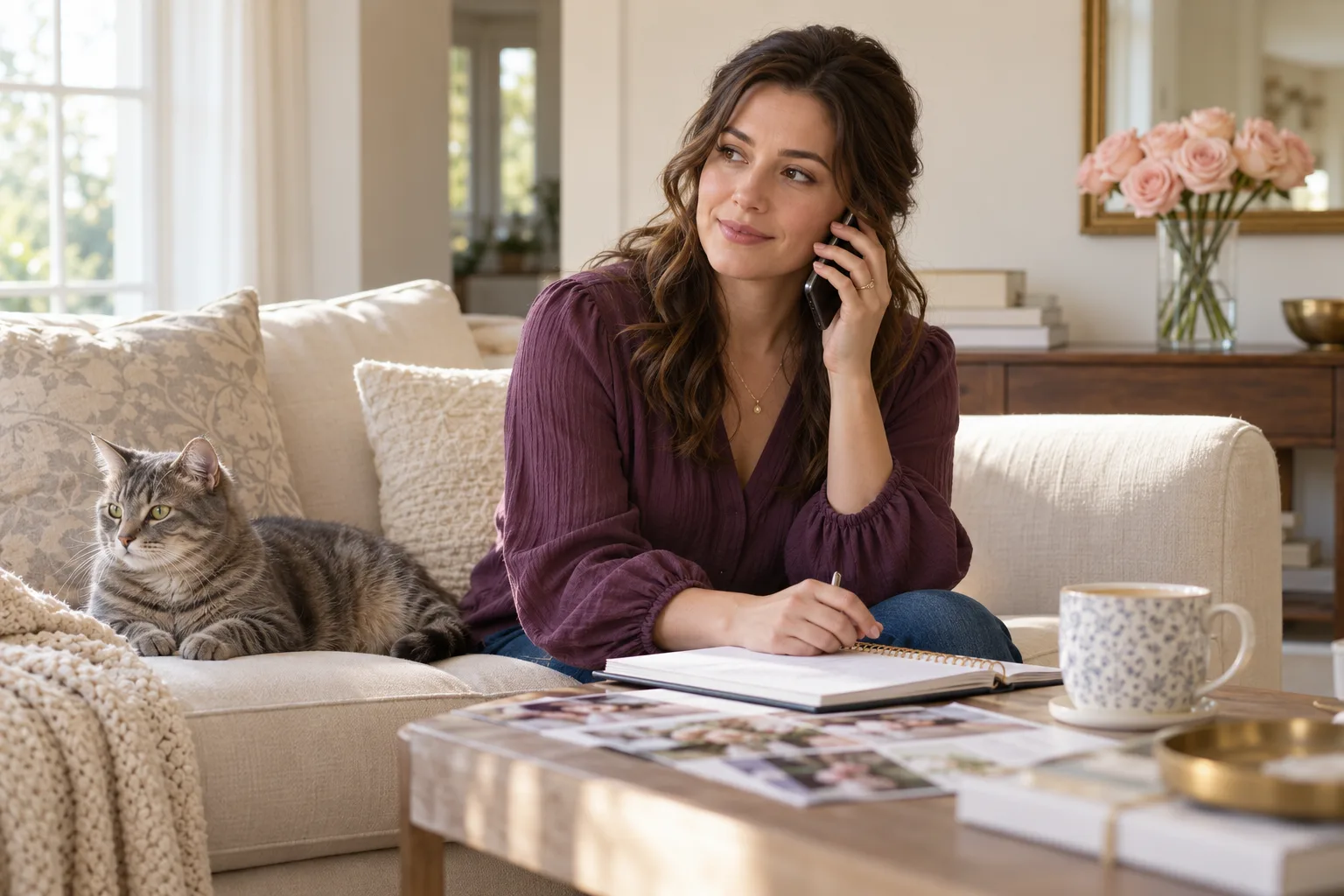
A wedding bouquet can pass through several homes: yours before the ceremony, a friend's after portraits and a guest's after the reception. If a cat lives at any of those addresses, tell the florist before the flowers are selected. The arrangement's destination matters alongside its color and size.
Give the florist plant names and household details
The ASPCA's April 2026 guidance identifies Lilium and Hemerocallis as potentially lethal to cats. Its examples include Easter, Oriental, Stargazer, Casa Blanca and tiger lilies, plus daylilies. [2] Write those botanical names into the order rather than relying on “nothing too fragrant” or “a simple white bouquet.”
Tell the florist where the bouquets, table arrangements, corsages and spare stems will go. Include the preparation house, overnight accommodation, return address and any household receiving thank-you flowers. If relatives are ordering separately, give them the same information.
Ask for an ingredient list and a clear substitution process. A request made at the consultation can be lost when a different person packs the order. Have the florist confirm how the restriction will appear on the production and delivery notes.
If an unexpected arrangement arrives, keep it away from the cat while you identify the contents with the supplier. A gift card naming the sender does not identify the plants. If contact or ingestion may already have happened, make the veterinary call immediately rather than delaying for a complete flower list.
Pollen and vase water count as exposure routes
The FDA warns that the stem, leaves, flowers and pollen of dangerous lilies are toxic to cats, as is the water in a vase containing them. A cat can ingest pollen while grooming its fur; chewing a petal is not the only concern. [1] Removing the obvious flower head does not turn the remaining arrangement into a suitable household bouquet.
The ASPCA also warns that cats can slip into rooms and that aging lilies may drop leaves and pollen, giving a cat access even when the original vase was out of reach. [3] A high shelf or a room that will be opened repeatedly by wedding helpers is a poor substitute for excluding these flowers from a cat household.
Put the receiving person's name and the agreed delivery location on the order. If the venue has cats or other resident animals, discuss that with its manager too. Do not assume that flowers left in a corridor or service area will stay inaccessible.
“Lily” does not describe one type of toxicity
The FDA distinguishes lily-of-the-valley and gloriosa or flame lily from the kidney-toxic lily groups, but both can cause other serious poisoning. Lily-of-the-valley can cause dangerous heart-rhythm changes. Calla and peace lilies contain irritating calcium oxalate crystals. [1] These distinctions help a veterinary professional assess an exposure; they are not permission to substitute one lily-named plant without checking it.
Common names can be misleading when ordering online. Ask the florist for the botanical name and check the actual selection, including greenery. A photograph showing a white flower is insufficient information for a pet-specific order.
For alternatives, the ASPCA's April 2026 list identifies roses, sunflowers, zinnias, gerbera daisies, snapdragons and several other flowers as non-toxic. It also notes that even non-toxic plants can cause mild stomach upset when eaten. [2] Ask the florist to develop the design from checked ingredients; do not describe the resulting bouquet as edible or harmless in every respect.
Decide who takes the flowers home
Before offering centerpieces to guests, provide their ingredient list and ask whether the proposed recipient has pets. A guest who declines should not need to explain at the reception why a familiar flower is unsuitable for their household.
Tell the coordinator which arrangements have an agreed destination and which should stay with the florist or venue. Include the plan for leftover stems and delivery containers. Do not send an unidentified mixed arrangement home with the pet sitter because there is space in their car.
Chapter 13 of Bridegenic assigns practical wedding-day jobs to named people. For flowers, use that approach at both ends of the day: someone checks the delivery, and someone follows the agreed collection plan after the reception.
Suspected exposure needs a veterinary response
Call your veterinarian or an emergency veterinary clinic immediately if you suspect lily poisoning. UC Davis veterinary specialists describe vomiting, lethargy and loss of appetite as possible signs and emphasize urgent contact when poisoning is suspected. [4] Do not use the absence of those signs to clear a possible exposure.
The ASPCA advises contacting a professional even when a potentially poisoned pet appears normal, since effects may be delayed. It recommends removing the pet from the exposure area and gathering identifying information. If the pet is unconscious, having difficulty breathing or having seizures, go directly to a veterinary clinic for immediate care. [5]
Have the florist's ingredient list, a photograph of the plant, the approximate exposure time and any observed behavior available. Ask the clinic what to bring. The FDA suggests a plant sample or photograph to help identification. [1] Keep the cat and other pets away from the arrangement while help is arranged.
Do not give hydrogen peroxide to a cat or try to make it vomit at home. The ASPCA warns that peroxide irritates cats' stomachs and esophagus and that there is no safe at-home substance for inducing vomiting in cats. [6] Follow the veterinary professional's directions instead of attempting a household remedy.
In the United States, the ASPCA Poison Control number is 888-426-4435. [5] Save your regular and emergency veterinary contacts with the pet sitter's instructions before wedding week.

Physical Book (No Download)
Bridegenic: The Glow-Up Guide for Brides on GLP-1s
$12.95 + Free Shipping
Order NowThis article provides general education, not a diagnosis or an individual treatment plan. Medication information refers to US sources. Talk with your prescriber, pharmacist or dermatologist about decisions for your care.
Read next
PlanningWedding Bouquet Care: Delivery, Water and Storage→PlanningSix Wedding Dog-Care Questions Before Booking a Handler→Sources
- Lovely Lilies and Curious Cats: A Dangerous CombinationU.S. Food and Drug Administration↩ Back to text
- Do You Know Which Flowers and Plants Are Toxic to Pets?, April 30, 2026ASPCA↩ Back to text
- Which Lilies Are Toxic to Pets?, April 6, 2022ASPCA↩ Back to text
- UC Davis Veterinarians Warn of Lethal Toxicity of Lilies, March 20, 2021UC Davis School of Veterinary Medicine↩ Back to text
- What to Do if Your Pet Is Poisoned, March 20, 2019ASPCA↩ Back to text
- Is It Ever Safe to Induce Vomiting?, November 19, 2019ASPCA↩ Back to text