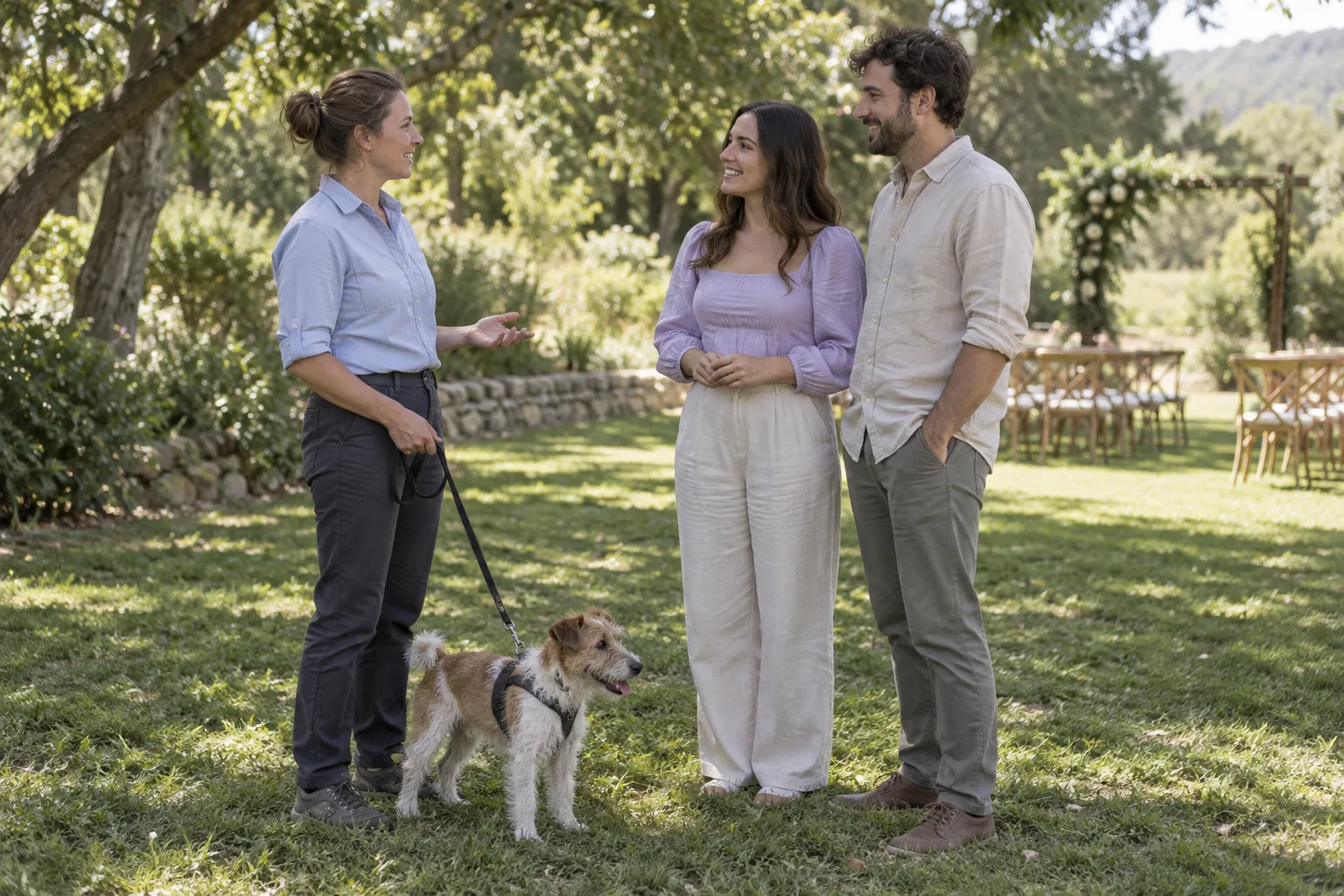
Including your dog in a wedding needs more than a lead that matches the flowers. Someone must manage arrival, guest contact, breaks, food, transport and the moment the dog has had enough. Before booking a handler or assigning a friend, work through the whole visit together.
1. Does this particular dog suit the proposed visit?
Describe the event to the handler: travel time, crowd size, children, other animals, amplified sound, unfamiliar clothing and the planned photographs. Explain how your dog usually responds to those situations, including any history of fear, guarding, escape attempts or biting. Do not leave difficult details out because the booking sounds appealing.
Ask to meet the person who will actually handle your dog. Discuss a familiarization visit where the venue permits it. A short, comfortable meeting can help you assess the proposed arrangement; it cannot guarantee how the wedding will go.
The RSPCA identifies lip-licking, yawning, turning away, crouching and a tucked tail among signals that a dog wants an interaction to stop. It also warns that a wagging tail does not necessarily mean friendliness. [1] Consider the dog's posture and situation together rather than treating one movement as a diagnosis.
Agree on what the handler will do if the dog withdraws, freezes, repeatedly tries to leave or reacts to approaching guests. The answer should include space and a way to end the visit. A photograph should not require repeated attempts after the dog is uncomfortable.
You can arrange a short portrait visit, a familiar walk with the handler or care at home. Ask your veterinarian about health or behavior concerns before committing to an event role.
2. What has the venue actually agreed to?
Get permission for your pet and its specific activities. Ask about the ceremony space, photograph locations, indoor areas, food-service areas and any overnight accommodation. Record permitted arrival and departure times, lead requirements, cleanup responsibilities, charges and documentation the venue requests.
Walk the proposed route with the handler. Check doors, gates, vehicle movements and places where the dog might reach food, decorations or water features. Agree where toilet breaks will happen and how waste will be collected and disposed of.
CDC advises washing hands after handling dogs, their supplies or waste and before eating. It also advises keeping dog feeding away from areas where human food is prepared or eaten. [2] Choose a feeding and care location with those practical needs in mind.
Identify somewhere comfortable away from guest traffic where the handler can stay with the dog. A room name on a plan is insufficient if deliveries, catering staff or another event will use it. Check access, temperature and how long it is available.
Tell the photographer and coordinator which spaces and timings have been approved. Do not ask them to resolve an unconfirmed pet arrangement when the ceremony is due to start.
3. Who holds responsibility during each part of the day?
Ask what the handler's fee covers: collection, travel, meeting beforehand, on-site care, walks, photograph assistance, return and any overnight stay. Confirm the actual person, their experience with dogs with similar needs, references, relevant training and the service's insurance arrangements.
Discuss the handling approach and equipment. Show the handler the dog's familiar lead, walking equipment, recall cues, feeding routine and any veterinary instructions. Explain who may offer treats. Put an alternative contact in writing in case you cannot answer your phone.
CDC says young children need supervision around dogs, including familiar family pets, and advises against disturbing a dog that is eating, sleeping or trying to be alone. [2] Set guest boundaries before the visit: ask before approaching, give the dog room and let the handler control introductions.
Do not assign dog care to someone who must simultaneously walk down the aisle, deliver a reading, manage children or take photographs. If responsibility changes, name both people and the exact handoff.
Chapter 13 of Bridegenic puts names beside practical care tasks. Apply that scheduling method here: collection, water, breaks, departure and confirmation that the dog has reached its destination each need an owner.
4. How will food, flowers and decorations stay out of reach?
Share a simple instruction with guests and suppliers: only the handler gives the agreed dog food or treats. Review low tables, dropped favors, bins, unattended glasses and bags in preparation rooms.
FDA warns that chocolate and xylitol-containing products can poison dogs. Xylitol can occur in sugar-free mints, gum, baked goods and some nut butters, as well as other products. Suspected ingestion of chocolate or a xylitol-containing item needs an immediate call to a veterinarian. Alcohol and discarded bones also present hazards. [3]
Keep the original packaging if an exposure occurs so veterinary staff can identify the product. Do not wait for the reception to end before seeking advice.
Ask the florist for the botanical names of flowers and greenery the dog could reach. ASPCA lists florist's calla, Zantedeschia aethiopica, as toxic to dogs, with possible mouth irritation, drooling, vomiting and difficulty swallowing. [4] A flower suitable for a bouquet is not automatically suitable for chewing or wearing against a dog's mouth.
Have the handler review any proposed decorative accessory before use. Avoid treating a floral collar or bow as necessary for the photographs. Keep loose decorative pieces and food rewards under supervision rather than leaving them with the dog.
5. What changes the plan for heat or discomfort?
Check the actual waiting conditions, not only the ceremony forecast. Include travel, time before photographs, sunny paved areas and the route to the resting place. Agree in advance who can cancel the dog's attendance or bring departure forward.
AVMA recommends fresh water, shade and avoiding hot surfaces that can burn paws. Its heat-stress warning signs include excessive panting, drooling, unsteadiness, abnormal gum or tongue color and collapse; it directs owners to emergency veterinary care for these signs. It also warns against leaving pets in parked cars, including in shade or with windows cracked. [5]
A parked car is not the waiting room between photographs. Arrange suitable care throughout the visit, including any delay. If the approved resting area becomes unavailable, use the agreed alternative rather than extending time outdoors by default.
Give the handler permission to act on the dog's needs without waiting for a portrait list to be completed. Share any health-specific restrictions from the veterinarian.
6. Who takes the dog home, and who handles an emergency?
Confirm the driver, vehicle, destination, keys and receiving person. Include care after arrival. “Back to the hotel” is incomplete if the dog would then be left unattended contrary to its needs or the property's rules.
FDA's travel guidance recommends properly restraining pets in the back seat using a crate, carrier or suitable vehicle restraint and getting them accustomed to the equipment before travel. It advises discussing any perceived need for a travel sedative with a veterinarian beforehand. [6] Do not let a helper select a medicine or dose.
Give the handler your veterinarian's contact details and the nearest appropriate emergency clinic's location and current opening arrangements. Agree how urgent treatment, authorization and payment will be managed if you cannot be reached.
Write down what happens if the handler becomes unavailable or the event runs late. Confirm any extra charges and cancellation terms. End the assignment with a message confirming delivery to the named carer, rather than assuming departure from the venue means the job is complete.

Physical Book (No Download)
Bridegenic: The Glow-Up Guide for Brides on GLP-1s
$12.95 + Free Shipping
Order NowThis article provides general education, not a diagnosis or an individual treatment plan. Medication information refers to US sources. Talk with your prescriber, pharmacist or dermatologist about decisions for your care.
Read next
Wedding WeekOutdoor Wedding Heat Planning: Shade, Cooling Breaks and When to Get Help→Wedding WeekYour Wedding-Week Checklist: Food, Medicine and Named Handoffs→Sources
- Aggression in Dogs: Understanding CommunicationRSPCA↩ Back to text
- Dogs: Healthy Habits and Bite Prevention, June 15, 2026Centers for Disease Control and Prevention↩ Back to text
- Holiday Hazards: People Food and Other ExposuresU.S. Food and Drug Administration↩ Back to text
- Toxic and Non-toxic Plants: Florist's CallaASPCA↩ Back to text
- Warm Weather Pet SafetyAmerican Veterinary Medical Association↩ Back to text
- Travel Training for You and Your PetsU.S. Food and Drug Administration↩ Back to text