A pink conch shell in a gift shop and a coral fragment washed onto a beach can both raise questions about taking wildlife home. Before paying or collecting, identify the item and check the rules for the place you found it, the country you are leaving and the country you will enter.
Start with the species and the item's origin
Ask what the souvenir is made from, where it originated and how it was obtained. A shop's location does not establish the source of its stock. Request the common and scientific name, country of origin, seller's details and an itemized receipt. Photograph the item and any label while you can still ask questions.
The U.S. Fish and Wildlife Service's Caribbean travel guide warns that protected wildlife rules can apply to parts and manufactured products as well as live animals. It specifically flags coral, shells and jewelry for checks with local authorities. It also advises avoiding sea-turtle products, including items made from turtle shell. [1]
If a vendor cannot identify a material, choose another souvenir rather than treating “natural,” “old” or “found on the beach” as documentation. A photograph of a shell can help an authority understand your question, but does not establish that it was lawfully collected or exported.
Check the beach or protected area's rules first
Local restrictions can apply even on a domestic honeymoon. Hawaiʻi's Division of Aquatic Resources states that taking sand, dead coral and coral rubble is prohibited statewide. Its visitor guidance explains that dead material remains part of the marine ecosystem. [2] A fragment looking lifeless does not answer whether you may remove it.
Florida illustrates a different distinction. FWC prohibits possession of live queen conch. It allows possession of queen conch shells only when no living queen conch was present at collection and none was killed, mutilated or removed before collection. It also prohibits a queen conch shell with an off-center hole larger than 1/16 inch through its spire. [3] An empty appearance alone does not settle every condition.
FWC notes that parks, wildlife refuges and parts of the Florida Keys National Marine Sanctuary can have additional restrictions. [3] Check the actual beach, island or managed area before collecting. These examples do not establish permission for another state or country.
Ask the responsible land or marine authority about the exact location and species. A tour operator's willingness to take you shell hunting does not replace that check. If permission remains uncertain, leave the item and take a photograph.
Get the departure-country answer separately
The Cayman Islands Department of Environment, for example, states that conch products require a CITES permit for import or export, with an exception for up to three conch shells as tourist souvenirs. Its fact sheet separately describes local harvest restrictions. [4] An export exception is not a permit to collect anywhere or during a closed season.
For your destination, ask its CITES Management Authority or relevant wildlife agency whether the exact item may leave, which documents apply and how long processing takes. Include the scientific name, quantity, origin, intended personal use and proposed travel date. If you will cross another border during the trip, include that route in the question.
Resolve this before buying. Keep the written reply and any issued permit with the receipt, and check whether an original document must accompany the item. Do not assume the shop can obtain everything while you wait at the airport.
Understand what the U.S. personal-effects exception covers
Under 50 CFR 23.15, a CITES personal-effects exemption requires lawful acquisition, personal use, a quantity appropriate to the trip and travel with your baggage. It excludes live specimens and generally excludes Appendix-I species. The item must not be mailed or shipped separately. Stricter national measures and other U.S. wildlife permissions still apply. [5]
The regulation's quantity table includes three queen conch shells, and three giant-clam shells totaling no more than 3 kg. For a giant clam, one intact shell or two matching halves count as one shell. Exceeding a listed quantity requires a valid CITES document for the entire quantity. [5] Those numbers are conditional document-exemption limits, not blanket permission to bring those quantities from any country.
Ask FWS to assess the actual species, origin and itinerary if you plan to rely on this exception. Describe whether you will carry the item or have it shipped. A shop's offer to mail it does not preserve the baggage exception.
Prepare for declaration and inspection
USDA APHIS says travelers entering the United States must declare agricultural and wildlife products to Customs and Border Protection. Its souvenir guidance notes that species documentation may be needed even when a permit is not, and that many saltwater shells differ from regulated land and freshwater snail shells. [6]
APHIS also requires travelers to declare rocks and beach sand for inspection for soil or other organic matter. [6] Cleaning an object does not resolve a collection ban or wildlife restriction. Confirm eligibility first rather than buying a product on the assumption that washing it will make it admissible.
Keep the item and documents accessible when presenting them. Describe what you have accurately, including shell components in jewelry or decorative objects. Ask FWS before travel about any wildlife declaration, inspection or port arrangements required for your purchase.
The FWS travel guide warns that mailing or shipping purchases can bring stricter requirements. [1] If your plan changes from carrying an item to sending a parcel, obtain fresh guidance. A postal receipt does not establish wildlife clearance.
Choose a keepsake you can document
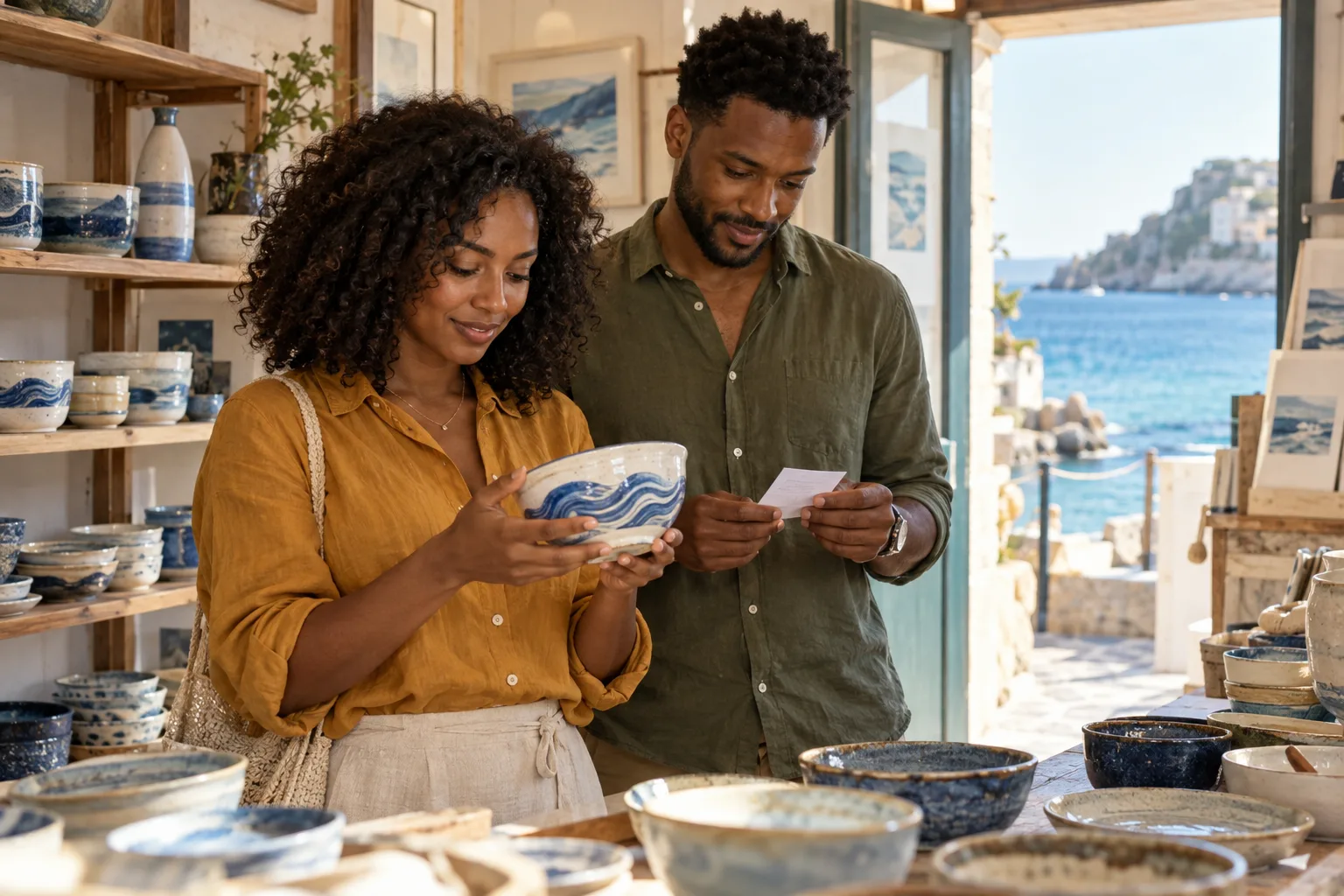
A ceramic dish, locally made art print or photograph of the shoreline may suit your plans without taking a shell or coral fragment. Check the actual materials of a craft item too, since decorative additions can include wildlife parts.
Chapter 14 of Bridegenic begins travel preparation with the itinerary. Use the same method for souvenirs: record what the item is, where it came from and which borders it will cross. Keep the official answer beside the purchase record so you do not have to reconstruct it at departure.
Physical Book (No Download)
Bridegenic: The Glow-Up Guide for Brides on GLP-1s
$12.95 + Free Shipping
Order NowThis article provides general education, not a diagnosis or an individual treatment plan. Medication information refers to US sources. Talk with your prescriber, pharmacist or dermatologist about decisions for your care.
Read next
Honeymoon & BeyondBringing Your Wedding Bouquet Home: U.S. Entry Requirements→Honeymoon & BeyondSix Honeymoon Food-Souvenir Checks for U.S. Entry→Sources
- Caribbean Traveler’s Guide: Be Informed, Buy InformedU.S. Fish and Wildlife Service and partners↩ Back to text
- Visitors Have Second Thoughts, Return Sand and Coral, March 15, 2023Hawaiʻi Division of Aquatic Resources↩ Back to text
- Recreational Sea Shell CollectingFlorida Fish and Wildlife Conservation Commission↩ Back to text
- Conch Fact SheetCayman Islands Department of Environment↩ Back to text
- 50 CFR 23.15: Personal or Household Effects, Including Tourist SouvenirsElectronic Code of Federal Regulations↩ Back to text
- International Traveler: Souvenirs, modified January 13, 2026USDA Animal and Plant Health Inspection Service↩ Back to text