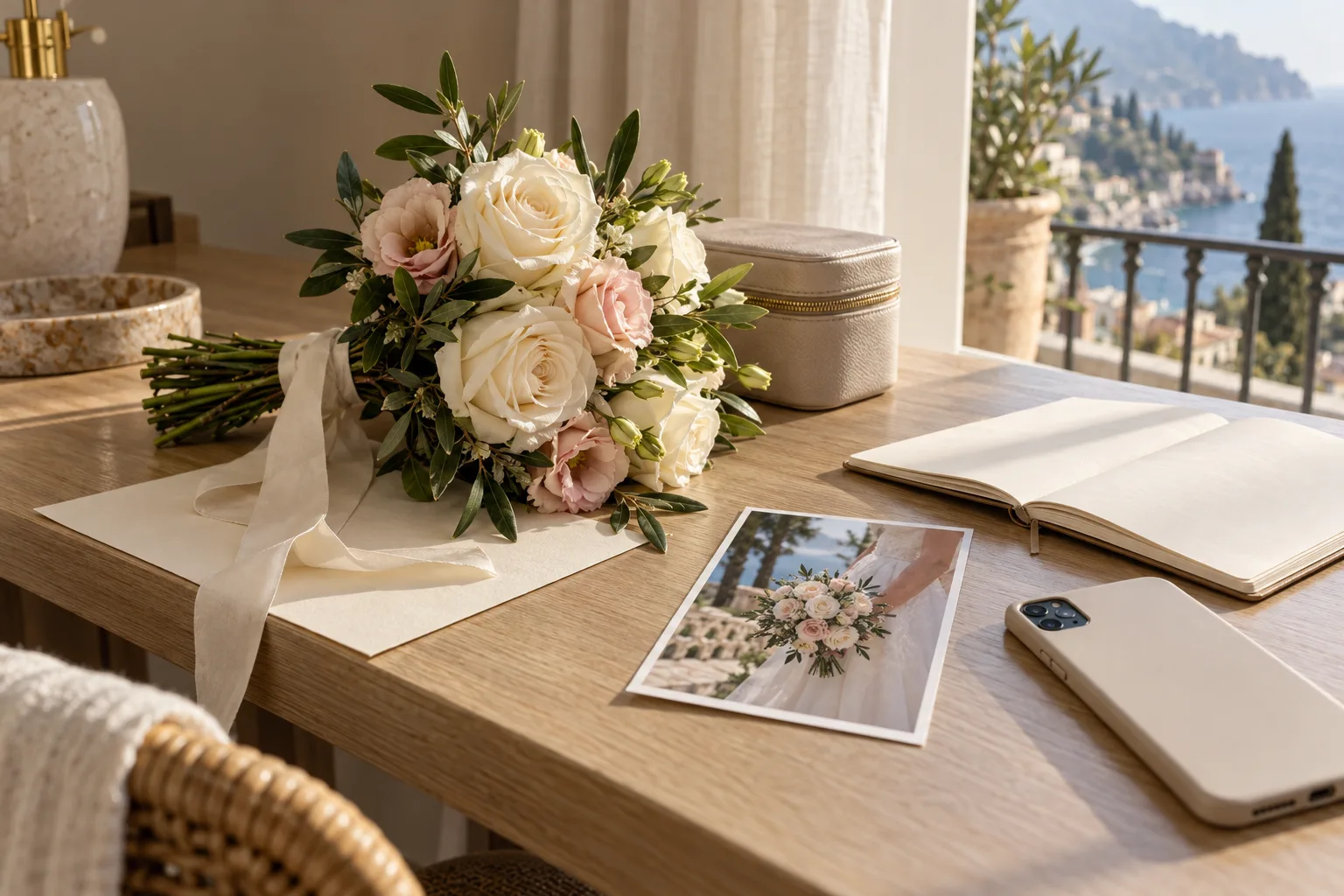
If you want to preserve flowers from a wedding abroad, check the U.S. entry requirements before placing the preservation order. The bouquet can contain several plant species from different growing countries, even when one local florist assembled it. A return flight booking and a preservation appointment do not establish that those materials can enter the United States.
Start with the contents of the bouquet
APHIS says requirements depend on the plant, its form, country of origin and intended use. Fresh cut flowers and greenery must be presented to Customs and Border Protection, or CBP, at the first U.S. port of entry. Inspectors may refuse materials that do not meet requirements or carry pests or disease. [1]
Ask the florist for the botanical names of the flowers and greenery, where they were grown and whether the arrangement includes seed heads, berries, roots, bulbs, moss or other plant material. Include every component you intend to bring home, rather than listing only the main flower.
Describe the condition in which the materials will travel. A freshly cut stem, a rooted plant and a pressed flower should not receive the same description on an inquiry. Photograph the complete arrangement and keep the florist’s itemized information with the travel notes.
If the florist proposes a substitution, update that information before confirming the return plan. The answer for the original design may not cover a different species or growing country.
Separate the purchase location from the growing country
APHIS’s guidance for entry from Canada at land borders illustrates why origin matters. It says many bouquet materials produced in Canada, including baby’s breath and ferns, are generally admissible, subject to the applicable requirements and inspection. Flowers not produced in Canada may have special requirements. [2]
That guidance concerns Canada’s land border; it is not permission for every bouquet bought in Canada or for a flight from another country. Ask where the stems were produced, not just where the florist’s shop is located.
For example, a destination florist might purchase flowers through an importer. Your inquiry should describe that supply chain as accurately as the florist can document it. If the origin is unknown, tell APHIS that rather than substituting the wedding country.
APHIS recommends retaining receipts and original packaging as evidence of origin. [1] Ask the florist which supplier information can accompany the flowers, and keep it accessible rather than buried inside a suitcase.
Use the current commodity requirements
APHIS directs importers to its Agricultural Commodity Import Requirements database, called ACIR. It includes separate categories for cut flowers and greenery, plants and seeds for planting, seeds not for planting and other agricultural commodities. Requirements vary by commodity and origin. [3]
Use the itemized bouquet information when asking which requirements apply. State the return date, first U.S. entry point, intended use and whether the flowers will accompany you or be sent separately. Ask which documents, permits or other conditions apply to those exact materials. Do not assume that a rule for live plants describes a cut bouquet.
APHIS lists its Plant Import Information Line at 877-770-5990 and [email protected] for questions. [1] Begin before the design is final, so there is time to change the flower selection or keepsake plan if necessary.
Keep the response with the florist’s list. If a preservation company offers to handle the paperwork, ask what it will obtain, who supplies the botanical names and origin information, and who is responsible for the import arrangements.
Check effective dates when a rule changes
A federal cut-flower rule published October 8, 2026, removes chrysanthemum-white-rust-specific restrictions and moves commodity requirements into ACIR. Its effective date is November 9, 2026. As of this article’s October 16 check, that effective date has not arrived. The rule says other fresh-cut-flower import requirements remain unchanged. [4]
This is why an announcement about relaxed restrictions cannot stand in for checking the requirements on your travel date. It also does not mean that every chrysanthemum is currently prohibited or that every bouquet becomes admissible on November 9.
Have the florist identify the plants and ask APHIS about the applicable entry conditions. Save the date of the advice and check again if the composition or itinerary changes.
Drying or pressing needs its own check
APHIS’s souvenir guidance says permits may be required for plant parts and crafted products. It also warns that documenting the plant species may be necessary to establish lawful entry even when a permit is not required. [5]
Do not treat the words dried, pressed or preserved as an exemption. If the plan is to press petals abroad, dry the bouquet or have flowers incorporated into a finished keepsake, describe that exact form and processing when seeking advice.
Ask the preservation business for a materials description, including any added botanical pieces. A finished display could contain more than the flowers you supplied. Get the entry question answered before paying for an item that depends on international transport.
Mailing the bouquet or asking the business to ship the finished keepsake should trigger another inquiry about that route. Do not assume advice for flowers accompanying a traveler also settles the requirements for a separate shipment. Ask the business how it has checked the particular materials and destination.
Airline and security checks are separate steps
TSA says fresh flowers can pass its security checkpoint without water. [6] That is a U.S. security-screening statement, not agricultural import permission. Check the departure country’s screening requirements and the airline’s baggage rules for your itinerary.
Ask the airline whether the proposed packaging counts toward your allowance and where it can be stowed. Confirm any connection requirements with the relevant authorities. Avoid planning around a promise that cabin crew will hold an extra arrangement for you.
Keep documents and plant materials accessible for the required inspection. If your itinerary changes, identify the new entry point before assuming the original arrangements still work.
Choose a keepsake plan that can survive a refused entry
APHIS requires travelers to declare agricultural and wildlife products, and inspectors make the final entry determination. [5] Describe the flowers and accompanying greenery explicitly when declaring the wedding souvenir.
Before the ceremony, ask the photographer for clear bouquet photographs, including a close view of the flowers and ribbon. Decide whether a photograph, illustration or another locally arranged keepsake would be acceptable if the botanical materials cannot return with you.
Ask the preservation company what happens if flowers are delayed, refused or arrive in unsuitable condition. Put its acceptance criteria, timing and cancellation terms beside the entry inquiry. Do not book a deadline that assumes inspection will take a fixed number of minutes.
Chapter 13 of Bridegenic assigns practical tasks to named people. Name who collects the florist’s list, carries the documentation and communicates with the preservation business. Keep this separate from the dress transport plan so one person is not improvising both handoffs during a connection.

Physical Book (No Download)
Bridegenic: The Glow-Up Guide for Brides on GLP-1s
$12.95 + Free Shipping
Order NowThis article provides general education, not a diagnosis or an individual treatment plan. Medication information refers to US sources. Talk with your prescriber, pharmacist or dermatologist about decisions for your care.
Read next
PlanningGetting Married Abroad: Confirm the Documents Before Travel→Dress & FittingsFlying With Your Wedding Dress: Bags, Flights and Arrival Care→Sources
- International Traveler: Plants, Plant Parts, Cut Flowers, and Seeds, updated February 24, 2026USDA Animal and Plant Health Inspection Service↩ Back to text
- Traveling to the United States From Canada at Land Borders: Cut FlowersUSDA Animal and Plant Health Inspection Service↩ Back to text
- How To Import Plants and Plant Products into the United States, updated July 29, 2026USDA Animal and Plant Health Inspection Service↩ Back to text
- Cut Flowers Regulations; Removal of Chrysanthemum White Rust-Related Provisions, published October 8, 2026, effective November 9, 2026Federal Register, 91 FR 64253↩ Back to text
- International Traveler: Souvenirs, updated January 13, 2026USDA Animal and Plant Health Inspection Service↩ Back to text
- Flowers: What Can I Bring?Transportation Security Administration↩ Back to text