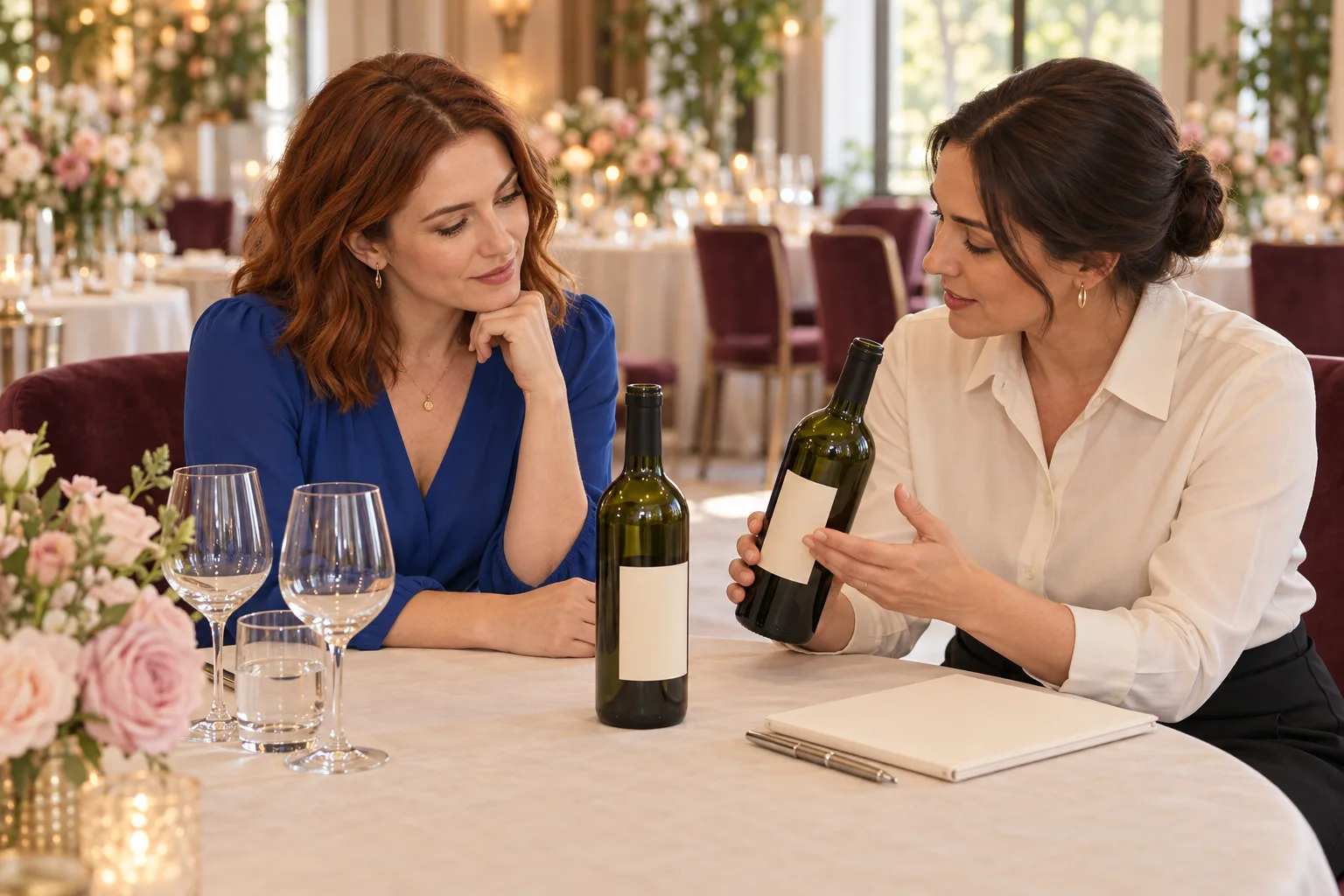
A wedding wine list can name the grape and region while leaving an allergy question unanswered. Before the bottles are ordered, give the bar lead the exact question and ask who will check it with the producer or importer.
Start with the bottle and its market
This article concerns U.S. federal labeling rules for wine within TTB's Part 4 framework, which defines the covered wine range as 7–24% alcohol by volume. Other drinks and markets can follow different rules. [1]
Ask the supplier for the producer, product name, vintage where applicable, alcohol content and photographs of every label on the actual bottle. “House white” is not enough information for a product inquiry. Keep the supplier's description attached to the reply so the bar team knows which bottle was checked.
What the sulfite statement tells you
TTB requires a sulfite declaration when total sulfur dioxide reaches 10 parts per million or more. A wine below that threshold need not carry the declaration. TTB also says it does not permit wording such as “sulfite free.” [2]
The absence of the statement therefore does not establish zero sulfites. Nor does the statement identify every ingredient or answer a separate milk, egg or other food-allergy question.
If sulfites are the concern, use the guest's own requirement and medical advice in the discussion. Do not translate “no added sulfites” into a promise that the guest can drink the wine.
A separate allergen rule is voluntary
Under the current Part 4 rule, major-food-allergen declarations are voluntary. If one defined major allergen is declared, the rule requires the other defined major allergens used in production, including fining or processing agents, subject to approved exemptions. A bottle without such a declaration is not an allergen-absence certificate. [1]
That is why the next question belongs with the product supplier or manufacturer, rather than being answered from the front label's design. Food Allergy Research & Education (FARE) advises that a manufacturer inquiry may be needed to establish whether a beverage includes a person's allergen. [3]
Let the person with the allergy assess the response and decide what they will consume. A planner's job is to obtain and pass on accurate information, not to clear a wine for someone medically.
Carry the answer through service
Record the checked product, the date and source of the answer, the on-site bar lead and the substitution rule. If the agreed bottle is unavailable, ask the bar lead to pause that selection and obtain a new answer rather than substituting a similar grape or price point.
Discuss mixed drinks separately. FARE notes that cocktail ingredients can introduce allergens, including egg in some whiskey sours, and that shared shakers, stirrers and garnishes can create cross-contact. [3] A wine inquiry does not review the cocktail recipe or bar equipment.
Ask the guest and bar lead how the agreed drink will be identified and served. Do not place a private allergy explanation on a public menu unless the guest wants that information shared.
Keep an agreed alternative available
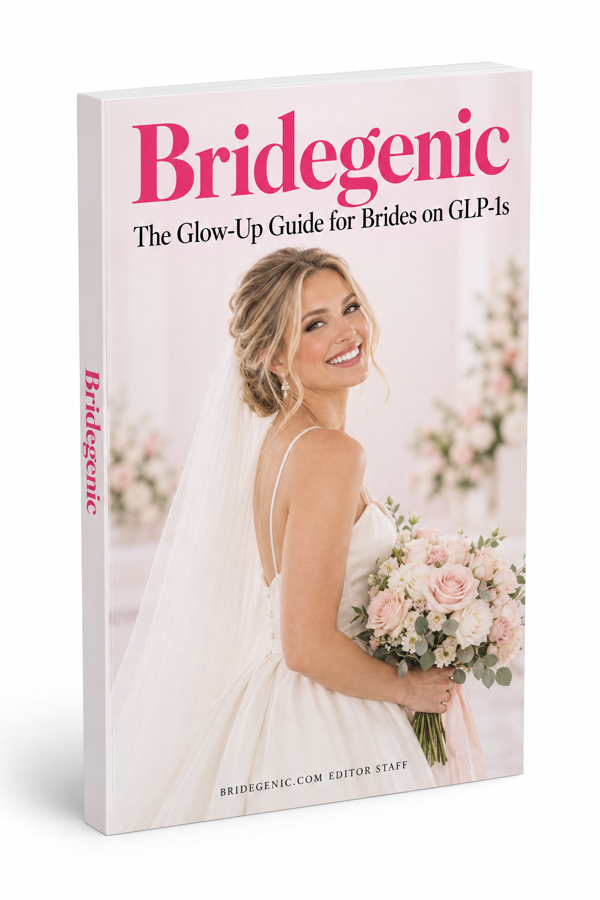
Chapter 13 of Bridegenic treats alcohol as optional, recommends a preferred nonalcoholic option and puts named people beside practical tasks. Apply that planning approach here: identify the alternative, where it will be kept and who can answer questions about it. A nonalcoholic choice still needs its own ingredient and service check.
The food-allergy catering guide follows the wider preparation and serving plan. Our bar-service booking guide covers permissions, staffing and closing arrangements.
Physical Book (No Download)
Bridegenic: The Glow-Up Guide for Brides on GLP-1s
$12.95 + Free Shipping
Order NowThis article provides general education, not a diagnosis or an individual treatment plan. Medication information refers to US sources. Talk with your prescriber, pharmacist or dermatologist about decisions for your care.
Read next
PlanningSix Wedding Bar-Service Questions Before Booking→Food & EnergyFood Allergies at Your Wedding: The Caterer, Kitchen and Serving Handoff→Sources
- 27 CFR Part 4: sections 4.10, 4.32(e) and 4.32aElectronic Code of Federal Regulations; checked October 28, 2026↩ Back to text
- Wine Labeling: Declaration of SulfitesAlcohol and Tobacco Tax and Trade Bureau; checked October 2026↩ Back to text
- Alcohol: labels, mixed drinks and cross-contactFood Allergy Research & Education↩ Back to text