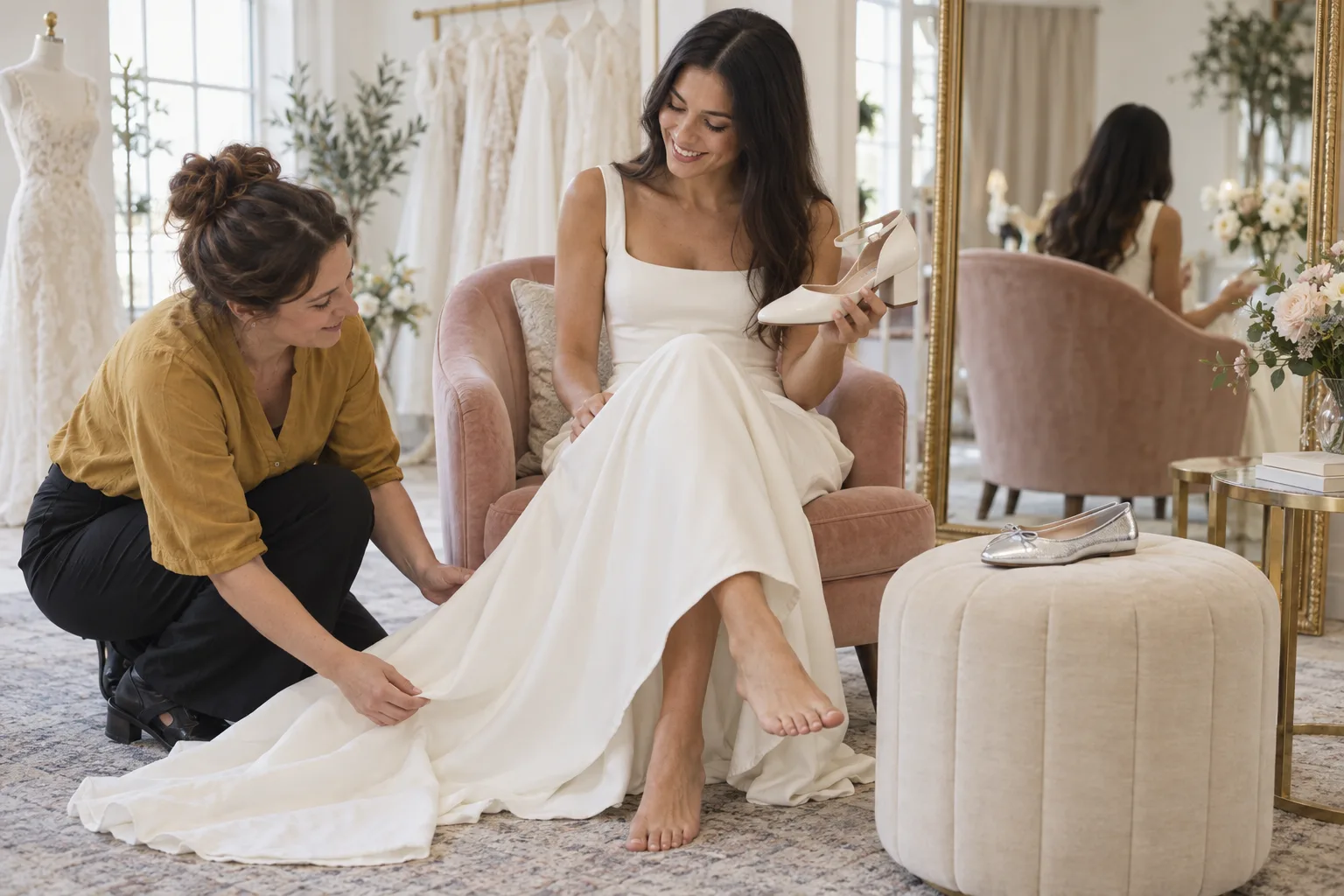
The shoes looked lovely beside the dress. After ten minutes of standing, the ankle strap started rubbing, and the flats packed for the reception left more skirt on the floor. Both problems belong in the fitting conversation before the hem is finished. Test the shoes on your feet, then test them with the gown.
Measure the feet you have now
The American Academy of Orthopaedic Surgeons (AAOS) recommends measuring feet while standing, shopping toward the end of the day when feet may have swollen, and choosing by fit rather than the number on the box. One foot may be larger, and brands and styles can size differently. [1]
If your body has changed during the engagement, check the shoe rather than assuming it still fits because it did when you ordered it. This article does not predict that GLP-1 treatment changes your shoe size. The fitting needs to assess what you are wearing today.
Try both shoes with the hosiery, socks or orthotics you intend to use. Fasten the straps at a setting you can repeat. Check whether the toes feel crowded, the heel lifts with each step, or the foot slides toward the front.
AAOS advises about half an inch between the longest toe and the tip of the shoe. It notes that selecting a wider fitting can be preferable to buying a longer size when width is the problem. [1] A shoe that is wide enough only because it is too long may still let your foot move around.
Check return terms before wearing a new pair outdoors. Keep the box and receipt until you have tested fit. A bargain is less useful when the return deadline arrives before the first fitting.
Look beyond the advertised heel height
AAOS describes a wide or square toe box and a heel lower than two inches as an ideal choice for women's shoes. Higher heels increase pressure under the ball of the foot. [1] That recommendation does not certify any particular bridal shoe as comfortable or suitable for your medical needs.
Compare a few styles instead of choosing the highest heel first and trying to fix it with pads. Note the room across the toes, how the fastening holds the foot, and whether you feel stable turning and stopping.
The height of the shoe's heel does not tell the alterations specialist everything about how you stand in it. A platform under the forefoot, the sole and the shoe's shape also matter. Bring the actual shoe so the specialist can assess your stance and the hem together.
For an outdoor venue, ask what surfaces are on the route: grass, gravel, uneven stone, stairs or a slick dance floor. Check whether you can use a paved route or transport instead. Test any heel accessory you intend to add; do not assume it will make every surface suitable.
Bring the reception shoes to the hem appointment
Designer Maggie Sottero advises bringing wedding shoes to alterations and notes that switching from heels to flats can leave a hem too long. Its fitting guidance also recommends checking the bustle and moving in the gown. [2]
If you plan two pairs, show both before approving the length. Ask the specialist to assess each pair with the train down and with the bustle fastened. A bustle arrangement should not be assumed to fix extra length at the front.
The answer might be a different shoe, another hem decision, or changing outfits for the reception. Get the options and any cost from the specialist. Do not remove decorative layers or improvise a new attachment yourself on the wedding morning.
If you buy another pair after the appointment, tell the specialist before pickup and ask whether a new check is needed. “Same heel height” on the sales page is useful information, but the gown should still be assessed with the replacement.
Run a short wear test that answers specific questions
AAOS warns against buying shoes that do not fit with the expectation of a break-in period. [3] Use a wear test to find a problem while you can still change the plan, rather than to train yourself to ignore it.
On a clean indoor surface, start with a few minutes of normal walking and standing. Turn, sit and stand again. If a stair route is part of your day, test it with a handrail and help where needed. Check whether you can fasten the shoes without damaging a manicure and whether someone else will need to help once the dress is on.
At the fitting, ask permission before moving around with pins in place. When the specialist says it is safe, walk forward and turn, check that the front does not catch under the shoe, and try a few gentle dance steps with the bustle fastened. Have the person who will bustle the dress practice the arrangement.
Write down what happened and where: “strap rubbed outside left ankle,” “right heel lifted,” or “front caught while turning in flats.” These notes give the fitter more to work with than “they weren't comfortable.”
AAD advises stopping an activity when pain, discomfort or redness begins to avoid a blister. [4] End the test at that point. Do not extend it because a checklist says you should reach a particular number of minutes.
Keep a small foot-care kit within reach
AAD suggests adhesive moleskin or other soft bandages for areas prone to rubbing, properly fitting shoes, and moisture-wicking socks where the footwear allows. If a blister develops, cover it loosely and avoid popping it; seek medical advice for signs such as pus, increased pain or swelling. [4]
Try any padding before the wedding, since it occupies space inside the shoe. A new insert can change a fit you already checked. Bring it to alterations if you intend to wear it with the dress.
Pack familiar bandages and the approved backup shoes in a bag someone can find. Assign that person a handoff location, such as the shaded portrait waiting area or reception dressing room. Keep the bag out of a vehicle that leaves after the ceremony.
If you have diabetes, reduced sensation, circulation problems, a wound or a condition that affects balance, ask your care team for footwear and skin-care advice suited to you. A generic wear test cannot assess those needs.
At pickup, confirm any changes against the note before taking the dress home. If the shoes have changed, say so before the specialist finishes the handoff.

Physical Book (No Download)
Bridegenic: The Glow-Up Guide for Brides on GLP-1s
$12.95 + Free Shipping
Order NowThis article provides general education, not a diagnosis or an individual treatment plan. Medication information refers to US sources. Talk with your prescriber, pharmacist or dermatologist about decisions for your care.
Read next
Dress & FittingsDress Fittings on a GLP-1: A Calm Plan for a Dress That Fits on the Day→Face & SkinSunscreen Under Wedding Makeup: What to Test Before Outdoor Photos→Sources
- Shoes: Finding the Right FitAmerican Academy of Orthopaedic Surgeons↩ Back to text
- How to Have a Successful First Wedding Dress FittingMaggie Sottero Designs↩ Back to text
- Tight Shoes and Foot ProblemsAmerican Academy of Orthopaedic Surgeons↩ Back to text
- How to prevent and treat blistersAmerican Academy of Dermatology↩ Back to text