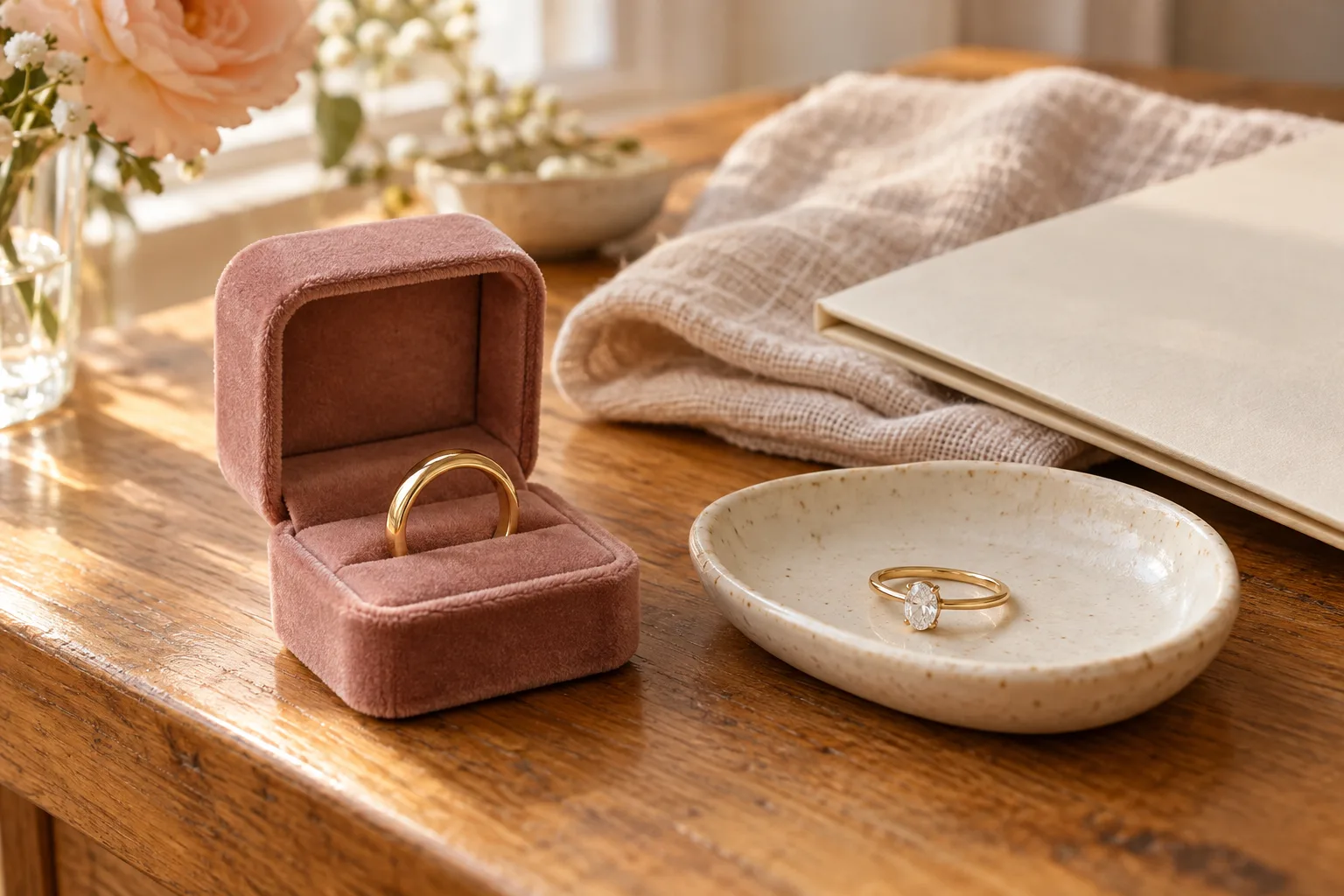
Before taking your engagement ring and wedding bands on a honeymoon, check what would happen if a ring were stolen, dropped, damaged or simply missing. Those are separate questions. A large personal-property limit on your home policy does not tell you how much it would pay for a jewelry claim.
Start with the policy you already have
The National Association of Insurance Commissioners says homeowners and renters policies commonly include jewelry as personal property, but limits and covered events may leave expensive pieces insufficiently protected. Theft coverage does not establish that accidental loss or damage is included. [1]
Find the declarations page, jewelry limits and relevant endorsements. The Texas Department of Insurance explains that declarations summarize limits and deductibles, while home policies can limit payments for jewelry and art. [2] Ask your agent to identify the clause applying to each situation you want covered.
Give the agent a list of the engagement ring, each wedding band and any other pieces you intend to insure. Ask whether a jewelry limit applies to all pieces combined, to each item, to theft specifically or to another category of loss. Write the answer beside the policy section rather than keeping only a general assurance that jewelry is included.
If you are comparing a home-policy add-on with a separate jewelry policy, ask how a jewelry claim could affect the existing policy's premium. NAIC includes that question in its consumer guidance. [3] Compare the protection and claim terms alongside the annual price.
Use specific loss scenarios
Ask about a ring stolen from a hotel room, a center stone lost while the setting remains, a ring accidentally dropped into water and an unexplained disappearance. Have the representative answer each scenario using the proposed policy wording. Do not turn a sales phrase such as broad coverage into an assumption that every cause is insured.
The American Gem Society's insurance questions include partial loss, unexplained disappearance, damage, theft, geographic restrictions and a piece in someone else's possession. It also recommends asking to see the language that addresses each concern. [4] That last step is useful for wedding-day handoffs and jewelry left with a repairer.
Describe your actual arrangements: the photographer may take detail photographs, a wedding party member may hold the bands and a jeweler may resize a ring before departure. Ask what applies during each handoff and whether you need a receipt or other record.
For borrowed heirloom jewelry, identify the owner and wearer before requesting coverage. Ask whose policy applies, who must be named and whether the proposed policy accepts a borrowed item. Keep the lender's written description and return plan with the wedding notes.
Ask how a covered claim would be settled
Some policies arrange repair or replacement; others offer a cash settlement. Jewelers Mutual's claims page describes replacing an item with the same kind and quality, up to the item's coverage limit or current replacement cost, whichever is lower. It says the customer can pay the difference for an upgrade. [5]
Chubb's U.S. jewelry page offers a cash-settlement option for a covered total loss at 100% of the agreed value. It also states that the issued policy governs coverage and products may not be available in every jurisdiction. [6] These are examples of different settlement arrangements, not interchangeable promises or a recommendation to buy either product.
Ask who selects the jeweler, whether you can approve the proposed replacement, how a custom design would be matched and what happens if an antique cannot be reproduced. AGS specifically raises jeweler choice, damage repaired rather than replaced and one-of-a-kind pieces. [4]
For a lab-grown diamond, have the item description say so. For an inherited setting with a replacement stone, document both components. Tell the insurer which details matter to you, such as the metal, engraving, stone origin or custom construction, then check whether the documents capture them.
Distinguish the appraisal from the grading report
GIA says it does not appraise jewelry or assign monetary values through its laboratory reports. A grading report gives information about gemstone quality; an appraisal provides a description and an opinion of value for a stated purpose. [7] Keep the documents together, but do not substitute one for the other.
Jewelers of America explains that insurance appraisals generally address retail replacement cost, while fair-market-value appraisals concern a sale between a willing buyer and seller in the item's market. Those figures can differ. [8] Ask for the valuation needed by the insurer rather than ordering an unspecified appraisal.
Confirm the insurer's documentation requirements before booking the appointment. Chubb's current U.S. product page, for example, says appraisals are required for individual jewelry pieces valued at $100,000 or more; below that it describes using a detailed description and estimated value. [6] A universal instruction that every ring must have a new appraisal would miss such differences.
If an appraisal is required, GIA advises looking for both gemological and appraisal training and experience relevant to the work. Ask the fee, timing and what the report will include. It also advises checking the insurer's requirements for appraisal updates. [7] Do not assume that an old purchase document is sufficient after substantial alterations.
Compare the deductible and limit together
A deductible is the part of a claim you pay yourself. TDI illustrates this with a $1,000 claim and a $300 deductible, leaving $700 paid by the insurer. [2] Ask whether the proposed jewelry coverage has a separate deductible from your home policy, and whether it applies per item or per event.
Request quotes using the same item descriptions, values and covered events. Record the annual premium, deductible, item limit, total jewelry limit and settlement method on one page. A lower premium is difficult to assess if the other quote covers events the cheaper one excludes.
Ask separately about gradual deterioration, routine maintenance, resizing and preventive repairs. Do not assume that an accidental-damage benefit pays for every worn component or ordinary service. If a maintenance benefit is offered, get its conditions and limits in writing.
Confirm the honeymoon and start date
NAIC recommends checking whether coverage applies worldwide or only domestically. [3] Give the agent your destination countries and ask about travel, hotel storage, transit and any security conditions. If an item will stay at home, describe that storage arrangement instead.
Ask for the effective date and written confirmation that the specific pieces are included. NAIC explains that a rider or endorsement changes the policy and recommends keeping the new document. [9] A quote or an application still awaiting requirements is not the document you want to rely on at departure.
After adding the wedding bands, compare their descriptions with the receipt and photographs. Check the insured person's name, address and contact details too, especially if the wedding coincides with a move or name change.
Prepare the file you would need after a loss
NAIC recommends storing photographs and appraisal copies safely in a home inventory. [1] Photograph each ring from several angles and keep the purchase receipt, appraisal, grading report if any, repair history and policy documents together. Store an accessible private copy separately from the physical jewelry.
Save the insurer's claim contact before traveling. Jewelers Mutual's published process asks for a written explanation and proof of ownership such as a receipt, appraisal or dated photograph; it requires a police report for certain claims. [5] Ask your own insurer what evidence and notification steps apply.
If something happens, record when and where the item was last seen and distinguish observations from guesses. Keep any remaining setting or damaged components. Ask the insurer how to proceed before commissioning replacement work, and update the item record if a replacement is issued.
Physical Book (No Download)
Bridegenic: The Glow-Up Guide for Brides on GLP-1s
$12.95 + Free Shipping
Order NowThis article provides general education, not a diagnosis or an individual treatment plan. Medication information refers to US sources. Talk with your prescriber, pharmacist or dermatologist about decisions for your care.
Read next
PlanningBuying a Lab-Grown Wedding Diamond: Reports and Returns→Dress & FittingsWedding Ring Fit: Measurements, Resizing and the Final Check→Sources
- Learn How to Insure Expensive Jewelry and GiftsNational Association of Insurance Commissioners↩ Back to text
- Home Insurance GuideTexas Department of Insurance↩ Back to text
- Homeowners and Renters Insurance: Jewelry ProtectionNational Association of Insurance Commissioners↩ Back to text
- Professional Appraisal Services: Questions to Ask Your Insurance AgentAmerican Gem Society↩ Back to text
- Jewelry Insurance ClaimsJewelers Mutual↩ Back to text
- Jewelry Insurance, U.S. Product InformationChubb↩ Back to text
- Tips on Getting a Jewelry AppraisalGemological Institute of America↩ Back to text
- AppraisalsJewelers of America↩ Back to text
- Adding an Endorsement or Rider to an Existing Insurance PolicyNational Association of Insurance Commissioners↩ Back to text