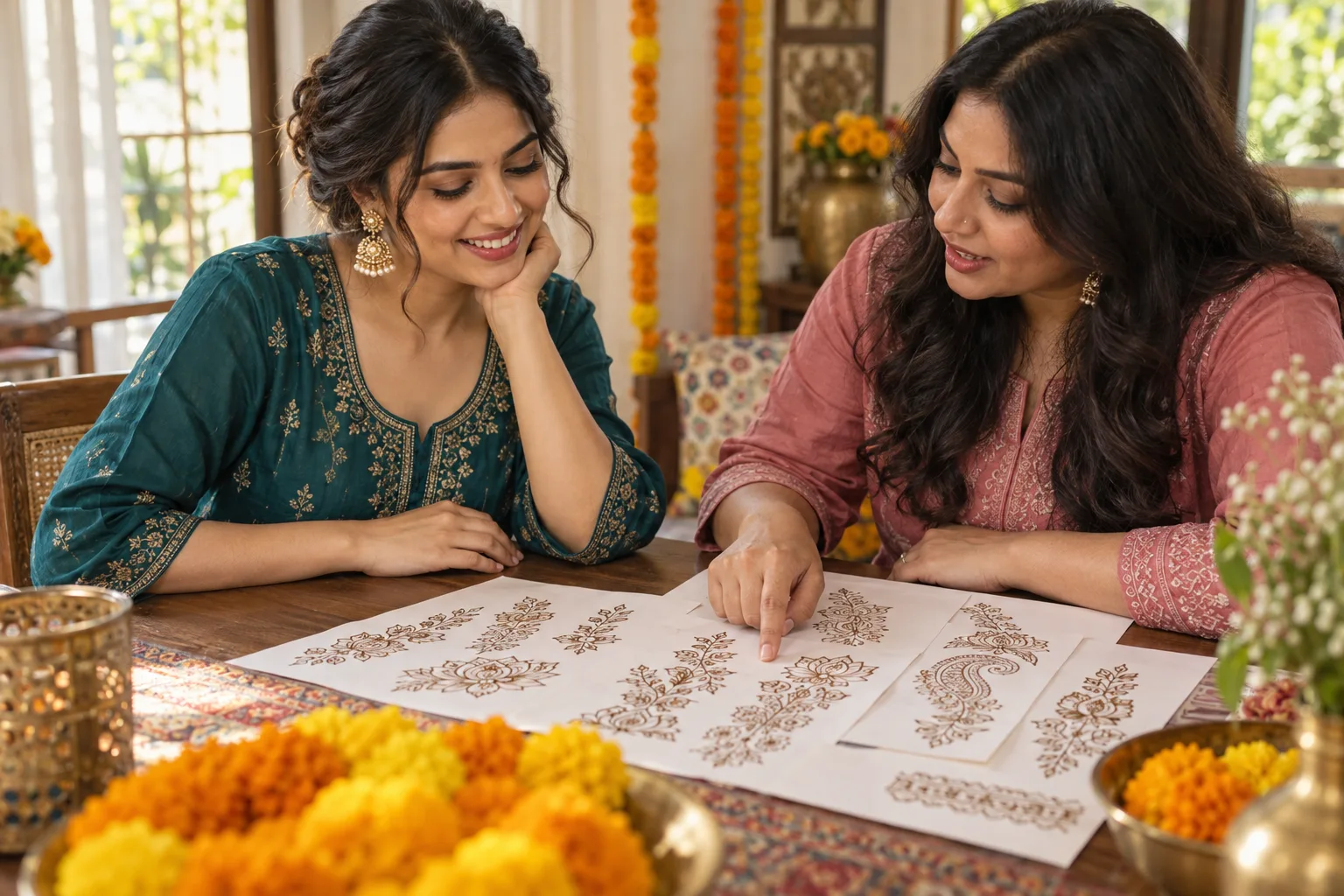
If mehndi is part of your wedding plans, discuss the product as carefully as the design. Ask the artist about the full paste ingredients, previous reactions and what happens if the intended product changes. Keep that conversation distinct from promises about how dark a stain will look in photographs.
Distinguish the product from its advertised color
FDA describes henna as a plant coloring that usually produces brown, orange-brown or reddish-brown stains. Products marketed as henna can contain other ingredients, including products that produce brown shades. “Black henna” often contains p-phenylenediamine, or PPD, a hair-dye ingredient associated with dangerous skin reactions. [1]
Ask for the actual product name and full ingredients, including anything the artist mixes into a paste. A photograph of a finished design cannot establish its contents.
Do not use color alone to identify PPD. Nor does a brown stain prove a product has no additives. Record the product information and ask what the artist would do if that product were unavailable on the event date.
FDA states that PPD is not permitted in cosmetics intended for skin application. It also states that henna's approved U.S. color-additive use is for hair dye, rather than direct skin decoration. [1] These are U.S. regulatory statements; do not describe a paste as FDA-approved for mehndi.
Ask for ingredient information before the event
FDA explains that retail cosmetics generally need an ingredient declaration, while that labeling requirement does not apply in the same way to samples or products used only by professionals. [1]
Ask before making the booking rather than waiting until the artist is setting up. If the product is mixed by the artist, request a written ingredient list and identification of the components used.
Keep a photograph of the packaging and any batch or supplier details that are available. Save the artist's contact information with it. If a reaction develops later, those details can help the clinician investigate what touched your skin.
If the ingredients cannot be identified, you cannot meaningfully check them against a known allergy. Pause the decision and ask for a documented option or discuss another arrangement for the event.
Include finishing products and decorative additions in the conversation. Do not let an agreed paste be substituted without telling you because a different product promises a faster or darker result.
Pure henna can also cause allergy
A July 2026 systematic review by Ben Yahia and colleagues specifically examined allergic contact dermatitis attributed to pure henna. From 731 records, 13 original articles met its criteria, which required patch-test confirmation and excluded black henna, additives and reviews. [2]
The reported reactions included delayed dermatitis, sometimes with blistering or pigmentation, and immediate hypersensitivity. The authors described allergy to pure henna as uncommon but possible. [2]
The review's 13 articles are not 13 reactions among 731 people using wedding henna. They are selected publications from a literature search. That evidence does not calculate your chance of a reaction or establish that every product described as pure has been tested.
Discuss any previous reaction even if you believe the paste contained no added dye. You do not need to prove which ingredient caused it before asking for assessment.
Mention past black-henna exposure before hair coloring
NHS guidance explains that exposure to PPD in black henna can increase the risk of reacting later to a PPD-containing product, including hair dye. It advises avoiding PPD-containing products, particularly after a reaction to hair dye or black henna. [3]
Tell your hair colorist about previous black-henna use or reactions when planning wedding hair appointments. Tell your clinician as well if symptoms occurred or you are unsure what the product contained.
Do not assume a dye is suitable because you used it previously without a problem. Ask for the exact product information and follow the advice given for your history.
The hair-color planning guide covers the separate discussions about product instructions, strand testing and allergy concerns. A test intended to assess hair color is not a medical diagnosis of skin allergy.
Do not use a home test to clear a concerning product
The 2026 review describes clinical patch testing for delayed allergy and prick testing for immediate hypersensitivity. [2] These are diagnostic procedures interpreted in the context of the reaction history.
NHS guidance notes that a clinician may refer someone who has reacted to hair dye for dermatology patch testing to identify an ingredient allergy. [3]
If you have a previous reaction, ask what evaluation is appropriate before another application. Do not improvise a stronger test, repeatedly expose the skin or ask the artist to diagnose an allergy.
A small trial with no immediate symptoms cannot guarantee that a later application will be tolerated. It also cannot turn a product containing an unsuitable ingredient into an appropriate skin product.
Take ingredient records to the appointment and explain when the reaction began, how long it lasted and whether it involved symptoms elsewhere. Photographs of an earlier rash may be useful if you already have them; do not reapply the product to recreate it.
Recognize a reaction even if it starts later
The American Academy of Dermatology says reactions to temporary tattoos can begin from application through three weeks later. Signs can include itching, swelling, pain, small bumps, raised scaly skin, blisters, changes in skin color or scarring. [4]
Take new symptoms seriously even if the design initially looked fine. Do not assume that burning means a darker stain is developing or that a rash following the pattern is only a cosmetic inconvenience.
Contact a clinician for concerning symptoms and explain the exposure. Ask for product-removal and treatment instructions appropriate to the skin's condition. Do not scrub blistered skin or introduce several new products in an attempt to remove the pattern before photographs.
AAD recommends immediate medical care for a reaction accompanied by trouble breathing, chest tightness, a racing heart, dizziness, intense swelling, serious pain, hives or other systemic symptoms. [4] Do not wait for the artist to reply before obtaining urgent help.
Ask a companion to help you reach care and gather the product information. Keep the message to the coordinator practical: you need to pause preparations and obtain medical assessment.
Sticker tattoos need their own product check
FDA has also received reports of reactions to decal-style temporary tattoos. Adhesives and other ingredients can cause problems even when a backing separates the skin from the color. [1]
If temporary decals are offered at a wedding event, keep the original packaging, directions and ingredients available. Check the intended body area and instructions rather than assuming a product suitable for one location can be placed anywhere.
Participation should be optional. Give people an easy way to decline without explaining their skin history. Do not apply a product over an existing rash in order to include someone in a group photograph.
If children are attending, obtain advice appropriate to the particular product and child rather than extending an adult arrangement to everyone. Do not describe a communal activity as allergy-free.
Plan the event around a documented choice
Ask the artist for the expected appointment length, the practical instructions for the selected product and how dressing, meals and transport will work afterward. Record the agreed design and product so another person does not change either without checking.
Discuss clothing and jewelry with the artist and relevant vendors. If hands or feet are involved, identify who can help with belongings and transport while you follow the product instructions.
Do not set a medical “safe interval” by counting backward from the ceremony. AAD's possible three-week reaction period is a reason to recognize delayed symptoms, not a rule that an application made earlier is guaranteed safe.
Have an alternative if the intended product cannot be verified or your skin needs assessment. You can keep the gathering, music, food or other parts of the celebration while changing what you personally put on your skin.
If a reaction occurs, retain the product information and tell the artist what happened after arranging care. Ask your clinician how to document the suspected allergy for future appointments. A faded design does not erase a relevant exposure history.

Physical Book (No Download)
Bridegenic: The Glow-Up Guide for Brides on GLP-1s
$12.95 + Free Shipping
Order NowThis article provides general education, not a diagnosis or an individual treatment plan. Medication information refers to US sources. Talk with your prescriber, pharmacist or dermatologist about decisions for your care.
Read next
Face & SkinEczema Before the Wedding: Treatment and Makeup Plans→HairHair Color Before Your Wedding: Skin Tests, Strand Tests and Salon Timing→Sources
- Temporary Tattoos, Henna/Mehndi, and Black Henna: Fact SheetU.S. Food and Drug Administration↩ Back to text
- Ben Yahia et al. Allergic Contact Dermatitis to Pure Henna: A Systematic Review, July 31, 2026Contact Dermatitis↩ Back to text
- Hair Dye Reactions, reviewed December 29, 2025NHS↩ Back to text
- Tattoos: 7 Unexpected Skin Reactions and What to Do About Them, temporary tattoo sectionAmerican Academy of Dermatology↩ Back to text