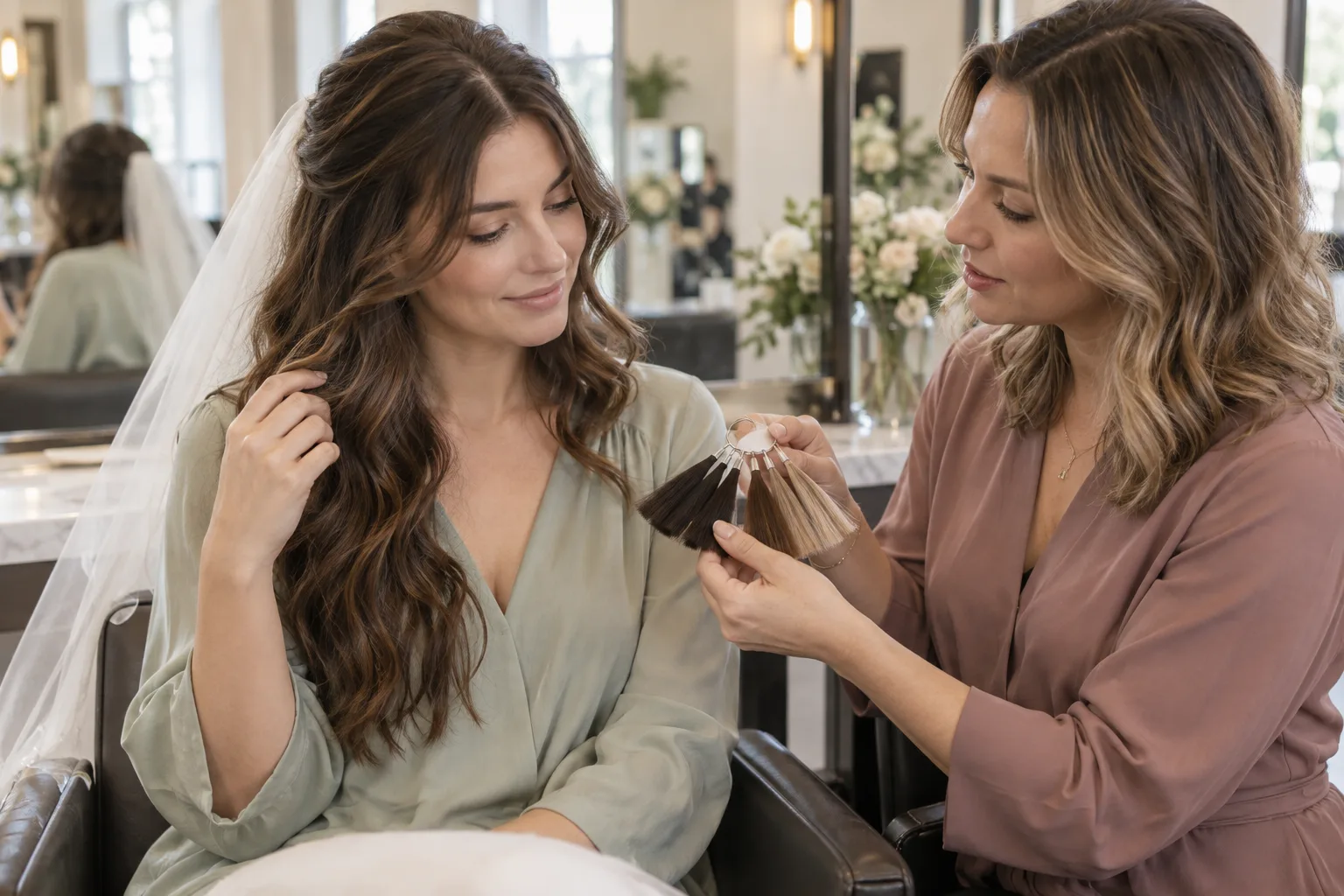
Before booking wedding hair color, collect the details of your last few services and any reaction you have had. Tell the colorist about itching, burning, swelling, breakage or a previous black-henna tattoo reaction. Then agree which questions belong to the salon and which need a dermatologist before another application.
Bring the color history you can verify
Write down the dates of recent color, bleaching, relaxing, perming or other chemical services. Include products used at home between appointments. Bring packaging or photographs of ingredient lists if available; say when you do not know the product.
Describe what you want to change in ordinary terms: cover a particular area, make the existing color more even or try a different shade. Show the colorist your intended wedding style so they can discuss the visible sections and any extensions or hairpiece involved.
Tell them if shedding is being assessed. A color consultation cannot diagnose the cause of hair loss. The hair-shedding guide explains how to prepare a symptom timeline for a clinical appointment.
Ask the salon to record the planned service, products, expected appointments, cost and what it would do if the hair or scalp assessment changes the plan. “Wedding color” is not a product specification.
Keep three different tests separate
FDA advises a skin test before every dye use, even after previous uneventful applications: sensitivity can develop, and formulas can change. A negative skin test still does not exclude a reaction during dyeing. [1]
Follow the instructions for the exact product and have the salon explain its process. FDA's consumer Q&A describes a two-day skin-test period and says salons should test too. [2] Do not replace the product's directions with a few minutes of waiting because you are already in the chair.
A strand test serves another purpose. Clairol describes using it to assess how a color will look on a small section of hair and how the hair takes up the dye. [3] It does not supply the skin information requested by an allergy test.
Medical patch testing is different again. A dermatologist applies selected allergens, usually on the back, and reads the skin's response over scheduled visits. AAD explains that delayed skin allergies can appear over hours or days. [4] A salon strand test is not that diagnostic procedure.
Ask which test is planned, who performs it and what answer it can provide. If the instructions are unclear, contact the salon or manufacturer before using the product. Do not put bleach or an unfamiliar mixture on your skin as an improvised test.
A previous reaction changes the next step
AAD advises not dyeing and seeking a dermatologist's allergy assessment if a store-bought color test causes rash, redness, swelling, burning or itching. [5] Do not conceal a reaction from the colorist because the appointment was difficult to obtain.
If you have reacted before, tell the clinician what happened, when it began and which product was involved. Ask whether further testing is appropriate and which ingredients or products you should avoid. Do not keep challenging your skin with replacement dyes while waiting for advice.
FDA identifies paraphenylenediamine, often called PPD, as a prominent hair-dye allergen and recommends checking ingredients you need to avoid. For salon products, ask the stylist or manufacturer for the ingredient information. [1]
A label that excludes one ingredient does not answer every allergy question. FDA says “hypoallergenic” has no federal definition or standard governing the term. [6] Bring the complete ingredient information to the professional assessing your reaction.
Mention black henna even if it was years ago
FDA explains that products marketed as black henna often contain PPD to darken the stain. This can cause dangerous skin reactions and increase concern about later hair-dye allergy. Even brown products sold as henna may contain added ingredients. [7]
Tell the dermatologist and colorist about any reaction to a temporary tattoo, including the symptoms and approximate date. If you still have a photograph or product details, bring them. Do not assume that a botanical name establishes what was in the mixture.
If planning mehndi or another temporary design for wedding events, ask what product is used and obtain the ingredient details. Avoid choosing black henna because the color seems better for photographs. Keep skin decoration and scalp coloring as separate product decisions with their own instructions.
Assess the scalp and hair before the color target
FDA advises against dyeing or relaxing an irritated, sunburned or damaged scalp. [1] Report current discomfort before the service begins. Ask whether the appointment should be postponed and whether symptoms need clinical assessment.
AAD notes that lightening more than three shades requires higher peroxide levels and causes more hair damage. It also warns that coloring and other treatments can leave hair dry and brittle. [5] Discuss what your current hair can tolerate with the colorist rather than treating an inspiration photograph as the only constraint.
If several chemical services are proposed, ask for the order and timing in writing under the relevant product instructions. Discuss all prior processing. Do not assume that services sold separately are automatically suitable on the same day.
Ask what findings would make the colorist stop or change the plan. If the hair needs a different approach, agree on that before chemicals are applied. A simpler color choice can still work with the style you want to wear.
Book a review as well as an application
There is no universal rule that every bride should color a fixed number of days before the wedding. The plan depends on the service, product instructions, hair condition, reaction history and appointments available for review.
Ask the colorist to work backward from the wedding and travel dates. Include any required testing, a chance to see the dry result and the next contact if you have a concern. Keep enough time to discuss an unwanted result without assuming another chemical service will be possible immediately.
Photograph the agreed result with permission in the lighting you want the stylist to review. Record the formula or service information the salon can share. If different people will handle color and wedding styling, agree what information each needs.
Use the hair-trial guide to coordinate accessories, attachment and removal. Ask how a proposed color change affects any hairpiece before purchasing or recoloring it.
Follow the actual instructions at home
FDA advises wearing gloves, following the package timing, rinsing the scalp well and never mixing different dye products. It warns against using hair dye on brows or lashes at home because of the risk of serious eye injury. [2]
Read the directions before starting, and keep them visible. Have the required supplies ready. Do not add extra processing time because the result looks different while wet, or combine leftover products to stretch a kit.
For a salon service, speak up promptly about discomfort. Ask how to contact the salon afterward and obtain the product details if a reaction develops. Your clinician needs the product history, not simply the description “professional color.”
Know when the appointment needs to stop
As one product-specific example, L'Oréal's Colorsonic instructions say to rinse immediately and discontinue if stinging, rash or burning occurs during coloring. They instruct immediate medical assistance for breathing difficulty, chest tightness, hives or swelling, and consultation before coloring again. [8]
Read the warnings for your own product and do not endure a reaction to finish the service. Seek emergency help for serious symptoms. Keep the package, ingredient list and timing record for the clinician, and ask about appropriate follow-up before trying another color.
Do not treat an improved photograph or a rinse that reduces discomfort as clearance to resume. Obtain the medical advice needed for the symptoms you experienced.

Physical Book (No Download)
Bridegenic: The Glow-Up Guide for Brides on GLP-1s
$12.95 + Free Shipping
Order NowThis article provides general education, not a diagnosis or an individual treatment plan. Medication information refers to US sources. Talk with your prescriber, pharmacist or dermatologist about decisions for your care.
Read next
HairHair Shedding Before Your Wedding on a GLP-1: A Plan for Hair You Love→HairA Wedding Hair Trial for Shedding or a Sensitive Scalp: Extensions, Veils and Comfort→Sources
- Hair DyesFDA↩ Back to text
- Cosmetics Safety Q&A: Hair DyesFDA↩ Back to text
- Your Guide to Coloring Hair at HomeClairol↩ Back to text
- Patch testing can find what is causing your rashAmerican Academy of Dermatology↩ Back to text
- Coloring and perming tips for healthier-looking hairAmerican Academy of Dermatology↩ Back to text
- Allergens in CosmeticsFDA↩ Back to text
- Temporary Tattoos, Henna/Mehndi, and Black Henna: Fact SheetFDA↩ Back to text
- Colorsonic instruction sheet: usage advisory and safety warningsL’Oréal Paris↩ Back to text