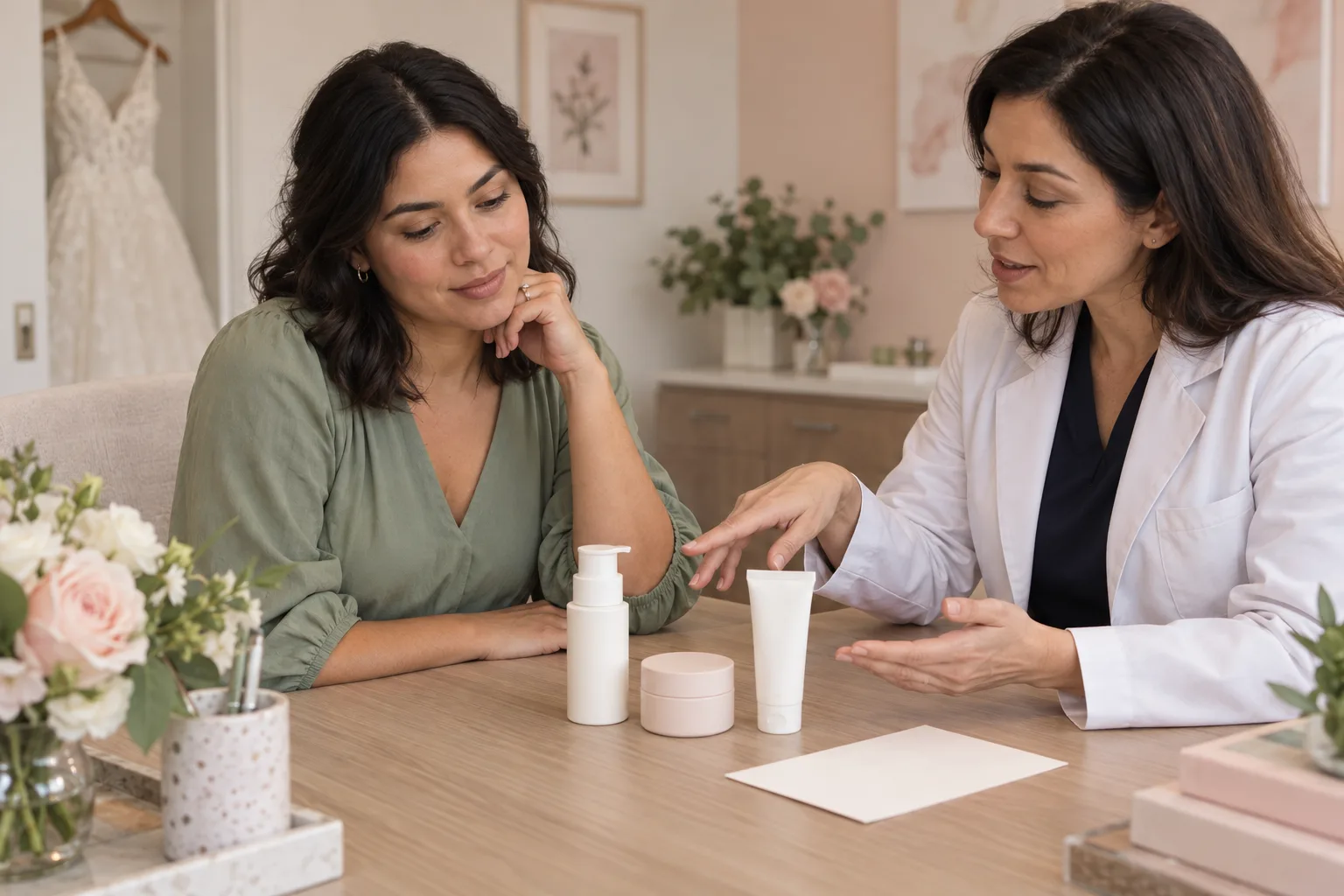
If your face burns when you cleanse, develops recurring bumps or changes color for long periods, book an assessment before adding another wedding skin-care product. Bring the products you use, photographs of intermittent symptoms and the dates of your makeup trial, ceremony and honeymoon.
Describe symptoms across your skin and eyes
AAD explains that a dermatologist diagnoses rosacea through skin and eye examination and questions about symptoms that may come and go. Testing is sometimes needed to rule out another condition. [1]
Write down when symptoms started, where they occur and what they feel like. Include burning, stinging, bumps and the duration of color changes. Bring photographs that show episodes the clinician may not see during the visit.
Rosacea does not have to look bright red. AAD's overview notes that affected skin may look brown or violet in darker skin tones. [2] Describe warmth and discomfort even if a color change is difficult to photograph.
List prescriptions, nonprescription skin care, supplements and earlier procedures. Tell the clinician about pregnancy, breastfeeding or plans to conceive so any proposed treatment can be assessed appropriately.
Ask what diagnosis has been made and which symptoms should prompt another assessment. Do not treat every new rash as an expected rosacea flare or assume a makeup artist can diagnose it.
Give each treatment a defined purpose
AAD describes different approaches for persistent facial color, acne-like bumps and visible blood vessels. It identifies brimonidine gel and oxymetazoline cream as options for temporary reduction of persistent color, while other treatments target inflammatory bumps. [1]
Ask which concern the clinician is treating and how you will judge response. A cream that addresses bumps should not automatically be expected to remove every visible vessel or prevent every episode of flushing.
Discuss how the treatment fits into your existing routine, what irritation can occur and when to report it. If a prescription is proposed, ask for the exact product, application instructions and follow-up date.
For topical treatment of acne-like bumps, AAD says a noticeable difference commonly takes two to three months. [1] That is a general treatment estimate, not a guarantee that your skin will reach a particular appearance by the ceremony.
If the wedding is soon, ask what can be assessed and managed within the available time. Leave room to continue care after the wedding rather than stacking treatments to meet a photograph date.
Read a prescription result by its measured outcome
Epsolay provides one example. Its U.S. label covers inflammatory rosacea lesions in adults and describes two randomized, double-blind, vehicle-controlled trials with 733 participants treated for twelve weeks. [3]
At week twelve, investigator-rated success was 47.4% versus 20.7% in one trial and 49.2% versus 28.2% in the other. Success meant clear or almost-clear status with at least a two-grade improvement. [3]
Those figures concern the trial's rosacea assessment, not flawless makeup, freedom from flushing or certainty for an individual bride. The comparator was vehicle cream, not another active rosacea medicine.
AAD describes this prescription as microencapsulated 5% benzoyl peroxide, designed to release the ingredient gradually. [1] Do not substitute an ordinary acne product on the assumption that the ingredient name makes the formulations interchangeable.
The label warns about irritation, serious hypersensitivity and sunlight sensitivity, and says the cream may bleach hair or colored fabric. [3] If prescribed, discuss these issues with your clinician alongside wedding clothing, skincare and travel plans.
Follow the label and prescribing instructions. Seek immediate medical help for a serious allergic reaction, such as breathing difficulty or facial or throat swelling. [3]
Make the routine tolerable before adding coverage
AAD's rosacea skin-care guide recommends a mild cleanser, gentle fingertip cleansing, moisturizer and sun protection. It advises avoiding scrubbing, rubbing and exfoliation, and choosing fragrance-free products. [4]
Bring ingredient lists or product photographs to the appointment. Ask which products to keep, which to stop and how prescriptions should be layered. Do not copy an entire routine from someone whose symptoms and medicines differ.
Keep track of how a new product feels. If it stings or burns, report that response rather than assuming discomfort proves it is working.
Ask how to distinguish expected effects from a reaction that needs treatment changes. For prescribed medicines, get instructions from the relevant clinician instead of adjusting frequency to fit makeup appointments.
Agree on a cleansing method that removes the planned wedding makeup without scrubbing. Tell the makeup artist which products or techniques the clinician has asked you to avoid.
Test sunscreen as part of the makeup plan
AAD recommends shade, protective clothing and broad-spectrum, water-resistant SPF 30 or higher sunscreen for rosacea. Its guide suggests looking for zinc oxide or titanium dioxide and no fragrance if sunscreen irritates your skin. [4]
Bring the sunscreen you intend to use to the makeup trial. Check comfort, application, the appearance in photographs and compatibility with the agreed base.
Ask the clinician and artist how to handle your routine on the morning of the wedding. If a prescription changes sun precautions, take those instructions into account for outdoor portraits and honeymoon activities.
Put shade and an indoor cooling place into the venue schedule. Confirm where you can wait before portraits instead of standing in direct sun while a group is assembled.
The sunscreen and makeup-trial guide provides a separate checklist for product wear and reapplication questions.
Use your observations to adjust the day
NHS lists possible triggers including hot drinks, temperature changes, sunlight, alcohol, spicy foods, exercise and stress. [5] Discuss what you have noticed rather than assuming every item affects you equally.
If a hot room tends to bring on symptoms, ask about ventilation, an indoor waiting area and the timing of photographs. Tell the planner the practical change you need.
If a particular drink has repeatedly caused discomfort, arrange an alternative you enjoy. A toast can use your preferred nonalcoholic drink without requiring a public explanation.
Keep a short symptom note if the clinician recommends it. Record what happened and the circumstances, without making the wedding meal depend on a growing list of unconfirmed food restrictions.
Plan a calm place to step away if you need it, and tell one helper where that is. No one needs to monitor your facial color throughout the reception.
Give the trial a comfort and removal test
AAD says green-tinted concealer can camouflage redness and yellow-tinted concealer can help with discoloration across skin tones. It also warns that cosmetics can irritate rosacea-prone skin. [4]
Describe your preferred coverage and tell the artist where your skin tends to sting. Test the proposed products before the wedding and keep a record of the exact items used.
Discuss application pressure, tools and removal. A trial that looks good for a photograph still needs to feel comfortable as you wear it.
If the treatment plan changes after the trial, update the artist. Ask whether the makeup or preparation needs another check. Avoid substituting a new exfoliating prep because the skin looks textured on the day.
The makeup-hygiene guide covers the separate questions about clean tools, product dates and personal touch-up supplies.
Bring eye symptoms forward
NHS advises urgent assessment when someone with rosacea has eye pain, blurred vision, light sensitivity, a red eye or a gritty feeling, because these can indicate keratitis. [5]
Use appropriate urgent medical services where you are. Do not wait for the makeup trial to ask whether eye symptoms can be covered or worked around.
Tell the treating professional about planned contact lenses, lash adhesives and eye cosmetics. Ask what you should avoid while the symptoms are assessed.
Keep any eye-treatment instructions distinct from facial skin treatment. Ask the clinician to clarify which product goes where, and keep follow-up arrangements accessible during wedding travel.

Physical Book (No Download)
Bridegenic: The Glow-Up Guide for Brides on GLP-1s
$12.95 + Free Shipping
Order NowThis article provides general education, not a diagnosis or an individual treatment plan. Medication information refers to US sources. Talk with your prescriber, pharmacist or dermatologist about decisions for your care.
Read next
Face & SkinWedding Makeup Hygiene: Brushes, Products and Touch-Ups→Face & SkinSunscreen Under Wedding Makeup: What to Test Before Outdoor Photos→Sources
- Rosacea: Diagnosis and treatment, April 3, 2024American Academy of Dermatology↩ Back to text
- Rosacea: OverviewAmerican Academy of Dermatology↩ Back to text
- Epsolay prescribing information, revised February 2025; DailyMed listing August 11, 2025Mayne Pharma; DailyMed↩ Back to text
- 7 rosacea skin care tips dermatologists recommendAmerican Academy of Dermatology↩ Back to text
- RosaceaNHS↩ Back to text