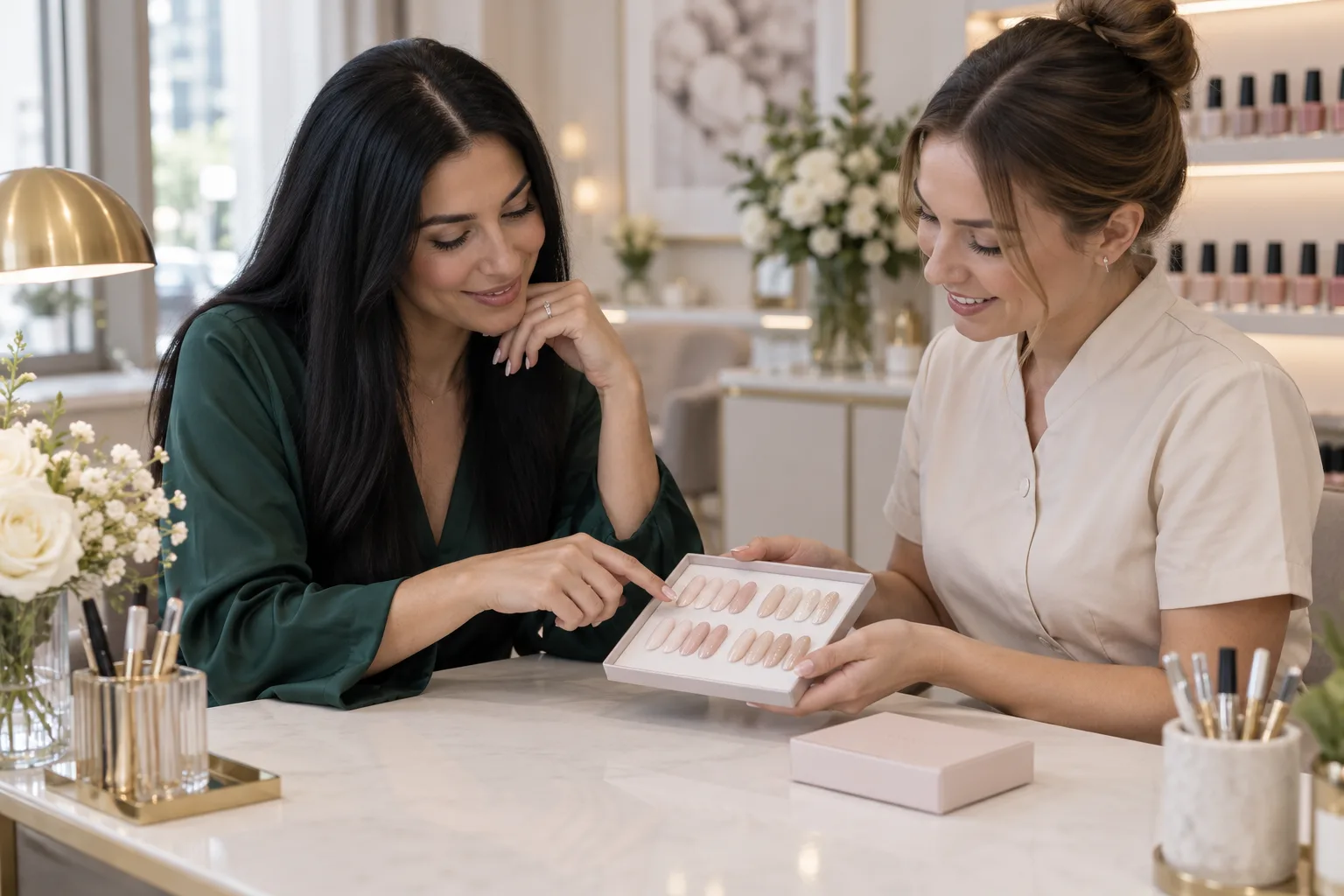
Press-on nails need a plan for the adhesive as well as the shape. Before the wedding, identify the exact attachment product, read its warnings and understand removal. Keep that record available if a nail loosens or your skin reacts.
Identify what holds the nail in place
Ask whether the set uses liquid nail glue, adhesive tabs, a lamp-cured attachment product or another system. Write down the manufacturer and full product name for each component. A photograph of the finished manicure cannot identify its chemistry.
FDA advises reading nail-product labels and warnings, keeping good ventilation and recognizing that some products can cause infection, allergic reactions or injury if they enter the eyes. [1]
For U.S. retail cosmetics, FDA describes ingredient-list requirements. Salon-only products can have different ingredient-label obligations, so ask the technician for the exact product information rather than assuming a missing retail-style panel identifies what is inside. [1]
Keep the packet or bottle, directions and ingredient information together. Include any primer, prep product and remover, not only the adhesive.
If a seller substitutes a different glue with the same nail design, review the new directions before use. Do not treat the design name as approval of every attachment product supplied with it.
Take cyanoacrylate and fabric warnings seriously
In March 2021, the French health agency ANSES described serious burns from nail-glue spills and explained the mechanism: cotton or wool can accelerate cyanoacrylate polymerization, producing rapid heat that burns the skin beneath the fabric. [2]
The report followed two serious pediatric cases reported by French poison centres in November 2020 and also discussed published cases, including an adult injury. [2] These reports demonstrate a hazard; they do not provide a burn rate for wedding manicures.
Check whether the adhesive contains a cyanoacrylate and read its textile and spill warnings. Do not use a cotton ball or a preparation robe to wipe up wet glue. Keep towels, clothing and other fabrics out of the handling area, following the product's directions.
Apply only in a stable, designated place with the required equipment ready. A crowded dressing table beside curling tools and robes is a poor location for an improvised repair.
ANSES also advises keeping these products out of children's reach and not leaving them unattended. [2] Close and store the bottle after use; a small travel size still needs secure handling.
If a spill heats up, contacts clothing or bonds skin, obtain immediate poison-centre or medical advice and follow the product's emergency directions. Do not pull bonded skin apart. Tell the professional whether fabric is involved and provide the container. ANSES advises immediately applying cold soapy water after splashes to limit burn injury. Obtain medical advice for the exposure. [2]
Keep irritation and allergy in the assessment
The British Association of Dermatologists distinguishes irritant contact dermatitis from allergic contact dermatitis. They can look similar. Allergic reactions can appear hours or days after contact, and inflamed skin can look purple, brown or grey as well as red, depending on skin tone. [3]
Record itching, burning, swelling, blistering, peeling and where the changes occur. Take photographs and note the time of application, removal and symptom onset. Tell the clinician about products used elsewhere on the hands too.
BAD's artificial-nail warning concerns sensitization from uncured (meth)acrylate products contacting skin and from insufficient curing. [4] The cyanoacrylate heat hazard discussed above is a different mechanism. Neither observation establishes which ingredient caused your particular reaction.
If you have reacted to gel, acrylics, nail glue or adhesive tabs, bring the known allergen report and current labels to a dermatologist. Do not assume that changing from gel to press-ons removes every relevant ingredient.
BAD explains that specialist patch testing can help identify the allergen and guide avoidance. [3] Do not create a home allergy test by putting raw glue or uncured nail product on your skin. Arrange the assessment before deciding which alternative, if any, is suitable.
If you receive an allergy diagnosis, keep the allergen names with your medical record. BAD notes that related methacrylates have medical and dental uses. [4] Tell treating professionals the diagnosed substances without assuming that every future treatment is prohibited.
Get removal instructions before application
Ask which removal method belongs to the exact system and who should carry it out. Read the manufacturer's directions before the first application. Purchase only the intended products and check their warnings too.
The American Academy of Dermatology warns that covering brittle, soft or damaged nails with artificial nails can worsen existing problems. Its guidance also distinguishes artificial-nail products by preparation and removal method. [5]
Do not use a soak-off timetable from a different manicure, pry off an attached nail to save time or add household adhesive after a loss. If you cannot follow the intended removal method, contact the technician or manufacturer for advice.
If there is a burn, rash, bonded skin or eye exposure, seek medical or poison-centre guidance rather than treating it as ordinary cosmetic removal. Tell the professional what has already been applied, including any solvent.
Ask how to handle a nail that loosens during the ceremony or reception. A planned cosmetic fallback can be a shorter, simpler manicure or a photograph arrangement that does not require an immediate repair.
Try the practical tasks before the wedding
Choose a length and shape that let you handle the things you need. At a suitable trial, try the dress fastenings, jewelry clasp, phone keyboard and medicine packaging you normally use.
AAD advises against using nails as tools, such as to open cans, and against removing cuticles. It recommends seeing a dermatologist if nails change, swell or hurt. [6]
Ask a helper to open difficult packaging instead of prying with an extension. Keep the care team's instructions for medical devices and supplies unchanged.
Record how the trial feels during ordinary tasks and removal. A comfortable trial does not prove you cannot develop a later allergy. If symptoms occur, stop the cosmetic plan and obtain advice.
For a lamp-cured manicure, the gel-manicure guide covers the separate questions about curing systems, UV exposure and nail care. Do not use a generic lamp or timing rule for a product that requires its own system.

Physical Book (No Download)
Bridegenic: The Glow-Up Guide for Brides on GLP-1s
$12.95 + Free Shipping
Order NowThis article provides general education, not a diagnosis or an individual treatment plan. Medication information refers to US sources. Talk with your prescriber, pharmacist or dermatologist about decisions for your care.
Read next
Face & SkinGel Manicures Before the Wedding: Skin Reactions, Lamp Exposure and Removal→Dress & FittingsWedding Jewelry and Skin Reactions: Nickel, Rings and Metal Labels→Sources
- Nail Care ProductsU.S. Food and Drug Administration↩ Back to text
- Nail Glues: Risk of Severe Thermal Burns, VigilAnses 13, March 2021French Agency for Food, Environmental and Occupational Health and Safety, ANSES↩ Back to text
- Contact Dermatitis, updated June 2025British Association of Dermatologists↩ Back to text
- Artificial Nails Warning and At-home Kits, published April 2023, modified January 2024British Association of Dermatologists↩ Back to text
- Artificial Nails: Tips for Reducing Nail DamageAmerican Academy of Dermatology↩ Back to text
- 11 Dermatologists Tips for Healthy NailsAmerican Academy of Dermatology↩ Back to text