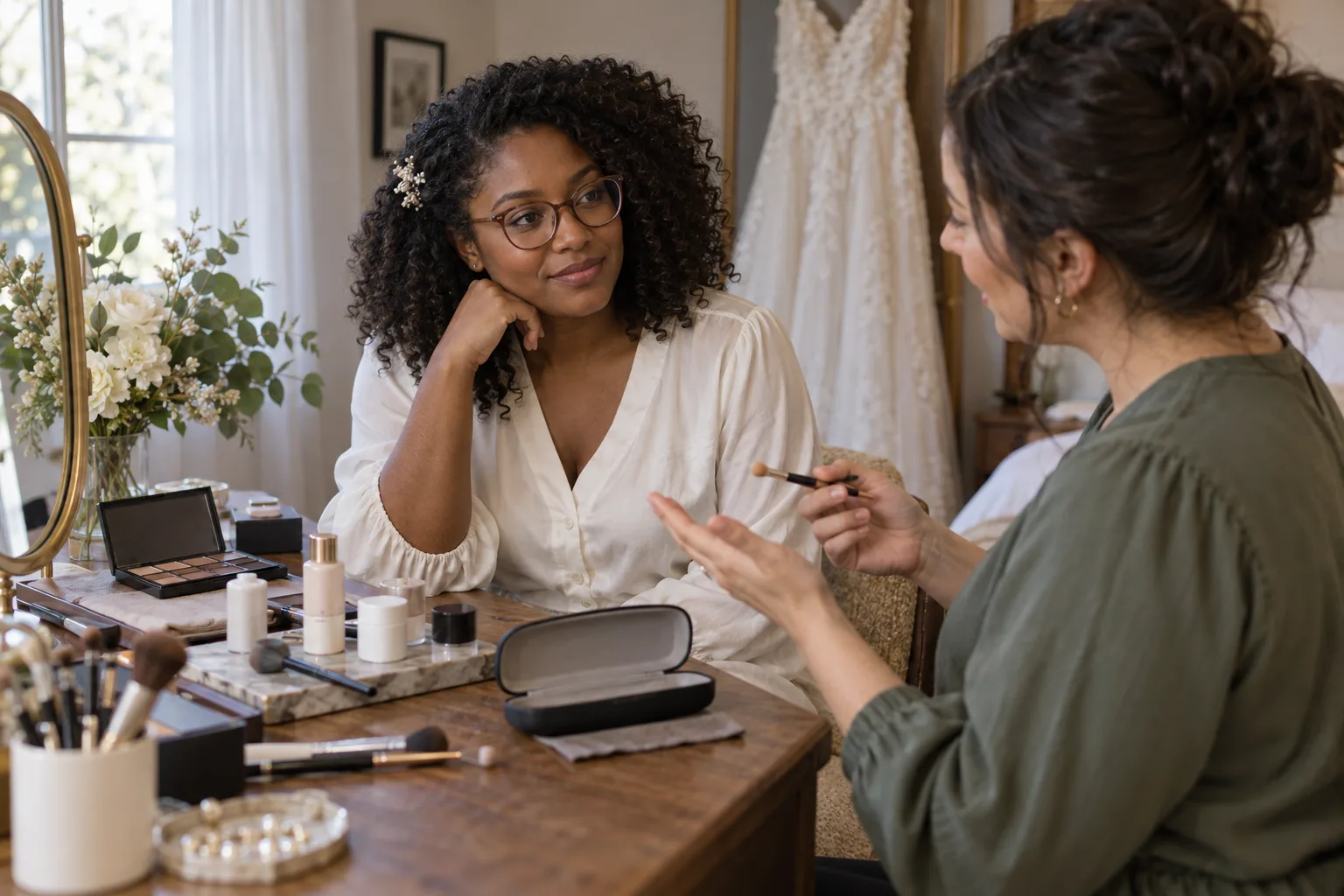
If your eyes sting, feel gritty or become uncomfortable during the makeup trial, record what happened and arrange advice before repeating the application. Include contact lenses, eye drops, sprays and the room conditions in that review. Give the makeup artist any clinical instructions before the wedding morning.
Describe the symptoms and their timing
The National Eye Institute explains that dry eye can result from too few tears or tears that do not work properly. Possible symptoms include scratchiness, stinging, burning, redness, light sensitivity and blurred vision. [1]
The NHS also lists eyes watering more than usual among possible dry-eye symptoms. [2] Watering does not by itself tell you which condition or product is responsible.
For the appointment, note whether symptoms affect one or both eyes, when they started and what makes them better or worse. Describe contact-lens wear, screen time, medicines and products applied near the eyes.
Bring the exact drop bottles and lens details, or clear photographs of the labels. Include anything recently changed, even if it was bought for travel or recommended by a friend.
NEI says assessment may include the amount of tears, how quickly they dry and the eyelid structure. Treatment depends on the cause. [1] Do not choose treatment solely from a photograph of a red eye.
If you suspect a prescribed medicine contributes, discuss it with the prescriber. The NHS advises against stopping a prescription without medical advice. [2]
Ask about the exact eye-drop product
NEI describes artificial tears as a common treatment for mild dry eye, with gels, ointments and prescription options also used depending on the situation. [1] Ask which product and routine are appropriate for you.
Have the pharmacist or clinician explain the intended purpose, frequency, storage, expiry and discard instructions after opening. Check whether the directions differ between a bottle and individual containers.
Ask about contact-lens compatibility and any required removal or waiting interval. If several eye medicines are prescribed, ask how to arrange them together.
Write the instructions with the product name. Do not use a timing rule from another bottle or add extra doses simply because photographs are about to begin.
Tell the professional if you cannot use the container comfortably. Ask for a demonstration with the product's instructions rather than practicing during a rushed preparation session.
Keep the original labeled container in the wedding kit. Do not transfer drops into a smaller cosmetic bottle to save space.
Keep the bottle tip away from surfaces
FDA says medicines used in the eyes must be sterile. It advises washing hands with soap and water before applying drops and avoiding contact between the bottle tip and the eye, hands, clothing or other surfaces. [3]
Arrange a clean place to use the drops. Ask your helper to hand you the labeled product and give you time to follow the directions.
If the tip touches a surface or you are unsure how a container has been handled, ask the pharmacist what to do. Do not wipe it with a makeup cloth and assume it is suitable to continue using.
FDA advises stopping an eye-drop product and speaking with a doctor for problems such as discharge, pain, vision changes or discomfort during use. [3] Keep the bottle and packaging available so the product and lot can be identified.
Check current FDA alerts if you have a product concern. A historical recall affecting one product or lot does not establish the status of every bottle sold under a brand.
FDA warns against unapproved eye products, including homeopathic drops and drops claiming to change iris color. [3] Ask about a safe, suitable treatment for the actual eye problem rather than relying on a cosmetic promise.
Make glasses part of the plan
FDA advises contact-lens users to keep backup glasses with a current prescription and consult their eye-care professional before using medicines or topical eye products, including those sold without a prescription. [4]
The NHS suggests removing contact lenses and wearing glasses to rest the eyes when they feel dry. [2] Ask your eye-care professional how that applies to your symptoms and when lens wear may resume.
Keep glasses accessible during preparation and portraits. Let the photographer know you may use them so the plan does not depend on wearing uncomfortable lenses.
For a trial that your eye-care professional considers suitable, use the prescribed lenses and intended products. Record when discomfort begins and tell the clinician if the problem recurs.
FDA advises applying aerosol products before inserting lenses, applying cosmetics after inserting them and removing lenses before taking off makeup. [4] Review that sequence with the hair and makeup team.
The wedding contact-lens guide covers prescriptions, cleaning and water exposure. A comfortable appearance in one photograph does not assess eye health.
Change a trial that irritates the eyes
FDA advises stopping an eye cosmetic immediately if it causes irritation, and seeing a doctor if irritation continues. It also advises avoiding eye makeup during an eye infection or when skin around the eye is inflamed, until the area has healed. [5]
Tell the artist which product was being used and when symptoms began. Keep a record of the product, tools, adhesive if any and removal method for your clinical review.
Ask the eye-care professional about restrictions before booking another lash application or repeating the full trial. Give the artist those instructions rather than asking them to diagnose the symptoms.
Agree on a simpler option if eye makeup needs to be reduced or omitted. The photographer can plan around that choice while the clinical issue is addressed.
FDA advises using only cosmetics intended for the eye area, clean tools and no sharing of eye cosmetics. [5] The makeup hygiene guide provides questions for the professional setup.
Do not test a new product while an eye problem remains unresolved simply to preserve the original wedding look.
Check the preparation room and portrait location
NEI suggests avoiding smoke, wind and air conditioning that aggravate symptoms, taking screen breaks and considering wraparound sunglasses outdoors. [1]
During the venue visit, check whether a fan or cooling vent points toward the preparation chair. Ask whether you can sit elsewhere without losing a suitable place for makeup.
For portraits, discuss an indoor or sheltered option if wind is a problem. Keep your glasses and prescribed products with you rather than in a bag sent back to the room.
Ask for short breaks during a long preparation appointment. Tell the artist when symptoms begin so the application can stop for appropriate advice.
For the honeymoon, consider flights, air-conditioned rooms, dusty excursions and extended screen use when discussing your routine with the eye-care team. Obtain instructions for the products you will actually pack.
Get help for red flags
The NHS advises urgent assessment for a painful red eye or a red eye in someone who wears contact lenses, because infection may be involved. [2]
It directs changes such as flashing lights, wavy lines or loss of vision, pain when looking at light, or a red eye with severe headache and sickness to emergency care. Eye injury or something stuck in the eye also needs emergency assessment. [2]
Use the appropriate local service and do not drive yourself when emergency care is needed. Do not continue applying makeup or insert lenses to conceal the problem.
Although light sensitivity and blurred vision can occur with dry eye, new or concerning symptoms need assessment. An earlier diagnosis does not establish the cause of a new episode.
Share the care contact with your partner and coordinator. They can rearrange photographs and transport while you obtain help.

Physical Book (No Download)
Bridegenic: The Glow-Up Guide for Brides on GLP-1s
$12.95 + Free Shipping
Order NowThis article provides general education, not a diagnosis or an individual treatment plan. Medication information refers to US sources. Talk with your prescriber, pharmacist or dermatologist about decisions for your care.
Read next
Face & SkinWedding Makeup Hygiene: Brushes, Products and Touch-Ups→Face & SkinColored Contact Lenses for Wedding Photos: Fitting, Makeup and Backup Plans→Sources
- Dry Eye, updated August 6, 2025National Eye Institute↩ Back to text
- Dry Eyes, reviewed January 6, 2025NHS↩ Back to text
- What You Should Know about Eye DropsU.S. Food and Drug Administration↩ Back to text
- Everyday Eye Care: Contact LensesU.S. Food and Drug Administration↩ Back to text
- Eye Cosmetic SafetyU.S. Food and Drug Administration↩ Back to text