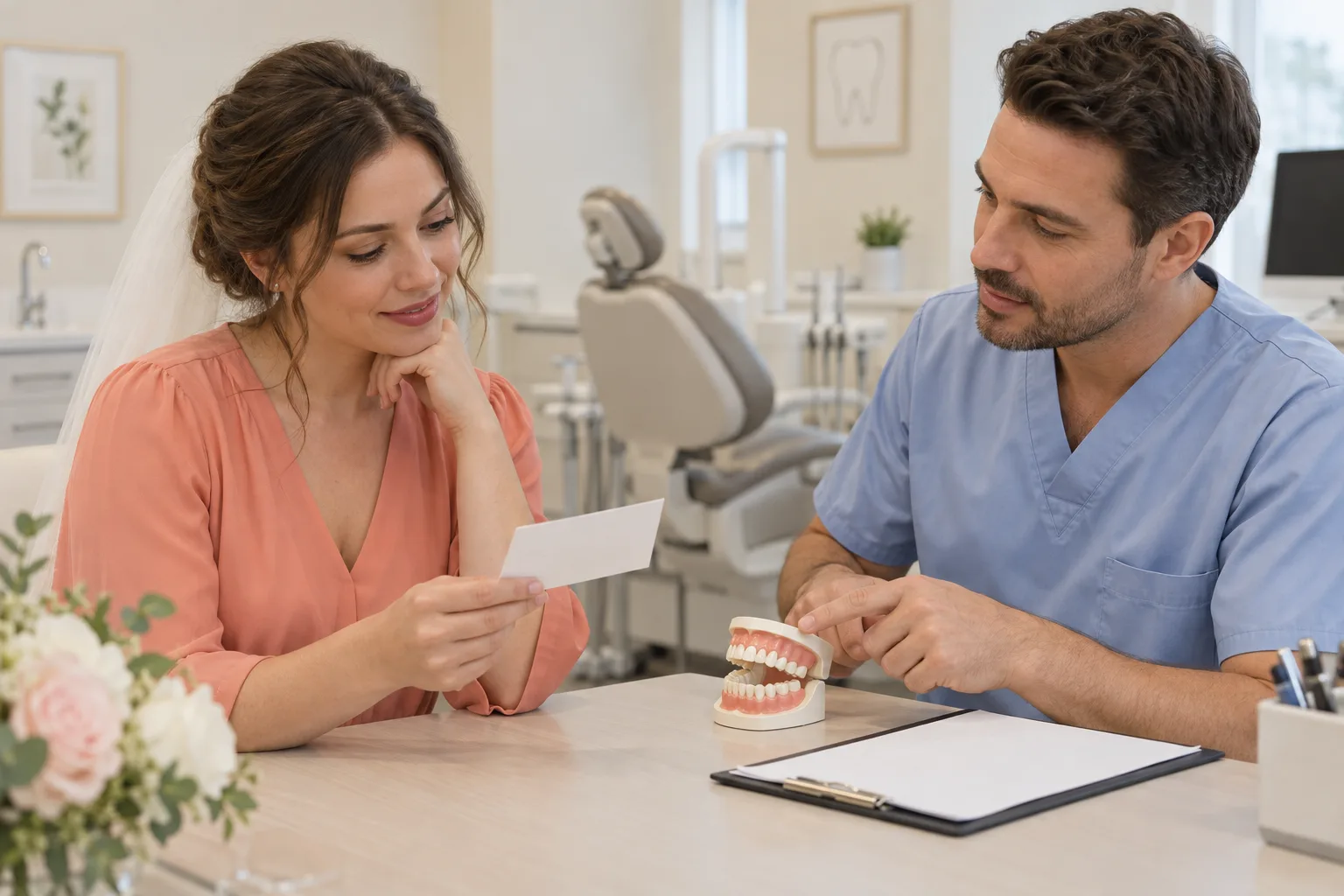
If a tooth hurts before the wedding, contact a dentist and describe the symptoms and travel dates. Ask what needs treatment, whether further appointments are expected and how to obtain help if symptoms return away from home. A pain-free afternoon after taking medicine does not establish that the cause has been treated.
Describe the problem when requesting care
NHS advises seeing a dentist for toothache lasting more than two days, pain not relieved by painkillers, or pain accompanied by fever, biting pain, red gums, a bad taste or cheek or jaw swelling. [1]
Explain when the pain began, whether it is constant and what brings it on. Mention a broken tooth, recent treatment, a lost filling or any change in swelling. Give the date you leave for the wedding location or honeymoon.
Ask the dental practice how urgently you should be seen. If symptoms change while you wait, contact it again with the new information. Do not interpret a two-day review point as a reason to wait through severe symptoms.
Bring your medicine list, allergies, relevant medical history and details of earlier dental work. Tell the dentist if you are pregnant, breastfeeding or planning pregnancy.
Ask for the diagnosis and proposed treatment in plain language. Record whether the visit is intended to provide temporary care, complete the treatment or begin a course that requires another appointment.
Treat a suspected abscess as urgent
NHS describes a dental abscess as pus caused by infection in the teeth or gums. It says an abscess needs urgent dental treatment and will not resolve on its own. Symptoms can include intense pain, swelling, a bad taste, difficulty chewing or fever. [2]
Call a dentist promptly if you think this is happening. Ask where to obtain urgent dental care if your usual practice is closed or cannot see you.
Do not wait until after the reception because a swelling has become less painful. Tell the dentist what changed and follow the assessment and treatment instructions.
NHS explains that treatment may involve drainage, root canal treatment or removal of a tooth, depending on the cause. [2] Ask which approach is proposed for your situation and what follow-up is needed.
Do not try to drain swelling yourself or use another person's antibiotics. The appointment needs to establish what is happening and how it should be treated.
Ask what an antibiotic would accomplish
ADA's antibiotic guideline recommends dental treatment rather than antibiotics for most specified pulpal and periapical conditions in adults who are not severely immunocompromised. It identifies systemic involvement, such as fever or malaise, as a reason antibiotics may be indicated. [3]
This guidance concerns particular diagnoses. Treatment decisions also depend on your health and access to prompt dental procedures. It should not become a blanket rule that every dental infection needs antibiotics or that none do.
Ask the dentist whether an antibiotic is needed, what it is intended to address and which dental treatment is still required. If prescribed, get the exact instructions, expected review and symptoms needing contact.
A prescription should not be treated as confirmation that it is fine to postpone the rest of the work until after a long trip. Ask the dentist explicitly about the remaining treatment and your travel dates.
Tell the practice about any antibiotic allergy or earlier reaction. Keep the prescription record available if another clinician needs to assess you away from home.
Get a temporary pain plan that fits your history
ADA's living-guideline toothache page, with an evidence search through July 2026, describes NSAIDs such as ibuprofen or naproxen, alone or with acetaminophen, as effective options for temporary pain management when dental care is not immediately available. [4]
Ask a dentist or pharmacist which option is appropriate for you. Share other medicines and health conditions, and ask about pregnancy, stomach, kidney, liver, bleeding or hydration concerns as relevant.
Write down the dose, interval, maximum amount and duration you have been told to use. Check active ingredients in combination products so you do not unintentionally duplicate a pain medicine.
Follow those directions. Relief does not replace the dental appointment, and taking extra medicine to get through photographs is not a treatment plan.
ADA's emergency advice specifically says not to put aspirin against the painful tooth or gum. [5] Do not pack an improvised chemical or crushed tablet into the area.
If dental treatment will involve sedation and you take a GLP-1 medicine, tell the dental and anesthesia teams. The sedation-planning guide can help organize the discussion; obtain fasting and medicine instructions from your team.
Know when the situation needs emergency medical care
NHS toothache guidance calls for emergency assessment when swelling affects the eye or neck, or mouth or neck swelling makes breathing, swallowing or speaking difficult. [1]
Its abscess guidance also identifies a swollen or painful eye, sudden eyesight problems, extensive mouth swelling or difficulty opening the mouth as emergency concerns. [2]
Use the appropriate emergency service where you are. Do not remain at a photo appointment, venue or hotel waiting for a routine dental callback when emergency symptoms are present.
Do not drive yourself to emergency care. Bring the medicine list and any recent dental instructions, and tell the medical team what treatment or medicine you have already received.
Ask one helper to handle transport or contact the venue while you obtain care. The task for that person is practical assistance, not deciding whether a serious symptom is probably harmless.
Have a response for a damaged or knocked-out tooth
ADA advises prompt dental care for dental emergencies. For a cracked tooth, its first-aid guidance recommends a warm-water rinse and a cold compress on the face for swelling. [5]
For a knocked-out permanent adult tooth, ADA says to keep it moist, avoid touching the root and get to a dentist immediately. Milk or an appropriate tooth-preservation product are options if the tooth cannot be replaced in its socket. [5]
Call the emergency dental service for instructions while arranging immediate care. Keep it moist and do not delay the call while searching for a cosmetic repair.
ADA also advises against using teeth to cut things and against chewing ice, hard candy or popcorn kernels. [5] Put scissors in the getting-ready supplies so ribbon and packaging do not become a dental task.
For a loose crown or filling, describe the problem to the dentist and ask what to do with the piece and how soon it needs assessment. Do not use household glue for a wedding-morning repair.
Record follow-up before leaving the practice
Ask whether temporary dental work needs replacement, how to care for the area and which symptoms should prompt a call. Confirm any eating or drinking instructions for your particular procedure.
Show the dentist the honeymoon departure date and planned activities. Ask whether another review is needed before travel, and what information to carry if a dentist elsewhere must assess the tooth.
Request the practice's out-of-hours instructions. Identify an urgent dental contact near the wedding location and ask how appointments are arranged and paid for.
For international travel, check your policy's dental benefit and exclusions with the insurer. The honeymoon insurance guide can help organize benefit and payment questions. Do not assume a medical benefit automatically includes the dental work you need.
Keep recent treatment details, contacts and your current medicine list accessible offline. Tell your partner where the information is stored.

Physical Book (No Download)
Bridegenic: The Glow-Up Guide for Brides on GLP-1s
$12.95 + Free Shipping
Order NowThis article provides general education, not a diagnosis or an individual treatment plan. Medication information refers to US sources. Talk with your prescriber, pharmacist or dermatologist about decisions for your care.
Read next
Honeymoon & BeyondHoneymoon Travel Insurance: Medical Care, Evacuation and Cancellation→Wedding WeekGLP-1 Medicines Before Anesthesia or Sedation: A Prewedding Procedure Checklist→Sources
- Toothache, reviewed July 1, 2024NHS↩ Back to text
- Dental abscess, reviewed March 18, 2026NHS↩ Back to text
- Antibiotics for Dental Pain and Swelling Guideline, 2019American Dental Association↩ Back to text
- Acute Pain Management: Toothache; last evidence search July 2026American Dental Association living guideline↩ Back to text
- Dental EmergenciesAmerican Dental Association, MouthHealthy↩ Back to text