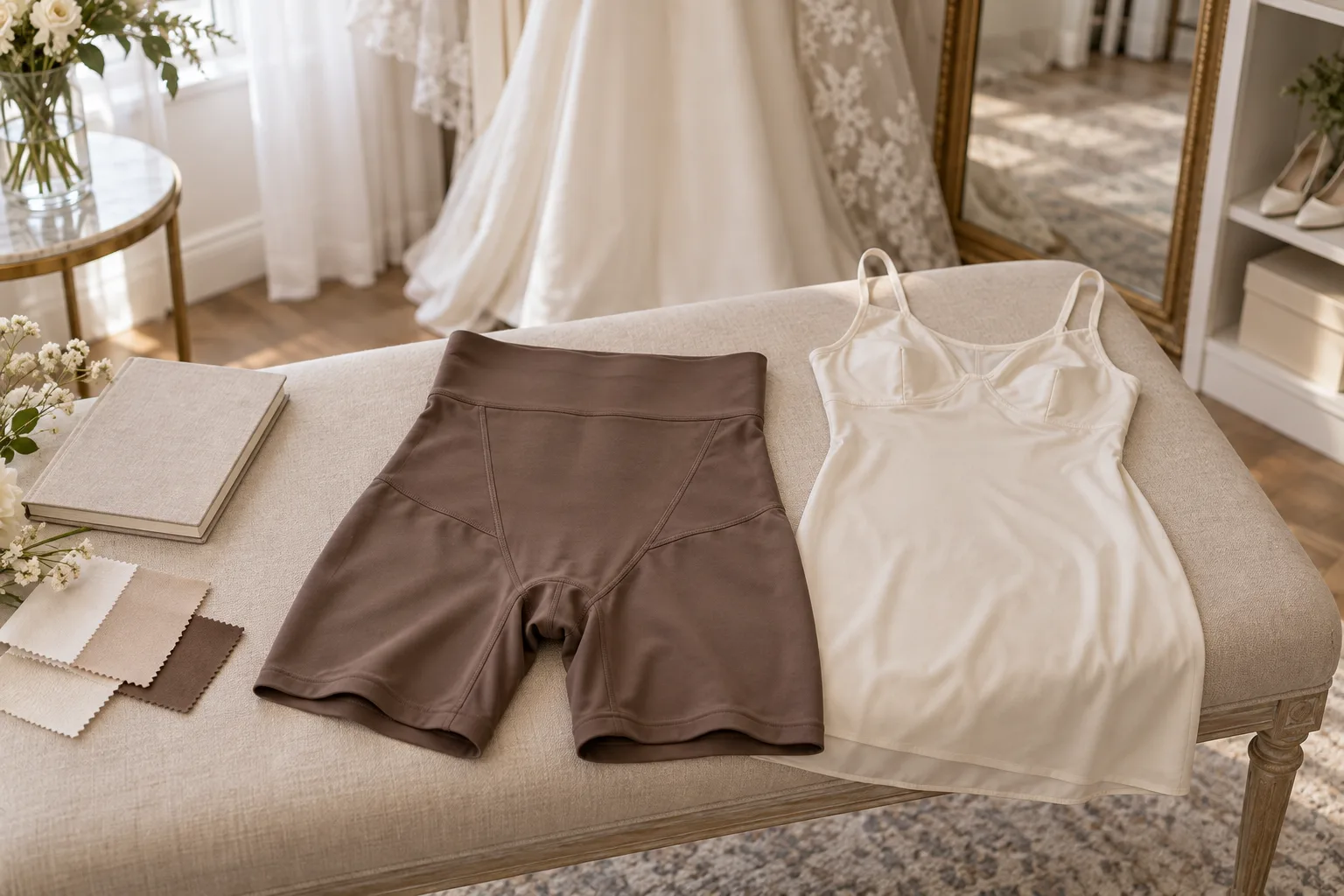
Shapewear changes what sits between your body and the dress. That can affect the waistband, seams, skirt movement and bathroom routine as well as the appearance in a mirror. Bring the intended undergarment to the fitting and test it while sitting and moving before the dress alterations are finished.
Name the clothing problem you want to solve
Decide whether you want less visible underwear stitching, a different fabric surface under satin, support or reduced thigh friction. Those are different requests. A slip, a different brief or a garment adjustment may answer one without adding a tightly compressive layer.
Take the chosen option to the alterations appointment, along with the intended shoes. Ask the specialist to check where its upper and lower edges fall relative to the dress seams, waist and slit.
Check the back and side views in the lighting available, with permission for photographs. A smooth front view can hide a rolling waistband or an edge that shows when you turn. Inspect the dress after walking, not only immediately after someone straightens it.
Use your current measurements and the maker’s chart. Ask the retailer how that model should fit and read its fitting and return terms before removing hygiene protection or wearing it for a trial.
Make the fitting a movement test
Sit in a chair similar in height to a dining chair. Check the waistband, groin and leg openings while seated, then stand without someone pulling the garment back into place. Notice whether it rolls or bunches when the dress is over it.
Walk, turn, reach and try the steps relevant to your venue. Test bending enough to manage the hem and getting into the position needed for transport. Ask for help with the gown when needed rather than risking a fall during the test.
Speak several sentences at your usual volume and check whether you can take a comfortable breath. A zipped dress and a standing photograph do not establish that the full combination will work through vows, dinner and dancing.
Record the exact undergarment and size used at the successful fitting. If you change it later, ask whether another dress check is needed before assuming the replacement behaves identically.
What the reflux evidence does and does not show
A 2017 prospective study included 14 patients with esophagitis or Barrett’s esophagus. Researchers measured reflux with and without a tightly applied weightlifting belt, including after a standardized meal. Abdominal compression increased acid reflux and slowed clearance of refluxed acid. [1]
The experiment used an inflated belt under controlled conditions. It did not test a range of wedding shapewear or establish how many hours a particular garment is safe to wear. The finding supports taking abdominal pressure seriously, especially when reflux is already a concern. [1]
University Hospitals Sussex’s December 2025 reflux guidance advises avoiding tight clothing around the middle. [2] Bring up existing reflux when choosing the outfit, and let your clinician or pharmacist advise about treatment.
During a trial away from the gown, check how the undergarment feels through a usual eating occasion. Do not skip food to make it tolerable. If the combination causes symptoms, reassess it before the final fitting rather than planning to avoid dinner.
The heartburn guide covers meal timing and medicine questions. Do not increase a medicine simply to tolerate a tighter outfit.
Do not dismiss outer-thigh tingling
Mayo Clinic’s July 2026 guidance describes meralgia paresthetica as tingling, numbness or burning pain caused by compression of the lateral femoral cutaneous nerve, which supplies sensation to the outer thigh. Tight clothing, including belts and corsets, can contribute. [3]
Symptoms often occur on one side and can worsen with standing or walking. Mayo advises seeing a healthcare professional for these symptoms; looser clothing is one conservative measure that can help. [3]
Remove a constricting garment if it causes tingling, numbness or burning. Note where the symptoms occurred and whether they continue after removal. Do not keep testing a smaller size to see whether you can get used to it.
That pattern does not establish a diagnosis at a fitting. Other causes need assessment, and the nerve involved in meralgia paresthetica affects sensation rather than muscle function. [3] New weakness or other concerning symptoms should not be attributed to underwear without medical review.
Check edges, heat and skin contact
Cleveland Clinic’s shapewear guidance discusses irritation and possible allergy from garment materials. It advises stopping wear when the skin is irritated, choosing an appropriate size, laundering the garment and avoiding sleep or extremely prolonged wear in it. [4]
After a trial, inspect the waistband, leg edges and any silicone grips. Record itching, soreness or rubbed areas and show the garment’s material information to a clinician if a reaction needs assessment.
Test the exact garment after following its care instructions. Do not add a fragranced spray, adhesive or unfamiliar skin product on the wedding morning to compensate for fit problems discovered earlier.
For thigh friction, the chafing guide discusses comfort measures and when a rash needs advice. A longer short may cover a rubbing area, but it still needs a comfortable waistband and leg openings.
No single number of hours establishes comfort for every person, garment and climate. Arrange an option you can change into if the first choice becomes uncomfortable.
Rehearse the bathroom and changing plan
Check whether you can manage the undergarment’s opening or fastenings while keeping the gown clear of the floor. A feature described as convenient on the package may be difficult to reach beneath a fitted skirt.
Ask the alterations specialist which parts of the dress need lifting or help. Identify a person you are comfortable asking and a bathroom with enough room. Share practical instructions with that person before the event.
Pack the tested alternative undergarment where it can be reached during the reception. Check whether changing it affects the dress support or closure. Keep any assistance instructions with the outfit, not buried in a general vendor email.
If you use prescribed compression or a postoperative garment, follow the treating team’s instructions. Ask before replacing it with fashion shapewear for the wedding. A product’s shaping description does not establish that it serves the same clinical purpose.

Physical Book (No Download)
Bridegenic: The Glow-Up Guide for Brides on GLP-1s
$12.95 + Free Shipping
Order NowThis article provides general education, not a diagnosis or an individual treatment plan. Medication information refers to US sources. Talk with your prescriber, pharmacist or dermatologist about decisions for your care.
Read next
Dress & FittingsWedding Dress Chafing: Check Layers, Seams and Skin Comfort→Dress & FittingsWedding Shoes and Your Dress Hem: A Plan for Comfort at the Final Fitting→Sources
- Mitchell et al. Abdominal Compression by Waist Belt Aggravates Gastroesophageal Reflux, June 2017Gastroenterology, PubMed abstract↩ Back to text
- Advice on Management of Gastro-Oesophageal Reflux, December 2025University Hospitals Sussex NHS Foundation Trust↩ Back to text
- Meralgia Paresthetica: Symptoms and Causes, July 16, 2026Mayo Clinic↩ Back to text
- A Doctor’s Advice on Wearing Shapewear, June 6, 2019Cleveland Clinic↩ Back to text