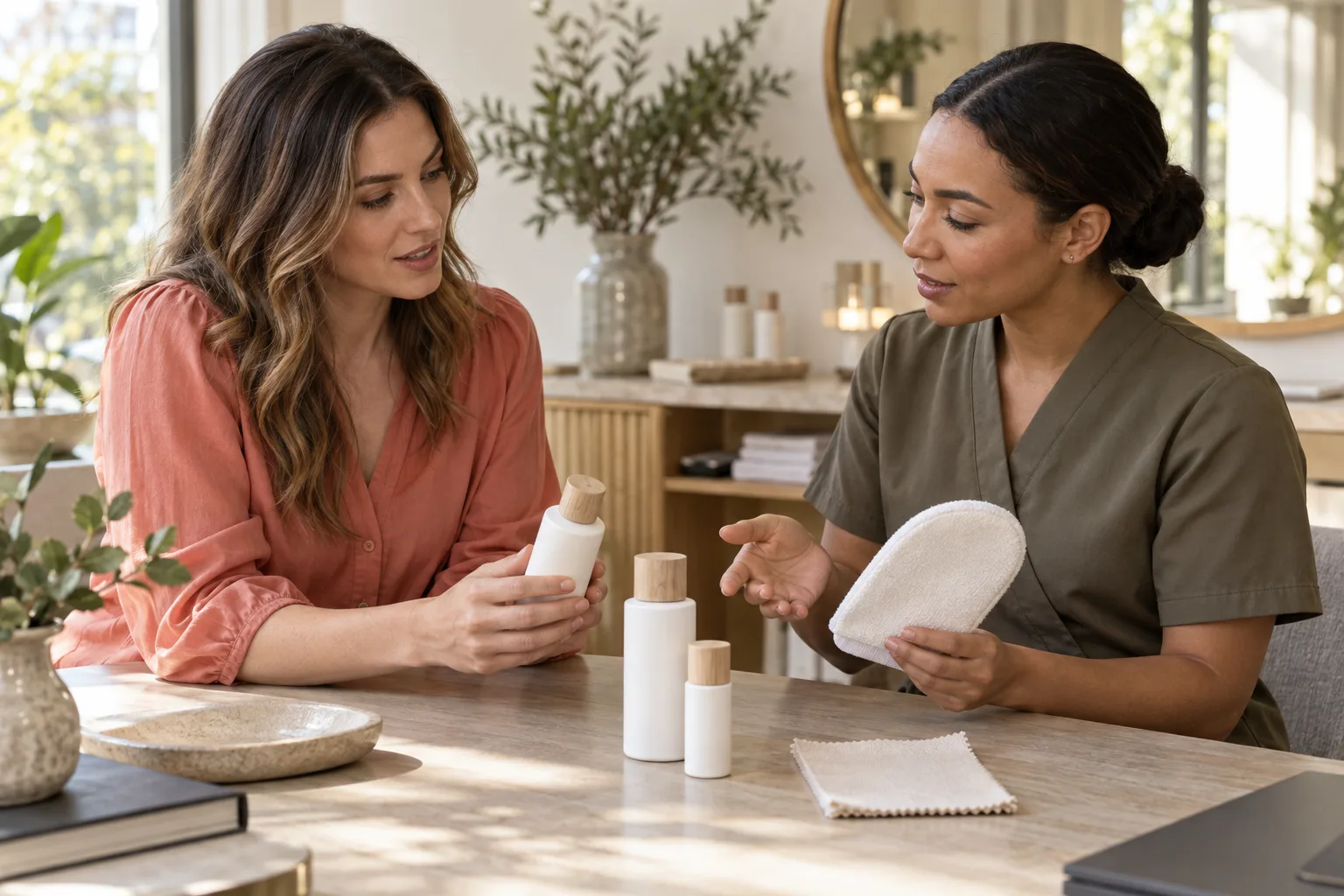
If you want a sunless tan for the wedding, test the exact product and routine before linking the appointment to dress pickup, makeup or travel. Record how your skin feels, when you rinse, when the color develops and whether it transfers onto clothing. The useful trial answers those questions.
Identify what is making the color
FDA explains that dihydroxyacetone, or DHA, darkens the skin by reacting with amino acids at its surface. Products called bronzers can instead be temporary makeup effects that wash off. A name such as “sunless tanner” does not define one formula. [1]
Ask for the exact product and ingredient information. Confirm whether the appointment uses a booth, hand-held spray or a product applied directly to the skin. For home use, keep the package and instructions, including any small-area testing directions.
Tell the provider about previous cosmetic reactions and current skin symptoms. If you have a known allergy, review the ingredient list rather than relying on a description such as natural or gentle. Ask a clinician about an unexplained rash or a previous significant reaction before testing another product.
Decide what you want to see in the trial. A modest change may be easier to coordinate with familiar makeup, but the shade is your choice. You can also decide the extra appointment and aftercare are not worth adding.
Ask the spray provider about exposure
FDA permits DHA for external application, excluding the eye area, lips and surfaces covered by mucous membranes. It has not approved all-over spray-booth use because supporting safety data for those exposure routes have not been submitted. FDA advises asking about protection of the entire eye area and mucous membranes, and prevention of inhalation or ingestion. [1]
Ask those questions before booking, and request the actual method the provider uses. “Close your eyes” does not explain how the full eye area, lips and breathing exposure will be addressed.
Do not assume that a hand-held service answers the exposure questions automatically. Ask the provider to explain its precautions for that method too. If it cannot address them, consider a different application method and review its own directions.
FDA's DHA permission does not mean it has approved an entire cosmetic product or salon service. [1] Keep the product, method and provider's precautions distinct when assessing a claim.
Write down three different times
Ask when the product is dry enough for clothing, when it should be rinsed and when its color should be assessed. Add the instructions about water, sweating and other products to the same record.
One current manufacturer example shows why the distinctions matter. St.Tropez Express Bronzing Mousse directs rinsing after one, two or three hours depending on the selected shade, while color continues developing over eight hours. Its bedding advice says development and removal of excess color help reduce transfer. [2]
Those are directions and claims for that named mousse, not a schedule for another brand or a salon spray formula. They also do not promise that every fabric will stay unmarked.
For the wedding booking, ask the provider to work backward from getting dressed and any earlier event. Include shower access, travel, sleep and the makeup appointment. A rinse requirement can be awkward if it falls during a rehearsal dinner or a long transfer.
If the plan changes, ask before extending wear time or adding another coat. Do not convert an “express” name into permission to ignore the instructions.
Prepare without injuring your skin
AAD's general self-tanner guidance recommends preparing the skin, drying it, applying in sections and washing hands between sections. It notes that knees, ankles and elbows can take up more color. [3]
Preparation needs to fit your skin and product. AAD's separate exfoliation guidance warns that retinoids, retinol and benzoyl peroxide can make skin more sensitive or prone to peeling, and added exfoliation may worsen dryness or breakouts. [4]
Tell the relevant clinician about prescribed skin treatment and ask how the cosmetic plan fits it. Do not independently stop a prescription or add acids and a coarse scrub because a salon's generic checklist says to exfoliate.
Ask the provider how it handles irritated areas or whether the service should wait. If the skin becomes painful, inflamed or otherwise unwell, seek appropriate advice instead of trying to color over it.
Keep the home trial simple enough to repeat. Record the actual products and preparation you used. Several new products introduced together make it harder to identify what caused a reaction or changed the result.
Test transfer without risking the gown
After following the product's instructions, wear ordinary clothing with contact points similar to the wedding outfit. Check the neckline, straps, underarms, waist and areas where fabric rubs. Note the conditions: dry skin, a warm room, movement or a particular body product.
Use washable items you are prepared to mark, and ask the garment specialist before bringing freshly treated skin into a dress fitting. Do not rub a test patch onto the gown, veil or a borrowed accessory.
If you see transfer, tell the tanning provider what happened and ask about the next step. Tell the dress specialist the product type if the garment is affected. Do not use a home stain-removal recipe without checking the fabric and embellishments.
The dress-cleaning guide explains why care instructions need to account for the entire garment. Ask the studio how it wants any cosmetic stain reported and handled.
Repeat only what needs checking after a change. A successful trial can inform your choice, but it cannot guarantee no transfer under every combination of heat, friction and clothing.
Match makeup to the result you will wear
Tell the makeup artist which product you plan to use and when it develops. Arrange the trial so they can see the color you expect at the wedding, rather than matching foundation to an immediate guide tint that you will rinse away.
Ask how the face, neck, chest and shoulders will be handled in the finished look. Keep the discussion specific to the areas visible in your outfit and the makeup products you tolerate.
Take a few agreed photographs in relevant light and note comfort and removal. The skin and makeup planning guide can help keep that record concise.
If the color looks different from what you hoped, contact the provider or artist before adding another product. Do not start aggressive exfoliation or an unfamiliar lightening product to meet the next appointment.
Keep sunscreen and shade in the plan
FDA says sunless-tan products provide sun protection only when they contain sunscreen ingredients and carry the relevant SPF labeling. The cosmetic color itself is not sunscreen. [1]
AAD recommends daily sunscreen that is broad spectrum, water resistant and SPF 30 or higher even when using self-tanner. [3] Follow the sunscreen label for application and reapplication, and use clothing and shade as appropriate for the activity.
Ask the tanning provider how its aftercare fits outdoor plans, while keeping required sun protection. Do not accept a schedule that depends on sitting in strong sun without protection to preserve a cosmetic result.
Keep the honeymoon routine separate from the wedding application. Swimming, travel and outdoor activities may require their own product and care decisions. The sunscreen trial guide covers how to test the finish alongside makeup.
Keep a record if symptoms occur
FDA has received reports of rashes and, particularly with spray booths, coughing, dizziness and fainting. It says the cause of these events is uncertain. [1]
If a product causes symptoms, stop using it and obtain appropriate medical advice. Keep the name, ingredient information, application method, timing and photographs of any skin change if useful to the clinician. Seek urgent help for serious symptoms such as breathing difficulty or fainting.
Do not assume that the active tanning ingredient caused every reaction. The full formula, exposure and medical history matter. Tell the clinician about other products used on the same day, and ask before repeating the service.
A provider can explain its product and application; a clinician assesses symptoms. Record both conversations if they change the wedding plan.

Physical Book (No Download)
Bridegenic: The Glow-Up Guide for Brides on GLP-1s
$12.95 + Free Shipping
Order NowThis article provides general education, not a diagnosis or an individual treatment plan. Medication information refers to US sources. Talk with your prescriber, pharmacist or dermatologist about decisions for your care.
Read next
Face & SkinYour Wedding Skincare Plan: From Engagement Photos to Makeup Removal→Face & SkinSunscreen Under Wedding Makeup: What to Test Before Outdoor Photos→Sources
- Sunless Tanners and BronzersFDA↩ Back to text
- Express Bronzing Mousse 100ml: directions and FAQSt.Tropez, U.S. product page↩ Back to text
- How to apply self-tannerAmerican Academy of Dermatology↩ Back to text
- How to safely exfoliate at homeAmerican Academy of Dermatology↩ Back to text