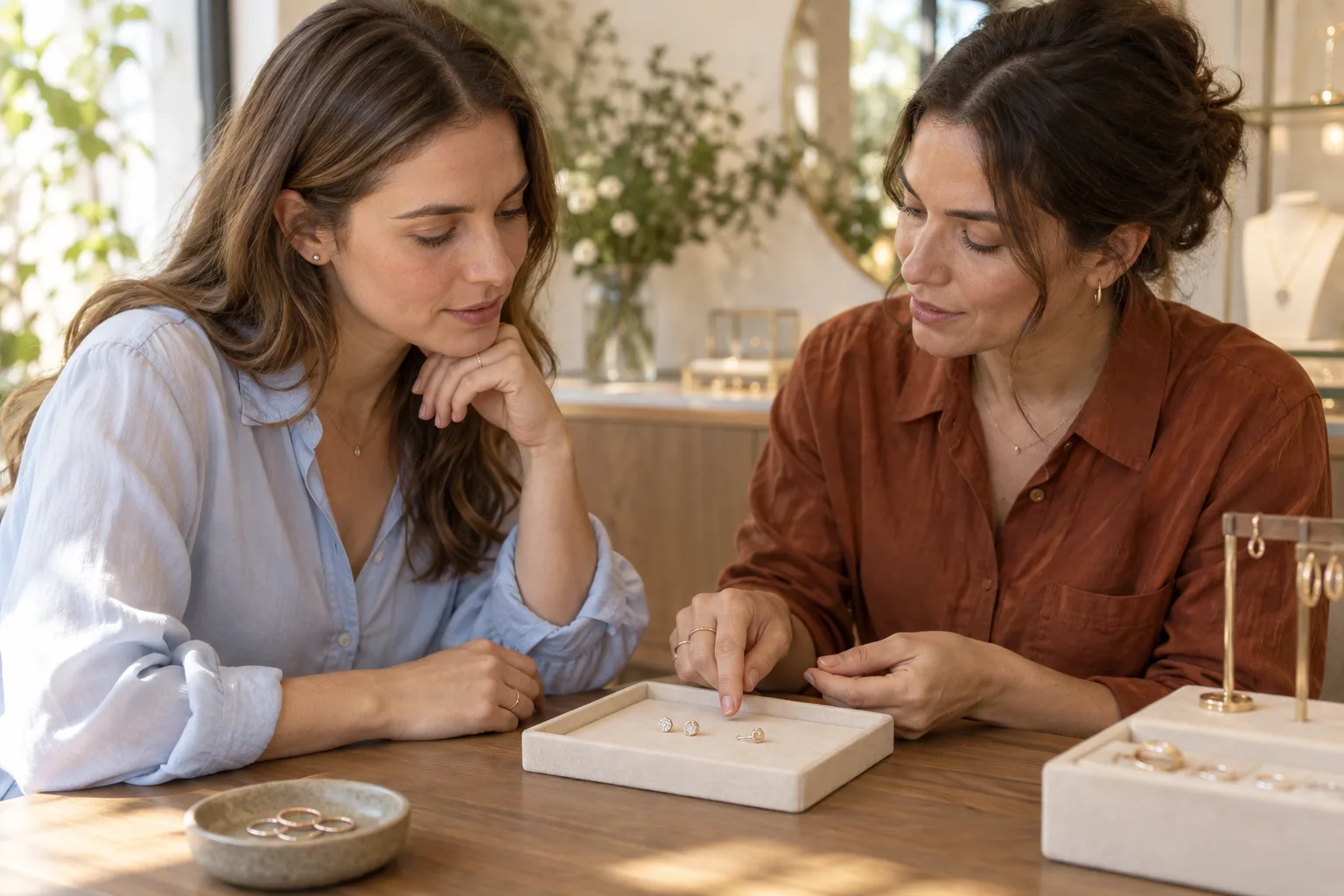
Before choosing wedding earrings or wearing a new ring for the whole day, ask what touches your skin. The post, back, clasp, chain and underside of a setting may need separate questions. If jewelry has caused a rash before, bring that history to the discussion before buying a replacement.
A rash under jewelry does not identify the cause
AAD explains that a rash can develop beneath new jewelry or a piece worn for many years. Metals can cause allergic reactions, but soap and water trapped beneath a ring can also irritate skin. It recommends stopping jewelry wear when a rash develops and seeking a dermatologist if the rash persists or returns. [1]
Describe where the symptoms appear: the earlobe, a ring's contact area, the neck under a clasp or another location. Record when they begin, how long they last and whether the piece was worn with a new body product or after cleaning.
Tell the clinician what you know and what is uncertain. Do not label every ring rash “nickel allergy” from a photograph. A useful history can include the jewelry, cleaning products, handwashing routine and previous similar episodes.
If the item comes off comfortably, stop wearing it while obtaining advice. Do not use a wedding countdown as a reason to keep an irritated area covered by the same object.
Check the parts you may overlook
AAD identifies nickel as a common cause of allergic contact dermatitis. It highlights earrings and earring backs as frequent sources, with nickel-containing watches, necklaces, rings and bracelets also capable of triggering symptoms. [2]
Ask the seller about the entire item rather than only the main decorative metal. For earrings, ask about posts and backs; for a necklace, the clasp and connecting parts; for a hair accessory, the pins or comb touching the scalp.
If you replace an earring back, tell the seller about any known allergy and check the replacement material. A back from an unrelated pair may not share the original piece's composition.
For a borrowed or inherited item, ask whether there is a receipt, maker's description or repair history. Say plainly when the composition cannot be established. A family member's years of comfortable wear do not establish your own tolerance.
Read metal labels for what they actually describe
FTC guidance explains that a karat mark describes the proportion of gold. An 18K item contains eighteen parts gold and six parts other metal; a 14K item contains fourteen parts gold and ten parts other metal. [3]
The remaining metal is part of the allergy conversation. Ask which alloying metals are used rather than treating a higher price or a familiar color as the complete answer.
FTC describes sterling silver as 92.5% pure silver, commonly marked 925. Gold-plated jewelry has a gold layer over a base material; plating eventually wears away depending on its thickness and use. Vermeil is gold coating over sterling silver. [3]
These labels describe composition or construction. They do not diagnose which substance caused your rash. If you have a confirmed allergy, bring the clinician's avoidance advice to the seller and ask how the particular piece fits it.
For plated jewelry, ask about the underlying material, the condition of the coating and maintenance. If a ring has been repaired, resized or replated, ask what was used and obtain the information available. Do not assume every part of an altered piece matches its original description.
Ask what supports an allergy-related claim
If the description says nickel-free or hypoallergenic, ask what materials and testing the seller means for this exact item. Get the answer in writing when possible. Do not substitute a marketing adjective for the composition questions your clinician has asked you to answer.
AAD's nickel guidance advises careful jewelry selection and avoiding nickel exposure when that allergy is present. [2] The appropriate alternative depends on what you react to, so ask about your own avoidance list rather than buying another piece simply because its main metal sounds different.
Keep the product page, receipt and any material statement. FTC recommends obtaining refund and return policies in writing before a jewelry purchase. [3] Confirm whether earrings, custom work, resizing or engraving change those terms.
If an item cannot be returned after alteration, discuss the material and fit questions before authorizing the work. A decision made earlier gives you more choices than a problem discovered after the final fitting.
Use clinical testing when the cause is uncertain
AAD describes diagnostic patch testing as applying selected allergens to the skin under patches and assessing delayed reactions over visits. The patches commonly remain for forty-eight hours, followed by removal and further assessment as instructed. [4]
Ask whether that assessment is appropriate for recurrent jewelry symptoms and what information to bring. A dermatologist may want the item, a product description or photographs of the affected skin. Follow the office's preparation instructions, including any medicine questions.
Do not tape a ring or loose metal to your skin to imitate diagnostic testing. Likewise, a few comfortable minutes trying on an earring cannot rule out a delayed reaction.
If a clinician identifies an allergy, ask for the names and avoidance instructions in a form you can use when shopping or arranging repairs. Ask what to do if the rash returns despite avoiding the suspected item.
Check comfort without repeating a known reaction
For jewelry you have no reason to suspect is causing a reaction, check the practical details before the wedding. Can you open the clasp, fasten the back and remove it without pulling? Does the necklace catch the neckline or hair? Can the helper you chose manage the fastening?
Keep any trial appropriate to your history and medical advice. Stop if symptoms appear. Do not turn testing into an instruction to wear a known trigger for longer periods until you tolerate it.
Try the accessories with the hairstyle and clothing when permitted. The hair-trial guide can help coordinate combs, pins, a veil and removal. Ask the dress specialist before letting a rough clasp or setting rest against delicate fabric.
Have a named place for removed jewelry and a person responsible for it. A small closed case in a known bag is easier to track than wrapping earrings in a tissue that may be discarded.
Plan handwashing and a ring alternative
AAD notes that removing a ring before handwashing and drying the hands thoroughly before replacing it can help when trapped soap and water are irritating the skin. [1] Follow individual advice if you already have a rash or another skin condition.
Decide where the ring goes when removed. Avoid setting it beside a sink or putting it in a pocket that will be emptied during a clothing change. If the fit feels wrong, ask the jeweler to assess it before the event.
If you cannot wear a particular ring or other accessory, tell the officiant, photographer or dresser what to expect. You may want to keep it in its box, use an alternative or omit it. Settle the practical arrangement without making injured skin part of the ceremony plan.
Do not apply an improvised coating, adhesive or cosmetic to the jewelry or your skin to force continued wear. Ask the clinician and jeweler about appropriate options for the specific materials and reaction history.
Know when a rash needs more attention
AAD advises medical attention for a painful rash, blistering or signs of infection, which can include pus, crusting, swelling, warmth or an unpleasant smell. It advises emergency care if a rash occurs with breathing or swallowing difficulty or swelling of the lips or eyes. [5]
Do not assume a worsening problem is routine metal sensitivity. Tell the assessing clinician about the item and any new cleanser, polish, adhesive, cosmetic or repair material involved.
Keep symptom care separate from the decision about jewelry. A jeweler can explain materials and construction; the clinician evaluates the skin and any treatment needed.

Physical Book (No Download)
Bridegenic: The Glow-Up Guide for Brides on GLP-1s
$12.95 + Free Shipping
Order NowThis article provides general education, not a diagnosis or an individual treatment plan. Medication information refers to US sources. Talk with your prescriber, pharmacist or dermatologist about decisions for your care.
Read next
Face & SkinYour Wedding Skincare Plan: From Engagement Photos to Makeup Removal→HairA Wedding Hair Trial for Shedding or a Sensitive Scalp: Extensions, Veils and Comfort→Sources
- Itchy rash could be contact dermatitis, updated December 2020American Academy of Dermatology↩ Back to text
- Nickel allergy: How to avoid exposure and reduce symptomsAmerican Academy of Dermatology↩ Back to text
- Buying Platinum, Gold, and Silver Jewelry, November 2024Federal Trade Commission↩ Back to text
- Patch testing can find what is causing your rashAmerican Academy of Dermatology↩ Back to text
- Rash 101 in adults: When to seek medical treatmentAmerican Academy of Dermatology↩ Back to text