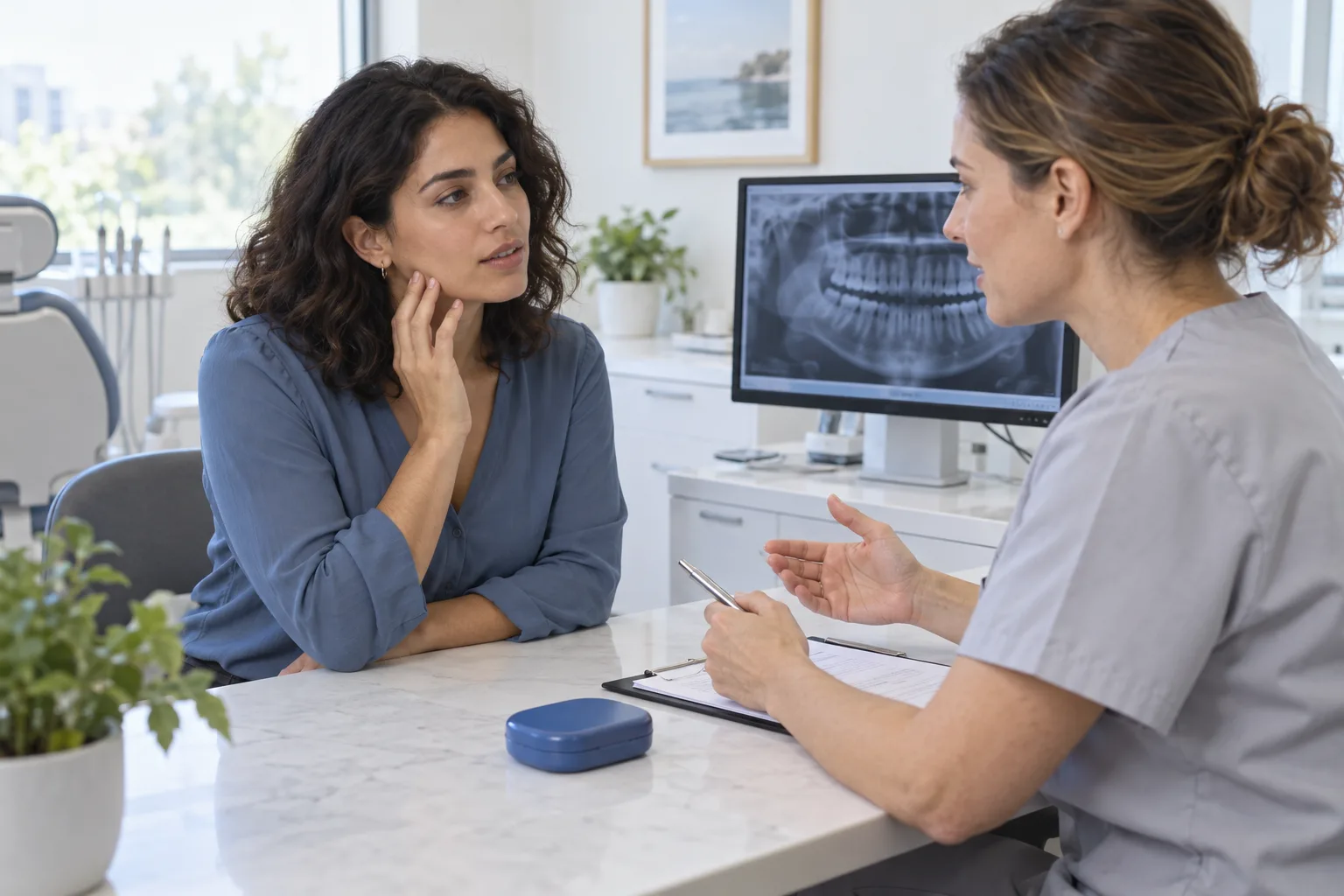
A sore jaw can change what you can chew, how long you can rehearse your vows and whether a new mouthguard feels tolerable. Arrange an assessment before buying a device or booking a treatment for the wedding. Bring a description of the symptoms and the dates when eating, speaking and travel will be hardest to adjust.
Describe what happens, and when
Bruxism means grinding, clenching or gnashing teeth while awake or asleep. Possible signs include damaged or sensitive teeth, sore or tired jaw muscles and headaches. A dentist can inspect teeth and restorations and check tenderness. [1]
Before the appointment, note whether discomfort is present on waking, develops during the day or appears when chewing. Record which side hurts, whether the mouth opens normally and whether a partner has heard grinding during sleep. Include recent dental work and any appliance you already use.
Take your medicine list. NIDCR identifies several possible contributors to bruxism, including certain medicines, caffeine, alcohol, smoking and psychological factors. [1] Ask the prescriber about a suspected medicine effect rather than changing treatment yourself.
Describe the wedding demands specifically: a long ceremony rehearsal, repeated portraits, a reception meal and an early flight. “I need to speak for ten minutes without worsening pain” gives the clinician a clearer functional concern than a request to change your jawline before photographs.
Do not diagnose every click as a disorder
The temporomandibular joints, or TMJs, are the jaw joints. Temporomandibular disorders, or TMDs, involve problems in the joints or the muscles controlling jaw movement. Painless clicking or popping is common and does not require treatment, according to NIDCR. [2]
Pain, locking, restricted movement or a change in how teeth meet deserves assessment. Jaw or facial pain can have causes other than TMD. There is no single widely accepted standard diagnostic test; the history, examination and sometimes imaging help guide the assessment. [2]
Tell the clinician which symptom you want addressed. A click you noticed while watching a rehearsal video and pain that prevents lunch are different concerns. Avoid repeatedly forcing the mouth open to reproduce a sound for a recording.
If the diagnosis remains uncertain, ask what needs to be ruled out and when to return. Do not let a wedding deadline replace that discussion with a same-day purchase.
Ask what the mouthguard is expected to do
NIDCR describes mouthguards as a way to separate teeth, prevent damage and potentially reduce muscle activity from grinding or clenching. [1] That protective purpose does not establish that every guard will relieve jaw pain.
A 2024 Cochrane review included 57 randomized studies with 2,846 participants. Its search covered evidence through August 9, 2022. Only one study was judged at low risk of bias; certainty was very low across the assessed comparisons and outcomes. [3]
The reviewers found insufficient evidence to draw firm conclusions about occlusal interventions for TMD symptoms. A full hard stabilization splint might reduce chewing muscle pain compared with no treatment, but that finding was very uncertain. [3]
Ask which outcome the dentist expects for you and how you will judge it. Protecting a worn tooth, reducing morning soreness and improving mouth opening need separate follow-up questions. An expensive appliance is not proof of a better result.
For an appliance you are prescribed, get instructions for the exact wear schedule, fitting checks, cleaning, storage and replacement. Ask what to do if it feels different after other dental work. Bring the existing device to the appointment instead of describing its fit from memory.
NIDCR advises against appliances designed to permanently change the bite and says to stop using an appliance and consult the dentist or doctor if it causes pain. [2] Do not continue a painful trial to meet the wedding date or reshape the device yourself.
Question permanent changes proposed for pain
NIDCR advises starting with conservative care and seeking another qualified opinion before more complex procedures. It reports insufficient evidence for changing the bite with tooth grinding, crowns or orthodontics to treat TMD; some such treatment can worsen problems. [2]
That is a question about the reason for the procedure. Repairing a chipped or worn tooth can be an appropriate part of bruxism care. [1] Ask whether a proposed crown is repairing a damaged tooth or being offered to treat jaw pain by changing your bite.
Request a written explanation of the diagnosis, expected benefit, risks, alternatives and follow-up. If you cannot explain what the procedure is intended to improve, arrange another conversation before consenting. For persistent or complicated pain, ask about an orofacial pain specialist.
Arrange a meal you can manage
NHS guidance lists soft foods among measures that may ease TMD symptoms and advises avoiding gum and nail biting. It also describes a physiotherapist as a source of advice about jaw exercises. [4]
Discuss what texture and portion size suit your symptoms. Then ask the caterer for an actual dish, including preparation-room food. Soup, tender pasta or an omelette may be options, but ingredients, allergies and other dietary needs still matter.
Check the whole day. A suitable dinner will not help if the only food available before the ceremony is a chewy bagel. Ask who will deliver the agreed option, where you can sit and how to request more.
If exercises are recommended, have the clinician demonstrate them and specify when to stop or seek review. Do not add forceful jaw stretches or prolonged chewing exercises from a beauty video.
Keep the care instructions with the wedding-week handoff. A helper needs to know which meal to collect, not your entire dental history.
Adjust rehearsal and photograph requests
Mark which parts of rehearsal require you to speak and which can be walked through without repeating every line. Ask the celebrant about a microphone, shorter practice blocks and a pause if symptoms worsen. These are scheduling options to discuss, rather than a treatment protocol.
Tell the photographer if prolonged posed smiling hurts. Agree on a signal for a break and ask how to shorten repeated group setups. You do not need to promise a continuous expression through discomfort.
For daytime clenching, NIDCR suggests reminders to keep teeth apart. [1] If the dentist recommends this approach, choose a cue you will notice, such as a discreet phone reminder during desk work. Ask for clarification of the resting position rather than holding the jaw in a strained pose.
Keep your prescribed appliance and its case accessible during travel. Confirm whether you need a fitting review before departure and save the practice's contact details. Avoid packing the device loose among cosmetics or garment pins.
Know when the schedule must change
NHS guidance calls for urgent assessment when jaw symptoms prevent eating or drinking, restrict opening or involve locking. It also flags frequent severe headaches, tenderness at the side of the head or scalp, and vision problems such as double vision or loss of vision. [4]
Seek urgent care for these symptoms instead of waiting for the next routine fitting or trying to work through the reception meal. Explain any new symptoms, when they started and whether eating or drinking is possible. Your usual dentist may direct you to medical care depending on the presentation.
Use the dental-care travel plan to save care contacts before the honeymoon. Include who can help rearrange transport or appointments if the assessment changes your plans.

Physical Book (No Download)
Bridegenic: The Glow-Up Guide for Brides on GLP-1s
$12.95 + Free Shipping
Order NowThis article provides general education, not a diagnosis or an individual treatment plan. Medication information refers to US sources. Talk with your prescriber, pharmacist or dermatologist about decisions for your care.
Read next
Wedding WeekWedding Toothache: Dental Care, Urgent Symptoms and Travel→Wedding WeekYour Wedding-Week Checklist: Food, Medicine and Named Handoffs→Sources
- Bruxism, reviewed March 2025National Institute of Dental and Craniofacial Research↩ Back to text
- Temporomandibular DisordersNational Institute of Dental and Craniofacial Research↩ Back to text
- Occlusal Interventions for Managing Temporomandibular Disorders, September 16, 2024Singh and colleagues, Cochrane Database of Systematic Reviews↩ Back to text
- Temporomandibular Disorder, reviewed June 20, 2023NHS↩ Back to text