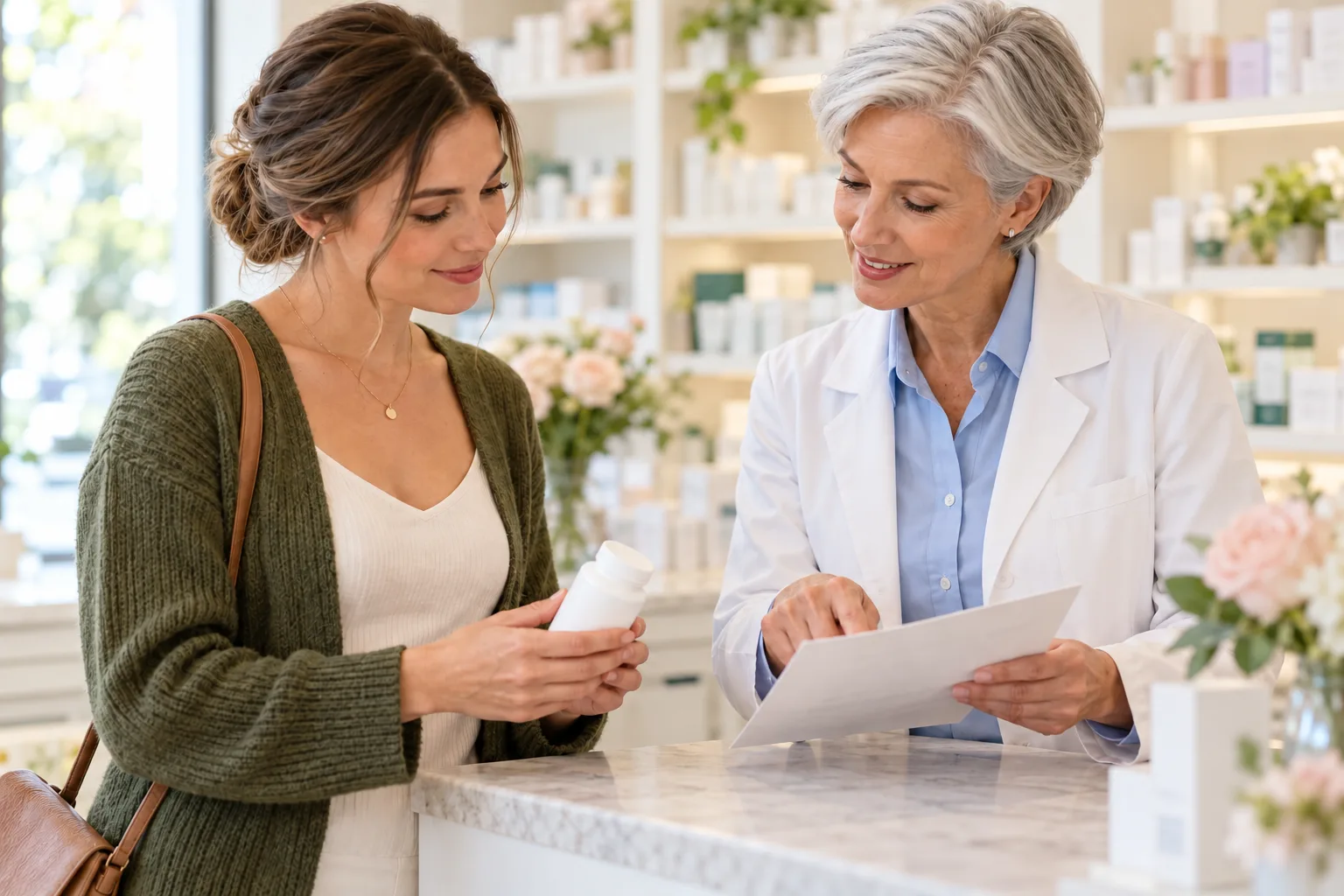
A supplement bottle can carry a quality seal beside a promise about fuller hair or smoother skin. Before adding it to your wedding preparation, ask two questions: what did the certification check, and what evidence supports the result you want?
Start with the limit of a quality seal
The NIH Office of Dietary Supplements explains that independent quality seals can indicate appropriate manufacture, the listed ingredients and acceptable contaminant levels. They do not guarantee that a supplement is safe or effective. ODS also advises discussing supplements with a healthcare professional, especially when medicines, other supplements or health conditions are involved. [1]
Write the claim you are considering in a sentence: “I want this product to reduce shedding before my wedding.” Keep that sentence beside the seal's description. A check that concerns what is in the bottle does not, by itself, answer whether the preparation has been shown to change your kind of shedding.
Chapter 7 of Bridegenic asks you to match the study's measured outcome to your goal. Apply the same discipline to a certification. Label accuracy, a particular skin measurement and a visible change in your hair are separate claims requiring their own support.
What the USP Verified Mark describes
USP's program summary says manufacturers voluntarily submit products for testing and auditing. Its Verified Mark indicates checks of labeled ingredients and amounts, specified contaminants, manufacturing practices, and breakdown and release within a stated time. [2]
That last item is a physical product-performance check. Do not rewrite it as proof that a supplement will regrow hair, replace facial volume or work before a wedding date. When a seller points to the mark in answer to a question about a clinical result, ask for the human study supporting that result.
Keep the full product name, formulation and serving information when you investigate. A company's participation in a program is not enough detail to identify the bottle you are considering. If you cannot match the item, ask the certifier or manufacturer for the relevant listing rather than assuming that every product in a brand's range has the same status.
Which NSF certification is being claimed?
NSF describes several programs. NSF/ANSI 455 concerns manufacturing quality systems and audits. NSF/ANSI 173 includes product technical review, testing and contaminant assessment; eligible products may carry its Contents Certified mark. NSF Certified for Sport adds banned-substance screening and requires the product certification first. NSF directs consumers to its online directory to look up certified products. [3]
Check the wording rather than treating “NSF” as one identical claim everywhere it appears. Is the seller describing a manufacturing facility, a finished product or the sport program? Save the directory entry and the date you checked it.
These are the certifier's descriptions of its programs, not a Bridegenic endorsement of a brand. Avoid adding more meaning to a listing than the program states. A sport-related mark, for example, should not become a bridal hair-growth claim.
Ask for the study that matches your question
Use a short list when a seller offers research: Who participated? Which preparation and amount were tested? What was the comparison? What outcome changed, over what period? Was the product you are considering the one used in the study?
Put the response beside your original goal. If you wanted help with shedding and the answer concerns skin hydration, write that mismatch down. If the study is not supplied, record that it remains unavailable. Neither situation requires inventing an explanation for why the product might still work.
Our collagen evidence article works through a specific ingredient question. For overlapping nutrient amounts across several products, read the hair-supplement label guide.
Bring the bottle and your goal to the same conversation
Photograph the complete label, serving size and ingredient amounts. Add the other supplements and medicines you use, including products bought for different purposes. Write the monthly cost and any renewal commitment beside the information you have gathered.
Ask your clinician or pharmacist whether the product fits your situation and whether any overlap or interaction needs attention. ODS notes that a supplement can have unwanted effects with medicines, other supplements or certain health conditions, and that some pose concerns before surgery. [1]
If the goal is a changing hair or scalp symptom, keep its assessment on the appointment list. Buying a more thoroughly checked bottle should not become the reason the symptom goes undiscussed. You can value a quality check and still decide that the evidence, cost or uncertainty does not fit the purchase you were considering.
Physical Book (No Download)
Bridegenic: The Glow-Up Guide for Brides on GLP-1s
$12.95 + Free Shipping
Order NowThis article provides general education, not a diagnosis or an individual treatment plan. Medication information refers to US sources. Talk with your prescriber, pharmacist or dermatologist about decisions for your care.
Read next
HairHair Supplements Before the Wedding: Selenium, Vitamin A and Overlap→Face & SkinCollagen Supplements Before the Wedding: What the Skin Studies Can Support→Sources
- Dietary supplement FAQs: quality seals and safetyNIH Office of Dietary Supplements↩ Back to text
- Dietary supplements: USP Verified Mark program summaryU.S. Pharmacopeia↩ Back to text
- Dietary Supplements and Functional Foods FAQsNSF↩ Back to text