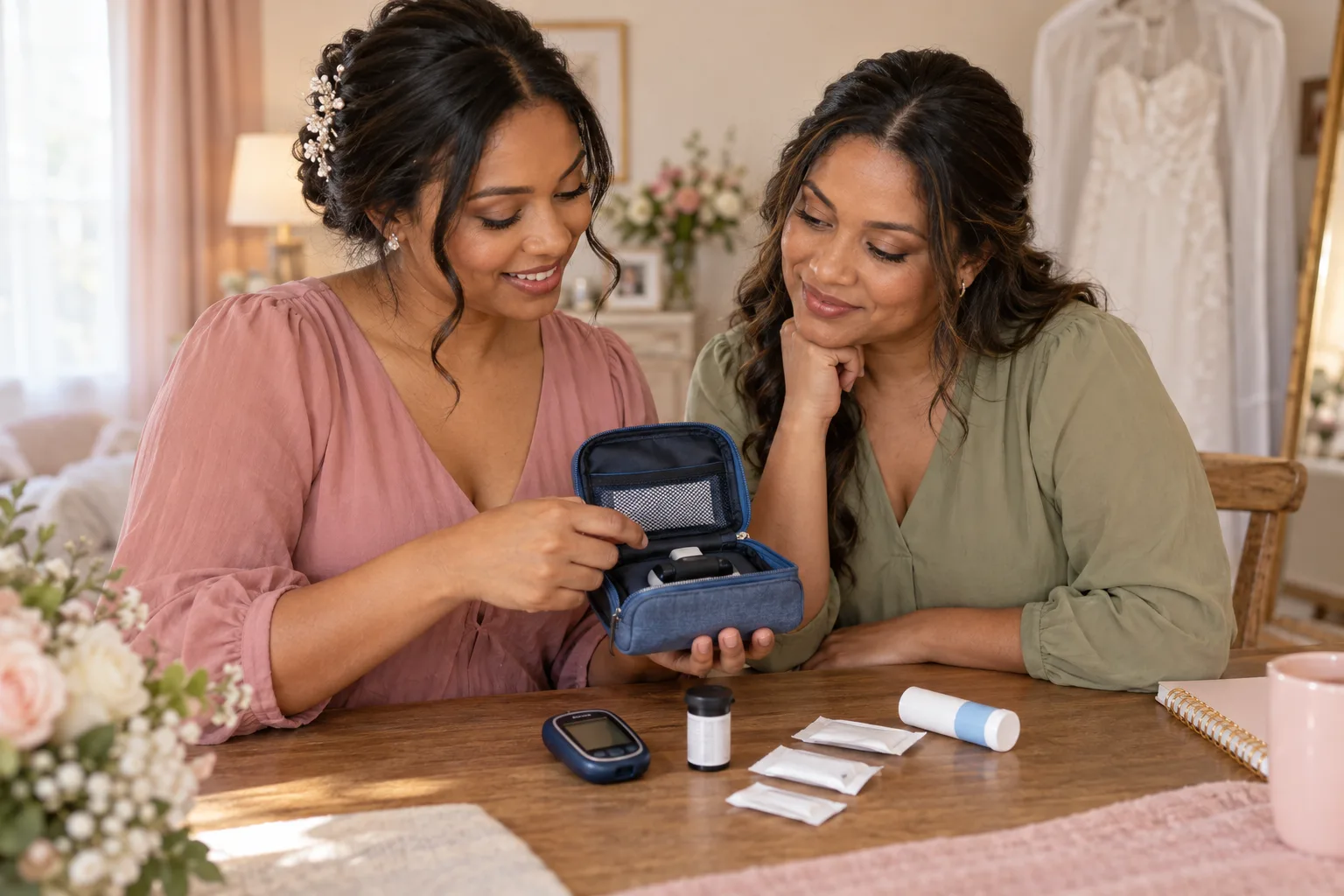
If you have diabetes and a risk of low glucose, take the wedding run sheet to your diabetes team. Include meal times, transport, photographs, dancing and when you will have access to your supplies. Ask how your established care plan should work through those changes.
Start with your treatment and history
The American Diabetes Association identifies insulin, sulfonylureas and meglitinides as treatments associated with hypoglycemia risk. Clinically significant lows are uncommon with other diabetes drug classes when used on their own. [1]
Ask your team how that applies to your complete regimen. If you take a GLP-1 medicine alongside another diabetes treatment, bring all product names and current instructions; the category name alone does not describe your risk.
Describe recent lows, symptoms you notice and any episodes when someone else needed to help. Tell the team if your appetite, weight, activity or treatment has changed.
Ask what to do if a meal is delayed, you cannot finish it or you become unwell. Get medicine instructions from the prescriber. Do not skip, reduce or add insulin yourself because a dress fitting or photography schedule makes eating inconvenient.
The wedding plan should record who brings food and supplies. It should not create a new dose schedule or glucose target.
Keep monitoring workable with the outfit and schedule
ADA recommends glucose-monitoring education and structured prevention and treatment education for people taking insulin or otherwise at risk of hypoglycemia. [1]
Discuss when to check glucose during your day and what to do with a low result or device alert. Ask how to respond if symptoms and a sensor reading do not match, or if your usual device stops working.
Bring the actual outfit and device arrangement into the planning conversation where relevant. At a fitting, test access to the items you normally use without requiring the entire dress to be removed.
Keep the prescribed backup supplies available. Check batteries or charging arrangements, usable test strips and any equipment instructions that apply to your setup.
If someone helps monitor shared alerts, agree on their role and how they contact you. Do not disable a clinically important alert solely to keep it from sounding during the ceremony; discuss workable settings with the care team.
Tell the officiant and photographer only the practical information they need, such as allowing you to pause or reach your supplies.
Pack fast-acting glucose as its own supply
For an alert person who can swallow safely, CDC's general treatment advice uses the 15-15 rule: take fifteen grams of fast-acting carbohydrate, wait fifteen minutes, recheck and repeat if glucose remains below 70 mg/dL (3.9 mmol/L). Examples include glucose products used according to their instructions or four ounces of juice or regular soda. [2]
Have your team confirm the amount and steps for you. ADA notes that some people using automated insulin delivery need a smaller carbohydrate amount; people taking acarbose need pure glucose for treating a low. [1]
Choose the product with your team and check its label so you know how much supplies the agreed amount. Pack enough for the response plan, with a second accessible supply if recommended.
CDC warns that fat or fiber can slow sugar absorption. [2] Cake, chocolate favors, a protein snack or a diet soft drink should not become an improvised replacement for your agreed fast-acting treatment.
Keep regular meal and snack supplies too. Ask what to eat after recovery and when to seek further help for a persistent or repeated low. The fast-acting glucose pouch and the lunch delivery serve different purposes.
Teach the helper before the wedding
CDC lists shaking, sweating, hunger, dizziness and confusion among possible low-glucose symptoms. Severe episodes can involve trouble walking or seeing, seizures or loss of consciousness; some people have reduced awareness of early symptoms. [3]
Tell your helper which signs you tend to notice and which response instructions your team has supplied. Ask a diabetes educator or pharmacist to help with training rather than expecting a friend to learn from a paragraph in the run sheet.
Show the actual supplies and where they will stay. Confirm that the helper can recognize your fast-acting glucose and distinguish it from other products in the bag.
Choose a backup who receives the same instructions. A helper taking photographs in another room should not be the only person who knows where the supplies are.
Agree on a simple phrase for pausing an activity. The helper can tell the photographer or planner, “We need to stop for the care plan,” without explaining your health history to everyone nearby.
Review the prescribed rescue product
ADA recommends prescribing glucagon for people taking insulin or at high risk of hypoglycemia, with close contacts trained in its use and location. Nasal and ready-to-inject products are available; the product you receive determines the instructions. [1]
Ask the care team or pharmacist to check your access, expiry date, storage and helper training. If the prescription has not been filled or the cost is a barrier, raise that before the wedding.
Baqsimi nasal powder provides one product-specific example. Its instructions say not to test the device or press its plunger before use, to keep it in the sealed shrink-wrapped tube until needed and to store it at temperatures up to 86°F, or 30°C. [4]
If that is your prescription, use its training materials or a demonstration device as instructed. Do not open or discharge the medicine to rehearse. Other glucagon products have their own preparation and storage requirements.
The Baqsimi instructions call for emergency medical help immediately after use and giving food or drink only when the person can safely swallow. [4] Ask how your prescribed product's instructions fit the emergency response.
A rescue product should be reachable during transport, the ceremony and the reception. A bag in a locked room is not available to the person expected to use it.
Make the emergency response explicit
ADA says to call emergency services when a person is not alert or cannot administer carbohydrates, and explicitly warns helpers never to give insulin for hypoglycemia. [1]
If someone is unconscious or cannot swallow safely, do not put food, drinks or glucose gel in their mouth. Call emergency services and have a trained helper follow the prescribed glucagon and emergency instructions. Do not wait for a photograph or speech to finish.
Record the venue address and access point for responders. Assign someone to direct emergency personnel while the trained helper stays with you.
Ask your team what care is needed after an episode, including one that appears to resolve. The schedule should allow a clinical decision about what happens next.
Do not drive with low glucose. Arrange another driver and follow the team's instructions about recovery and reassessment before driving again.
Use the run sheet to protect access
Give each supply transfer a named owner and destination. For example: “The glucose pouch stays with me for portraits; the trained backup brings the rescue bag to the ceremony room before guests enter.”
Confirm who collects the meal and where it will be served. Tell the planner what to do if catering is delayed so the response does not depend on finding the couple in a crowded room.
Discuss alcohol and activity with the diabetes team. Ask how dancing, a longer walk or an evening meal at a different time affects your monitoring and care instructions.
Include the trip after the reception and any overnight stay. Keep supplies available after the venue staff finish their shift.
For honeymoon travel, use the medicine-travel guide to organize product-specific storage and border questions, and ask your team about diabetes supplies separately.
After the final clinical review, share the practical instructions with the people who have agreed to help. Keep your full medical record private and accessible to you and appropriate care professionals.

Physical Book (No Download)
Bridegenic: The Glow-Up Guide for Brides on GLP-1s
$12.95 + Free Shipping
Order NowThis article provides general education, not a diagnosis or an individual treatment plan. Medication information refers to US sources. Talk with your prescriber, pharmacist or dermatologist about decisions for your care.
Read next
Food & EnergyEating at Your Wedding on a GLP-1: A Food Plan for Your Happiest Day→Wedding WeekYour Wedding-Week Checklist: Food, Medicine and Named Handoffs→Sources
- Glycemic Goals, Hypoglycemia, and Hyperglycemic Crises: Standards of Care in Diabetes, 2026American Diabetes Association, Diabetes Care↩ Back to text
- Treatment of Low Blood Sugar (Hypoglycemia), May 2024CDC↩ Back to text
- Low Blood Sugar (Hypoglycemia)CDC↩ Back to text
- Baqsimi prescribing information and Instructions for Use, DailyMed listing August 6, 2025Amphastar Pharmaceuticals; DailyMed↩ Back to text