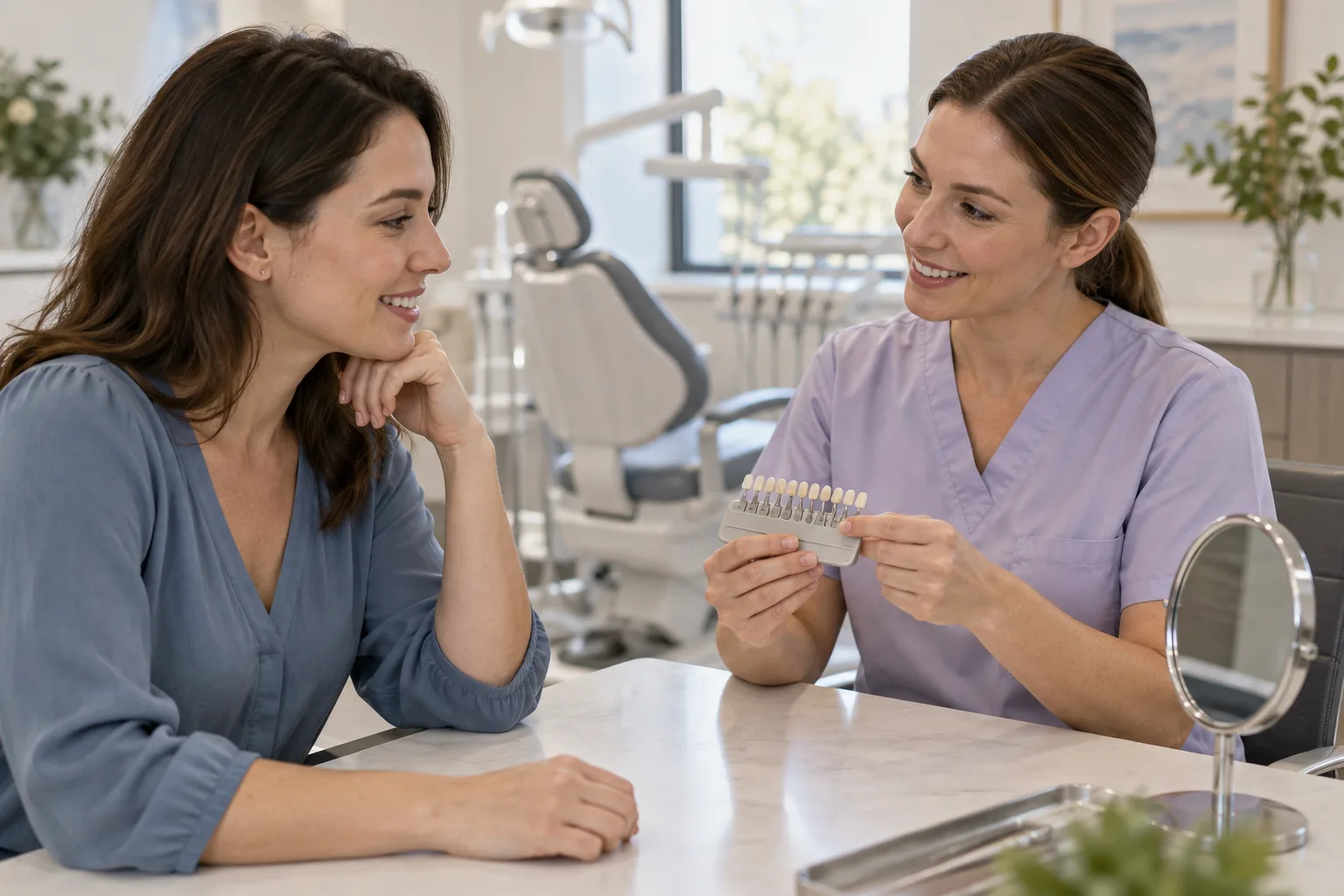
Before buying a whitening kit for the wedding, tell your dentist which teeth concern you, whether cold drinks hurt and whether you have a crown, veneer or filling near the front of your smile. Those details help determine what whitening can change and what needs a different assessment.
Start with the tooth, not the shade chart
The American Dental Association recommends a clinical examination before bleaching to help identify the causes of discoloration. Health history, allergies and previous sensitivity are part of that assessment. [1]
Describe the concern precisely: one tooth looks darker, several teeth have surface staining, or the color has changed since an injury or treatment. Bring the names of products you have tried and explain any discomfort. Do not decide that a single dark tooth needs the strongest kit on the shelf.
Ask the dentist to separate necessary care from optional cosmetic work in the estimate. Find out which issues need attention before whitening and which choices can wait. If you decide against whitening, keep any appointments recommended for dental health.
When booking, give the office the wedding date, travel dates and dates of any other dental treatment. Tell them how much time you can attend appointments and whether you will be away during a home treatment course.
Map crowns, veneers and tooth-colored fillings
Bleaching changes natural teeth; tooth-colored restorations do not change color with them. That can produce a mismatch. [1] Ask the dentist to point out which visible areas are restorations and discuss how the proposed change might affect the overall appearance.
For example, if a front crown currently matches neighboring teeth, ask what may happen if those neighbors become lighter. Do not assume another round will make the crown catch up. Ask about the options and their costs before paying for treatment.
If a new filling, crown or other restoration is already planned, ask how color selection and whitening should be coordinated. Obtain the sequence from the treating dentist rather than booking separate services that depend on each other's outcome.
Replacing a functioning restoration is a separate treatment decision. Ask why it is proposed, what it involves and whether you are comfortable proceeding. A wedding photograph alone does not tell you which dental work you need.
Compare the actual methods
Whitening toothpaste mainly removes surface staining through polishing ingredients. Peroxide-based bleaching changes tooth color. The distinction helps explain why products bearing the same broad “whitening” description may do different jobs. [1]
ADA patient guidance describes office bleaching, dentist-provided home trays and over-the-counter bleaching products. A dentist supplies directions for a home tray's gel and wear time; home treatment may take days to weeks. [2]
Ask for the exact product name, active ingredient, concentration, application method and proposed course. Keep these instructions together. A package showing a short session cannot supply the instructions for a different gel or tray.
When comparing quotes, ask whether the price includes the assessment, trays, gel, office sessions, review and replacement supplies. Confirm what happens if a tray needs adjustment or symptoms interrupt treatment. A lower opening price may include fewer services, so compare itemized plans.
If a light is included, ask what benefit the clinician expects from that particular system, what evidence supports the claim and what protection is used. Do not use the presence of a lamp as your only measure of the service.
Check the exact product's claims
The ADA Seal is a voluntary program. For accepted consumer products, manufacturers demonstrate safety and effectiveness under the program's requirements when used as directed. Professional whitening products supplied or applied by dentists are not eligible for that Seal. [1]
Use the ADA's product search to check the listed product and claim. [3] Compare the name with the package you intend to buy. A brand can sell several products, so do not transfer one item's status to every kit, pen or toothpaste with a similar logo.
Save the packaging and directions. Photograph the ingredient list if you want to discuss it with the dentist. If you cannot identify the product or obtain its instructions, resolve that before putting it in your mouth.
Give sensitivity its own plan
Temporary tooth sensitivity and gum inflammation are common adverse effects of bleaching. [1] Tell the dentist if you already experience pain with hot or cold foods, brushing or biting.
ADA patient guidance lists several possible causes of sensitive teeth, including decay, a fracture, worn fillings, gum disease, worn enamel and exposed roots. Treatment depends on the cause. [4] Do not assume every painful tooth is simply reacting to whitening.
Ask what symptoms mean you should stop the product and contact the office, what to do outside normal hours and whether any sensitivity product is appropriate for you. Request instructions for resuming treatment if it is paused. Do not cover discomfort with an improvised pain-medicine schedule so you can keep whitening.
If the tray rubs, the gel reaches your gums or a strip repeatedly contacts an irritated area, contact the dental team with the product details. Describe where it hurts, when it started and how long the last application lasted.
ADA guidance warns that overuse can damage enamel or gums. [2] Extra sessions and longer wear are not substitutes for a review.
Build the calendar around assessment and review
There is no single wedding countdown that fits every tooth, product and treatment course. Ask the dentist for a proposed start, review date and contact plan. Include enough flexibility to stop and ask about symptoms instead of depending on the final application the night before the ceremony.
Make one short record: product, directions, start date, applications used and any symptoms. That gives the dentist useful information if you call. You do not need repeated close-up photographs throughout the day.
If time is short, ask what can be assessed and completed within the available appointments. You can decline an optional treatment that leaves no room for review. Keep your photography brief focused on the pictures you want rather than a promised tooth shade.
Leave kitchen mixtures out of the plan
ADA patient guidance warns that prolonged contact with acidic fruit or vinegar, including scrubbing with them, can wear enamel. It also reports insufficient evidence for charcoal whitening safety and effectiveness and no dependable evidence that oil pulling or turmeric whitens teeth. [5]
Do not add a social-media scrub between scheduled bleaching sessions. Tell the dentist about everything used on your teeth, including powders, rinses and products marketed as natural. The full list helps them assess irritation and advise you about the next step.
Keep your usual dental-care questions separate from cosmetic promises. If you want help with daily cleaning or sensitivity, ask for guidance specific to your teeth and gums rather than choosing the most abrasive-feeling product.
Use the wedding preparation timeline to track the appointment and review date alongside other commitments. The useful endpoint is a clear, comfortable plan you understand and can follow.

Physical Book (No Download)
Bridegenic: The Glow-Up Guide for Brides on GLP-1s
$12.95 + Free Shipping
Order NowThis article provides general education, not a diagnosis or an individual treatment plan. Medication information refers to US sources. Talk with your prescriber, pharmacist or dermatologist about decisions for your care.
Read next
Dress & FittingsYour Bridegenic Wedding Timeline: What to Book, Confirm and Hand Off→Face & SkinYour Wedding Skincare Plan: From Engagement Photos to Makeup Removal→Sources
- Whitening, updated August 2022American Dental Association↩ Back to text
- Teeth WhiteningADA MouthHealthy↩ Back to text
- ADA Seal product searchAmerican Dental Association↩ Back to text
- Sensitive TeethADA MouthHealthy↩ Back to text
- Natural Teeth WhiteningADA MouthHealthy↩ Back to text