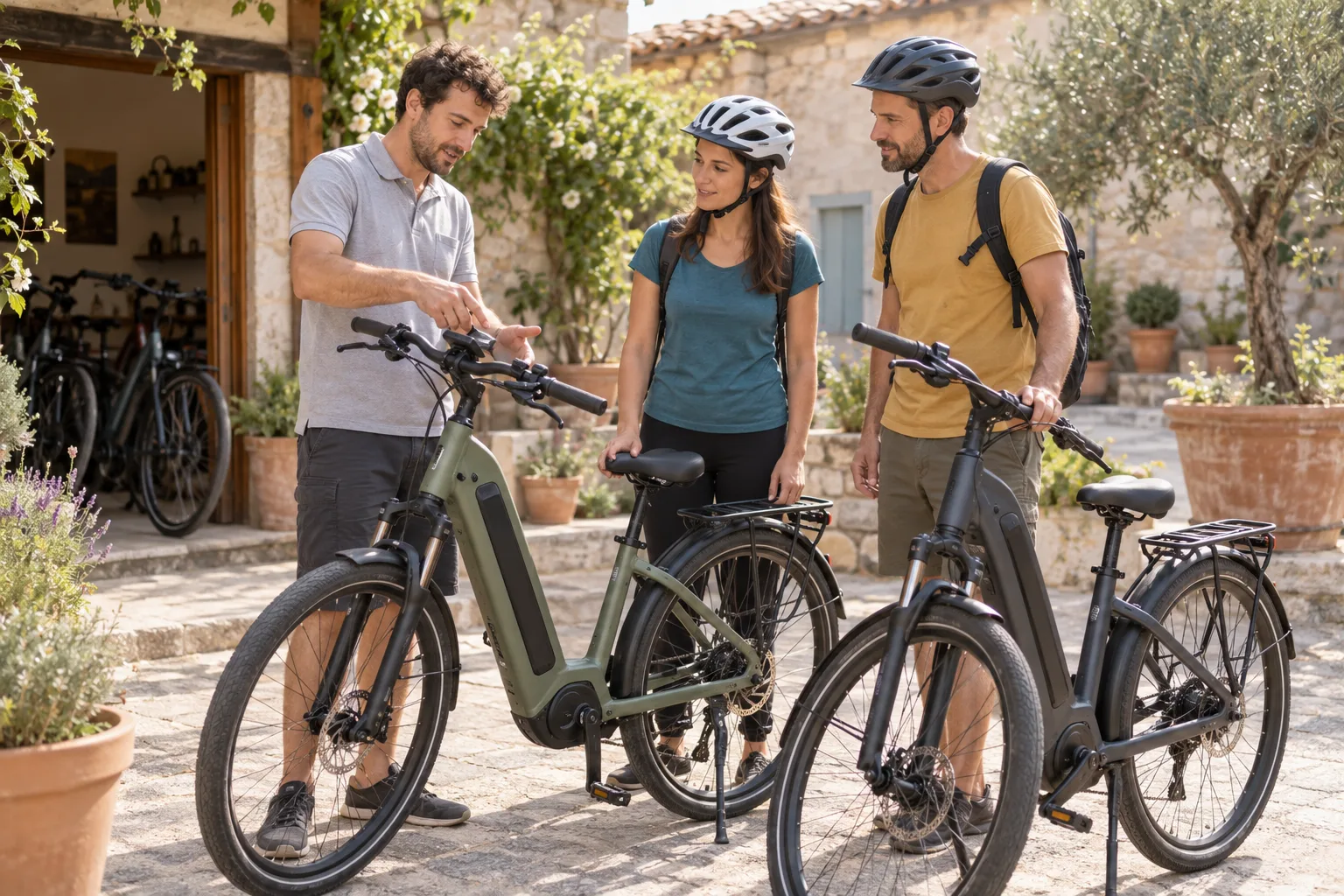
An e-bike rental needs a route, a suitable bike and a return plan. Before paying, find out what class of vehicle you are hiring, whether you can control it comfortably and what the shop will do if it breaks down. Check insurance before booking, and discuss charging if you will keep the bike overnight.
1. What vehicle are you hiring, and where may it be used?
Ask for the make, model, motor assistance and legal classification. Check the destination authority's rules for rider age, licence, helmet, registration and permitted roads or paths. A rental listing's use of the word e-bike is not the classification itself.
Great Britain provides a specific example. Department for Transport guidance describes an electrically assisted pedal cycle as having usable pedals, a maximum continuous rated motor output of 250 watts and assistance that cuts off at 15.5 mph. Compliant EAPCs do not require motor-vehicle registration, tax or insurance; vehicles outside the rules have different requirements. [1]
Those figures concern that jurisdiction and electrical assistance, not a worldwide rule or a promise that every rented bike qualifies. Ask the operator to confirm the offered model and check the rules where you will ride.
If the bike has a throttle or selectable modes, ask what they do and whether the proposed use is permitted. Do not accept an offer to change a restriction as a harmless upgrade. Confirm any route restrictions before booking rather than after arriving at a path entrance.
2. Can each rider fit and control the actual bike?
Give the shop each rider's height, experience and any relevant needs when booking. Ask whether it can reserve a suitable frame and adjust the bike at collection. Two people booking together do not necessarily need the same model or route.
NHTSA recommends a bike that fits, functioning equipment and practice in a safe area away from traffic. [2] Ask staff to demonstrate the brakes, gears, assistance controls, display, starting and stopping before setting out.
Try the bike where the operator permits a safe test. Check whether you can mount, stop, dismount, turn and walk it without difficulty. Find out how it behaves when assistance starts and when it is switched off. Do not let a departure time replace the demonstration.
Have the shop address loose parts, poor braking, damaged tires or controls you cannot operate. Request another bike if needed. Ask whom to call if a fault appears during the ride and whether you should stop using it.
If either rider is uncomfortable, change the plan before leaving. A shorter ride with support or another activity can be arranged without requiring one person to keep up with the other's confidence.
3. Are the helmet, lights and luggage arrangements suitable?
Ask whether a helmet is included, which sizes are available and who will help check its fit. NHTSA advises wearing a helmet level and low on the forehead, with the side straps forming a V below and slightly in front of the ears. It also recommends checking tires and brakes before riding. [3]
Try the helmet before accepting the bike. Tell the operator if it shifts, cannot be adjusted comfortably or appears damaged. Check the helmet requirements for the vehicle and destination rather than assuming one helmet type suits every electric vehicle.
NHTSA's bicycle guidance recommends bright clothing, lights and reflectors for poor visibility, securing carried items and keeping clothing from catching in the chain. [2] Ask how your bag will be carried and whether the rental equipment includes the lights needed for the planned return.
Bring clothing and footwear suited to riding. A loose dress hem, dangling bag or shopping bag on a handlebar needs attention before departure. Have the operator show you the intended storage arrangement rather than improvising attachments on an unfamiliar bike.
4. Does the route suit the riders and the available time?
Review the route with the shop or guide. Ask about traffic, surface, steep descents, junctions, restricted paths and places to stop. Check the distance back to the shop as well as the attractive outward section.
NHTSA recommends routes with less traffic and slower speeds and advises avoiding distractions such as texting while riding. [2] Stop somewhere suitable before checking directions or taking a photograph.
Ask what conditions would change the proposed ride, including weather, heat or a late start. Discuss a shorter alternative and how you would return from it. Do not assume a route can be completed within a rental period because a map app supplies an estimated time.
If you choose a guided outing, confirm whether the group stays together, who assists a rider who stops and whether transport is available. Ask how the guide handles different experience levels rather than relying only on the advertised distance.
Chapter 14 of Bridegenic plans activities around the specific itinerary and person's needs. Keep food, drinks, rest and any personal care requirements in your ride plan. Tell the provider what assistance you need without sharing more medical information than necessary.
5. Who handles the battery, charging and a power problem?
Ask the operator whether the supplied charge suits the proposed route and what assumptions that estimate uses. Get the contact and collection arrangement if assistance stops. A battery display does not replace a plan for returning a bike you cannot comfortably ride or walk.
If you must charge the bike, obtain the correct equipment and instructions. CPSC warns that a charger can fit a device while being electrically incompatible. It advises using the supplied charger or a manufacturer-confirmed compatible replacement, staying present while charging, never charging while asleep and unplugging after charging finishes. [4]
For an overnight rental, confirm storage and charging permission with the accommodation before arrival. Department for Transport guidance advises keeping e-bikes and batteries away from escape routes and not using or charging a battery suspected of damage. [5] Ask the operator to provide an appropriate arrangement if the property cannot accommodate it.
The same guidance identifies swelling, leaks, unusual smells, hissing or cracking and extreme heat as warning signs. For smoke or fire, it advises raising the alarm, leaving, staying out and calling emergency services. [5] Use the local emergency number. Do not try to repair or carry a smoking battery through the property.
6. What are the costs, cover and return requirements?
Read the rental agreement before signing. Identify the full price, deposit or card hold, supplied accessories, late charges, damage process, theft responsibilities and the steps required to secure the bike during stops.
Ask who pays for collection after a puncture, mechanical fault, depleted battery or early finish. Confirm the distinction between an included rescue service and one available for an extra charge. Record the phone number and its operating hours.
Check your insurance for the actual activity and vehicle. The UK's foreign-travel insurance guidance advises travelers to check coverage for planned activities and destinations and to review exclusions. [6] Ask your insurer specifically about the e-bike's classification, riding conditions, medical costs and any liability or rental-property cover you expect.
Photograph the bike's existing condition with the shop's agreement and have issues recorded before collection. Confirm the return location, deadline, inspection and how the end of the rental is acknowledged. Keep the agreement and return record with your trip documents.

Physical Book (No Download)
Bridegenic: The Glow-Up Guide for Brides on GLP-1s
$12.95 + Free Shipping
Order NowThis article provides general education, not a diagnosis or an individual treatment plan. Medication information refers to US sources. Talk with your prescriber, pharmacist or dermatologist about decisions for your care.
Read next
Honeymoon & BeyondSix Honeymoon eSIM Checks Before You Buy→Honeymoon & BeyondHoneymoon Travel Insurance: Medical Care, Evacuation and Cancellation→Sources
- EAPC Standards and Legal Requirements in Great BritainUK Department for Transport and Driver and Vehicle Standards Agency↩ Back to text
- Bicycle Safety: Preparation, Equipment and RoutesNational Highway Traffic Safety Administration↩ Back to text
- Learn to Bike Safely: Helmet Fit and Bike ChecksNational Highway Traffic Safety Administration↩ Back to text
- Universal Micromobility Chargers: Compatibility and Charging PrecautionsU.S. Consumer Product Safety Commission↩ Back to text
- Battery Safety for E-Cycle UsersUK Department for Transport↩ Back to text
- Foreign Travel Insurance: Activities and ExclusionsUK Foreign, Commonwealth & Development Office↩ Back to text