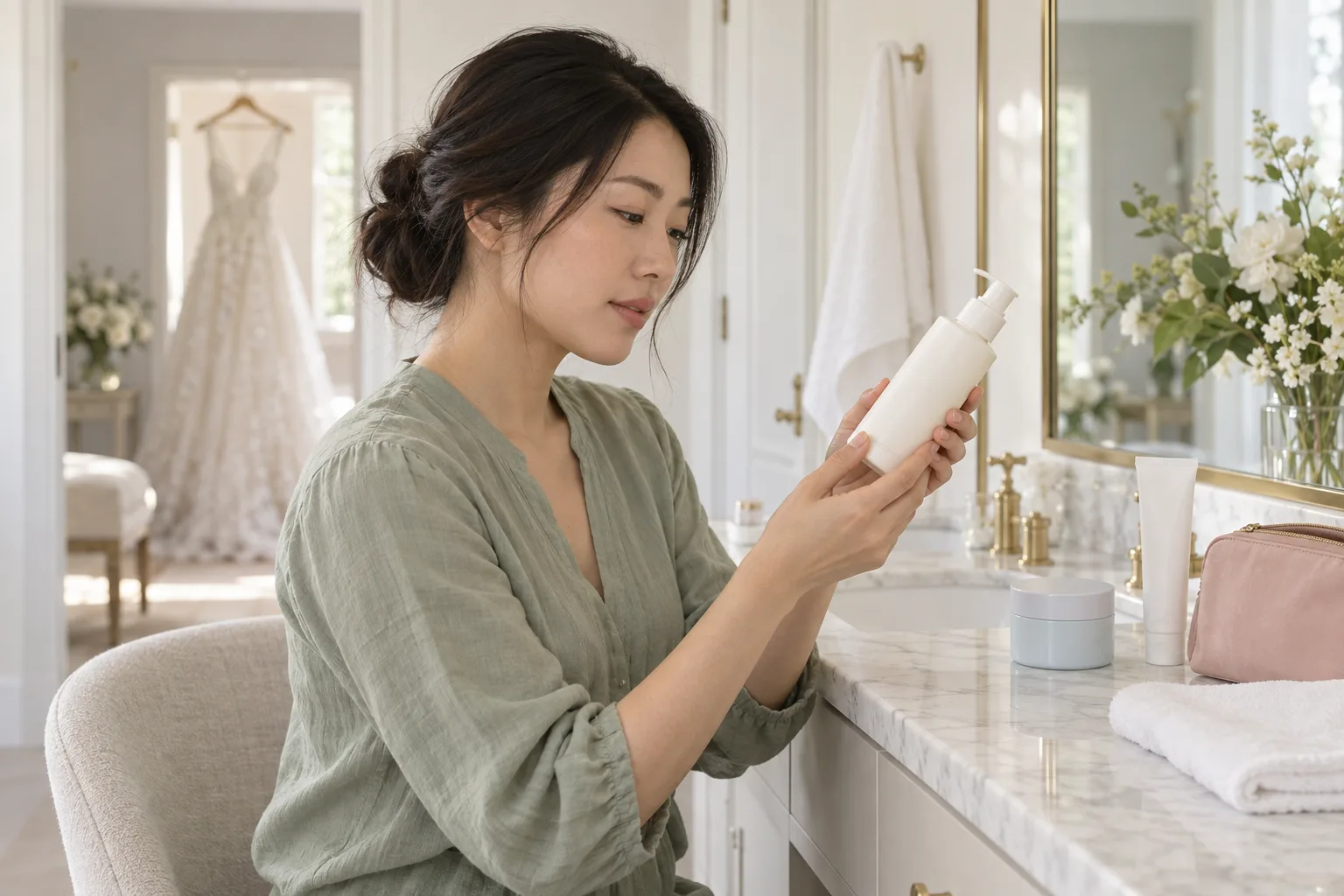
If you are considering salicylic acid for prewedding breakouts, start with the product’s purpose and directions. A rinse-off cleanser, a treatment pad and a high-strength peel can share an ingredient name while requiring different decisions. Check the complete routine before adding another exfoliating step.
Match the treatment to the skin concern
AAD describes salicylic acid as an ingredient that unclogs pores and exfoliates, with a particular role for whiteheads and blackheads. [1] Its 2024 acne guideline gives topical salicylic acid a conditional recommendation. [2]
That is support for an option in acne care, not a promise that one ingredient will treat every breakout. Ask about a diagnosis and treatment plan if acne is painful, persistent or leaving scars. Do not keep adding exfoliants because a deep tender lesion has not responded to a wash.
Define the goal before shopping: fewer clogged pores, fewer new pimples or assessment of an unexplained eruption. A residual dark mark and an active acne lesion can need different expectations. The azelaic-acid guide discusses why a product’s indication and formulation matter.
Photograph the proposed product’s Drug Facts and ingredient list. Record its concentration, form and intended body area. Include products you already use so the discussion concerns the whole routine.
Two 2% labels with different directions
The U.S. CVS Health Acne Control Cleanser label, updated August 6, 2026, lists 2% salicylic acid. Its directions describe wetting the face, working the cleanser into a lather, avoiding the eyes and rinsing well. [3]
The Stridex Maximum pad label also lists 2% salicylic acid, but describes applying a thin layer with the pad. It says not to leave the pad on the skin for an extended period and to keep it away from eyes, lips and other mucous membranes. Its directions address reducing application frequency if bothersome drying or peeling occurs. [4]
These are examples of label differences, not product recommendations or a routine to combine. Do not use the cleanser’s rinse instructions for a different leave-on product, or turn a medicated pad into an overnight compress.
Check the package in your hand. Similar names, retailer comparisons and products sold in other countries do not establish identical directions. If the wording is unclear, ask a pharmacist to explain it before the makeup trial.
Both labels warn that irritation and dryness are more likely when another topical acne medicine is used at the same time. [3] List washes, pads, spot treatments and prescriptions together rather than treating a medicated cleanser as an invisible step.
Read a combination-product trial as a combination trial
A randomized study published online in November 2023 and in a March 2024 journal issue enrolled 150 white adults aged 18 to 40 with mild-to-moderate acne. It compared a multi-ingredient cream with 5% benzoyl peroxide gel, twice daily for 56 days. The cream contained salicylic acid, niacinamide, lipohydroxy acid and several other components. [5]
The published abstract reports reduced lesion counts in both groups without a significant between-group difference. It reports better tolerability for the tested cream. The study lists L’Oréal research funding and multiple company-affiliated authors. [5]
This does not isolate salicylic acid’s contribution, prove every salicylic-acid product equivalent to benzoyl peroxide or establish a deadline for your skin. The summary here uses the published abstract; it does not substitute for a full assessment of every study method.
When a label or advertisement cites research, ask which finished product, comparison and outcome were studied. A study of a cream with several ingredients should not be presented as proof that a different 2% wash will produce the same result.
Introduce the actual product and review irritation
MedlinePlus advises first-time users to apply a small amount to one or two small treatment areas for three days, then follow the product directions if no reaction or discomfort occurs. [6] That sensitivity check cannot guarantee ongoing tolerance.
FDA’s BHA cosmetic guidance advises following the label, avoiding extra applications, and stopping a product and consulting a physician for irritation or prolonged stinging. It also advises sun protection. [7]
Ask a clinician how the proposed product fits with tretinoin, benzoyl peroxide, other acne medicines or exfoliating cosmetics. Do not create your own alternating schedule from several labels. If the current routine was prescribed, obtain instructions about any changes rather than abandoning it to make room for a new serum.
Do not use peeling as the measure of success. If skin becomes sore or irritated, describe the symptoms and products used instead of labeling everything an expected adjustment. Keep the package available for the pharmacist or clinician.
For makeup, trial the routine you intend to use, with appropriate sun protection and the artist’s planned products. A last-minute increase in applications does not become useful because the foundation appointment is approaching.
Keep stronger treatments and other indications separate
MedlinePlus says not to apply topical salicylic acid to broken, red, swollen, irritated or infected skin. It advises against covering treated skin with a dressing or applying it to large body areas unless directed by a doctor. [6]
Do not use a wart or corn product on facial acne because it lists the same acid. Ask a pharmacist to identify the intended use and strength. Do not extend a facial plan over the back, chest or shoulders simply because those areas will show in the dress.
FDA’s July 30, 2024 warning addresses chemical-peel products sold with concentrations too high for unsupervised home use, including salicylic-acid products. It describes risks such as serious burns, infection, color changes and scars, with concentration, repeated application and contact time affecting injury. [8]
A high-strength peel is not an accelerated version of an acne cleanser. Do not dilute one at home or combine applications to reproduce a professional treatment. The chemical-peel consultation guide covers questions for a qualified practitioner.
Discuss personal circumstances and serious symptoms
AAD advises discussing salicylic acid with an obstetrician or dermatologist before use during pregnancy and describes limited-time use as generally considered acceptable. [9] This is not approval for every strength, body area, duration or combination product.
MedlinePlus also advises telling the clinician about kidney, liver or blood-vessel disease, diabetes, allergies, medicines and breastfeeding or pregnancy plans. [6] Bring the actual products and ask which precautions apply to you.
Stop the product and obtain emergency help for throat tightness, breathing difficulty, faintness or swelling of the eyes, face, lips or tongue. These are among the serious reaction symptoms listed by MedlinePlus. [6] They should not be managed by simply reducing application frequency.
For a skin reaction without those symptoms, stop the suspected product and obtain advice about appropriate care and whether it should be used again. Do not reapply it to test whether the same reaction returns.
Set a review date without promising a wedding result
AAD’s adult-acne guidance describes fewer breakouts as something that can take four to eight weeks. [1] That is an expectation for assessing acne treatment, not a guaranteed response to any salicylic-acid product.
Chapter 9 of Bridegenic separates treatment of acne from camouflage and chooses an optional priority. Ask what improvement you are monitoring, when to return and what to do if the condition worsens. Keep a comfortable, established routine near the wedding when the alternative is an untested extra step.
Let the makeup artist know about dryness or current symptoms before the trial. The aim is to coordinate skin care and appearance plans without making the wedding date a reason to exceed the product instructions.

Physical Book (No Download)
Bridegenic: The Glow-Up Guide for Brides on GLP-1s
$12.95 + Free Shipping
Order NowThis article provides general education, not a diagnosis or an individual treatment plan. Medication information refers to US sources. Talk with your prescriber, pharmacist or dermatologist about decisions for your care.
Read next
Face & SkinAzelaic Acid Before Your Wedding: Acne, Rosacea and Marks→Face & SkinChemical Peels Before the Wedding: Depth, Risks and Aftercare→Sources
- Adult Acne Treatment Dermatologists RecommendAmerican Academy of Dermatology↩ Back to text
- Reynolds et al. Guidelines of Care for the Management of Acne Vulgaris, 2024Journal of the American Academy of Dermatology↩ Back to text
- Acne Control Cleanser, CVS Health: U.S. Drug Facts, updated August 6, 2026DailyMed, National Library of Medicine↩ Back to text
- Stridex Maximum: U.S. Drug Facts, updated December 16, 2024DailyMed, National Library of Medicine↩ Back to text
- Dal Belo et al. Efficacy of a Multitargeted, Salicylic Acid-Based Dermocosmetic Cream Compared to Benzoyl Peroxide 5% in Acne Vulgaris, online 2023; journal issue 2024Journal of Cosmetic Dermatology; published abstract↩ Back to text
- Salicylic Acid Topical, revised October 15, 2023MedlinePlus, AHFS Patient Medication Information↩ Back to text
- Beta Hydroxy AcidsU.S. Food and Drug Administration↩ Back to text
- FDA Warns Against Purchasing or Using Chemical Peel Skin Products Without Professional Supervision, July 30, 2024U.S. Food and Drug Administration↩ Back to text
- Is Any Acne Treatment Safe to Use During Pregnancy?American Academy of Dermatology↩ Back to text