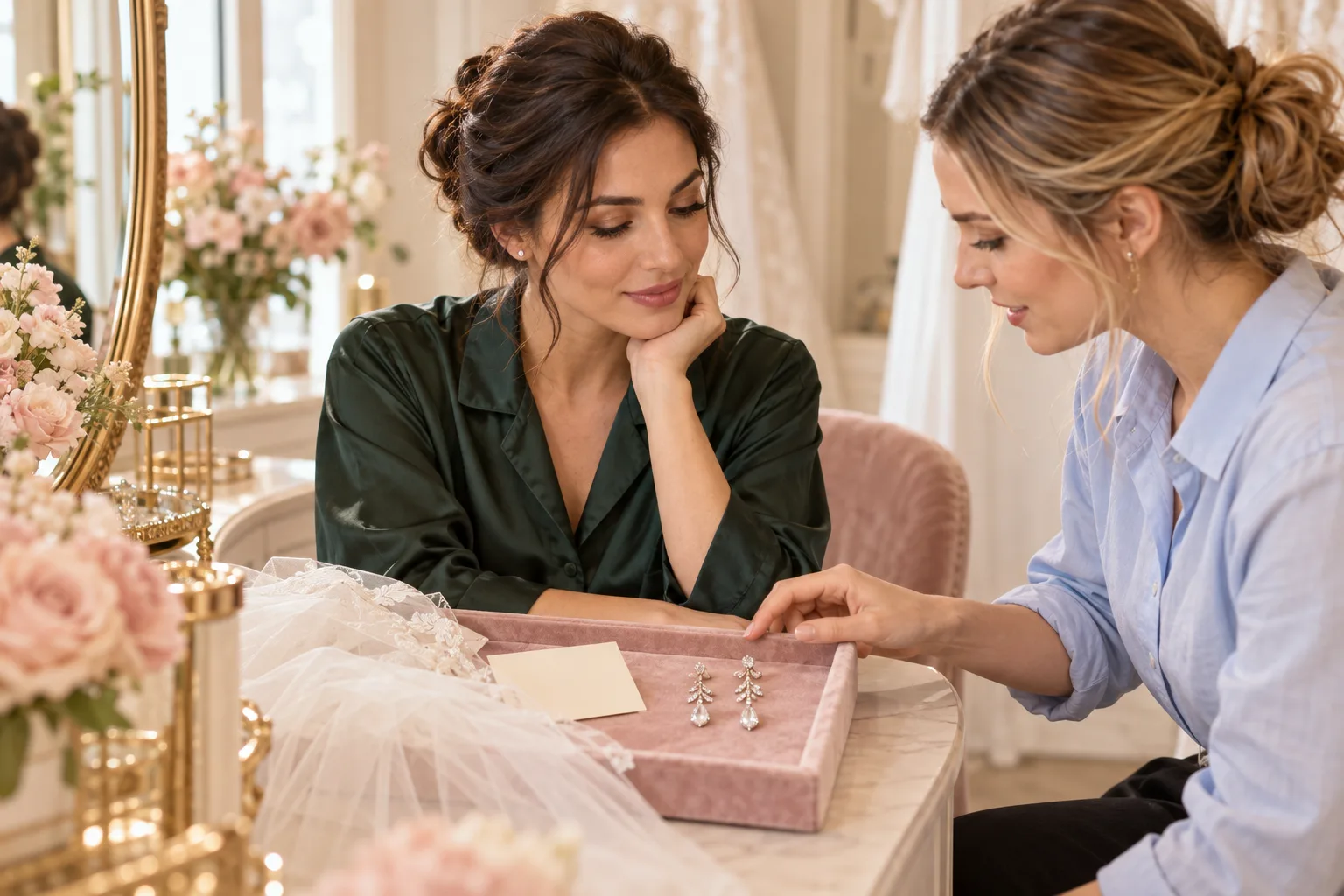
If a new ear piercing is part of your wedding plans, discuss the piercing site, follow-up and intended earrings before setting a jewelry-change date. The appointment should answer whether the plan fits your ear and healing progress, rather than simply counting backward from the ceremony.
Ask what the first review will decide
The American Academy of Dermatology (AAD) advises leaving jewelry in a new piercing for six weeks or longer, including overnight, because early removal can allow closure. That instruction is not a promise that every piercing is ready for decorative earrings at six weeks. [1]
The Association of Professional Piercers (APP) says a piercing can look healed while the interior remains fragile. It advises a qualified piercer for jewelry changes during healing, including a downsize when needed. [2]
Before booking, say whether you mean an earlobe or an upper-ear cartilage piercing. Bring a photograph of the wedding earrings and ask about their style, fit and suitability. If the answer depends on healing, record the review date and leave the final accessory decision open.
For example, if your ceremony is eight weeks away, “six weeks or longer” should not become “change earrings at week six” in your planner. Ask what must be checked in person and whether you are comfortable keeping the starter jewelry for the photographs.
Give the hair and makeup team a specific brief
APP advises telling your stylist about a new or healing piercing, keeping cosmetics and sprays away from it, and avoiding friction or pressure. Sleeping directly on healing cartilage can irritate it. [2]
At the hair trial, point out the site before work begins. Ask how combs, pins, the veil attachment and removal will be managed. Include the end of the evening: who can help remove the veil, where you will sit and what the helper needs to know.
Photograph the agreed hairstyle with permission, and record the accessory decision beside it. If another stylist will work on the day, confirm how that information reaches them. A message in your own phone is not the same as a brief the replacement stylist has received.
Get one clear aftercare plan
AAD recommends clean hands before touching a new piercing and avoiding hydrogen peroxide or antibacterial soaps. [1] APP's guidance also discourages harsh cleaning and unnecessary handling. [2]
Ask the professional caring for the piercing which written instructions apply to you, what to use, how often and whom to contact with questions. Aftercare sources do not give identical instructions. If advice conflicts, have the specific difference explained rather than combining several routines into a more intensive one.
For an upcoming honeymoon, bring the swimming and accommodation plans to that discussion. Ask about suitable care supplies and access to review while away. A trip departure date should not replace assessment of a sore or swollen piercing.
Recognize when the plan becomes a medical question
NHS guidance lists swelling, pain, heat, marked redness or darkening, blood or pus, and feeling shivery or unwell as possible infection signs. It advises an urgent GP appointment or NHS 111 in the UK if infection is suspected, and leaving jewelry in unless a doctor says to remove it. Elsewhere, contact your local urgent medical service. [3]
Mayo Clinic specifically advises medical care for a cartilage piercing that is painful, itchy, swollen and very red or dark. [4] Do not wait for a wedding fitting or a jewelry-change appointment to address those symptoms.
A jeweler choosing a different earring and a clinician assessing infection have different jobs. When booking help, describe the symptoms and location so you reach the appropriate person. Do not remove jewelry solely to conceal a problem for photographs.
Keep the accessory handoff short
Chapter 12 of the Bridegenic manuscript describes trials as opportunities to test comfort and accessory handling, then record the choices for the wedding-day team. Use that structure to keep the confirmed instructions accessible.
For reactions involving established jewelry, our wedding jewelry and skin-reaction guide covers a different discussion. This article does not diagnose an ear problem or set a guaranteed healing deadline.
Physical Book (No Download)
Bridegenic: The Glow-Up Guide for Brides on GLP-1s
$12.95 + Free Shipping
Order NowThis article provides general education, not a diagnosis or an individual treatment plan. Medication information refers to US sources. Talk with your prescriber, pharmacist or dermatologist about decisions for your care.
Read next
Dress & FittingsWedding Jewelry and Skin Reactions: Nickel, Rings and Metal Labels→HairA Wedding Hair Trial for Shedding or a Sensitive Scalp: Extensions, Veils and Comfort→Sources
- Caring for new piercingsAmerican Academy of Dermatology, updated September 2023↩ Back to text
- Suggested Aftercare for Body PiercingsAssociation of Professional Piercers; checked October 2026↩ Back to text
- Infected piercingsNHS, reviewed April 2023; checked October 2026↩ Back to text
- How to treat a piercing infectionMayo Clinic, February 2025↩ Back to text