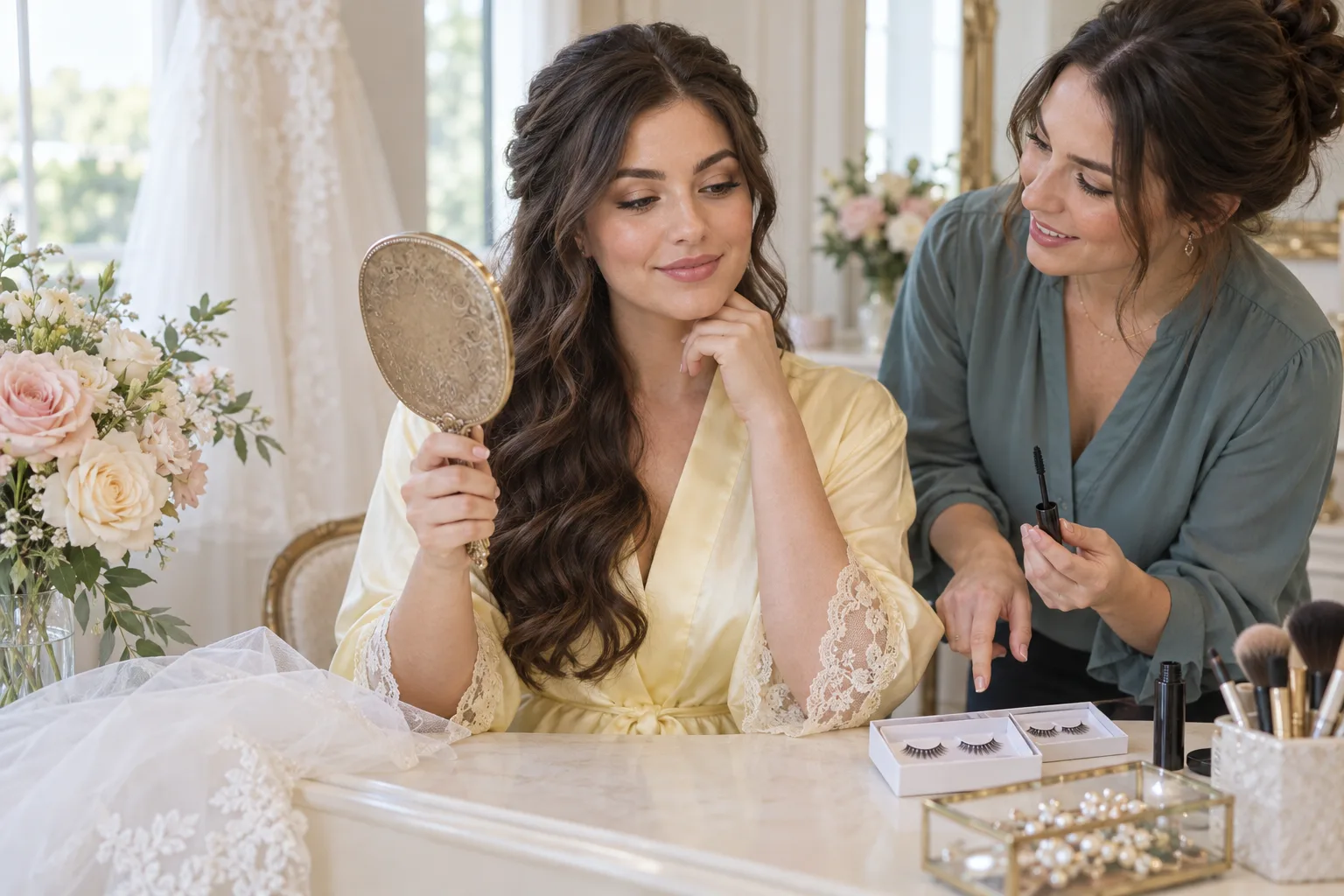
You want more visible lashes in your wedding photographs. A prescription, a cosmetic serum, mascara and false lashes can all appear in the same shopping search, although they ask different things of your eyes, budget and calendar. Start with the effect you want and the weeks available before the makeup trial.
Read the sixteen-week result with its endpoint
A randomized, double-masked study assigned 137 adults to bimatoprost 0.03% and 141 to vehicle, the comparison solution without the active drug. At week sixteen, 78.1% versus 18.4% had improved by at least one grade on a global eyelash assessment scale. The study also assessed lash length, thickness and darkness. [1]
That supports an effect on the measurements studied. It does not mean 78.1% reached the same look, or that one grade represents your preferred result. The trial did not promise a particular appearance at an engagement session or ceremony.
Count the weeks to both dates: your makeup trial and wedding. Ask the prescriber when to assess tolerability and when to review the result. Sixteen weeks is a study endpoint, not a reason to rush a prescription into a calendar that is already crowded.
The published study notes its short duration and the absence of Black participants because of digital-image-analysis requirements. [1] The prescribing information says lashes are expected to return toward their previous growth level after treatment stops. [2] Discuss ongoing use and cost rather than budgeting only for a bottle before the wedding.
Bring your eye history to the appointment
Latisse treats eyelash hypotrichosis by increasing length, thickness and darkness. The label warns about interactions with eye-pressure-lowering prostaglandin medicines and about brown iris pigmentation that may be permanent. [2]
Bring the names of eye drops, contact lenses, medicines and lash products you use. Mention previous eye surgery, irritation, infections, dry-eye symptoms and pregnancy or breastfeeding plans. Ask which details change suitability and whether your eye-care professional should be involved.
If lash thinning is new, patchy or accompanied by eyelid symptoms, tell the clinician rather than treating the purchase as the diagnosis. A wedding deadline does not explain the cause.
Ask for the exact product name and concentration on your written plan. Do not assume that a tube marketed as a lash serum has the same ingredients or evidence as prescription bimatoprost.
Application is part of the treatment
The label directs nightly use along the upper eyelid margin with the supplied sterile applicator, after removing makeup and contact lenses. Use a new applicator for the other eye, discard each after use, blot excess and avoid the lower lash line. Contacts may be reinserted after fifteen minutes. Extra applications do not increase growth. [2]
Have the prescriber or pharmacist demonstrate the technique and explain what to do after a missed application or accidental contact. Keep the instructions with the product. A friend's method is not a substitute for the package directions.
Price the treatment with its supplies: prescription assessment, refills and the single-use applicators needed for the intended course. Ask the pharmacy how the package quantity matches the directions rather than making the bottle last longer by reusing an applicator.
Tell the makeup artist that you are using a lash prescription if comfort or preparation affects their work. Keep medicine decisions with the prescriber. The artist can plan the makeup and removal around the instructions you already have.
Discuss eye-area changes before you start
The label lists itching, redness and skin darkening among adverse reactions. Postmarketing reports include eyelid-area changes associated with fat atrophy. Those reports cannot establish a dependable frequency or prove causation in each case. [2]
Ask the prescriber how to document your starting appearance and which changes warrant contact. A few comparable photographs may help a clinical discussion; daily zoomed inspections are not required by this article.
A 2021 review of prostaglandin lash products raised concerns that study design may have underreported application discomfort and changes around the eye. It describes the literature as dominated by industry-sponsored trials. [3] This is a critical review, not a new randomized trial providing a personal risk percentage.
Tell the clinician about new symptoms or changes around the eyes. Do not assume they are caused by GLP-1 treatment, weight loss, aging or the lash product without assessment. If you use a prostaglandin medicine for glaucoma or another eye condition, consult your eye-care team before changing it.
Makeup alternatives need a trial too
Mascara or false lashes may give the event-specific appearance you want without starting a months-long treatment. They have their own handling and comfort questions. FDA considers false lashes, extensions and their adhesives cosmetics, and advises checking adhesive ingredients because reactions and irritation can occur around delicate eyelids. [4]
At the trial, record the exact mascara, lash style and adhesive. Check whether the lash weight feels comfortable, whether the inner corner lifts, whether blinking feels normal, and how the look appears from the side. Wear the combination for the planned trial period and test removal according to its instructions.
Ask the artist how removal will work after the reception and which supplies you need at the hotel. Do not pull a lash attachment off because you are tired or cannot find the remover. If discomfort develops, seek appropriate advice rather than repeatedly adding adhesive.
FDA advises stopping an eye cosmetic that causes irritation and seeing a doctor if irritation persists. [4] A prior successful use can be useful information, but it does not guarantee every later application will be tolerated.
Save a simpler backup using products you already tolerate. Tell the artist which version to use if the planned adhesive or lash style becomes unavailable. A substitution on the wedding morning should not be the first time you discuss comfort.
Take the note to the appointment that fits your choice. If the result you want can be achieved with your current mascara, record that decision before adding another product.

Physical Book (No Download)
Bridegenic: The Glow-Up Guide for Brides on GLP-1s
$12.95 + Free Shipping
Order NowThis article provides general education, not a diagnosis or an individual treatment plan. Medication information refers to US sources. Talk with your prescriber, pharmacist or dermatologist about decisions for your care.
Read next
HairHair Gummies Before Your Wedding: Biotin, Evidence and Blood Tests→Face & SkinSunscreen Under Wedding Makeup: What to Test Before Outdoor Photos→Sources
- Eyelash growth in subjects treated with bimatoprost: randomized, double-masked, vehicle-controlled study (2012)Smith and colleagues, Journal of the American Academy of Dermatology↩ Back to text
- Latisse prescribing information and patient information, revised July 2024AbbVie↩ Back to text
- Revisiting the Safety of Prostaglandin Analog Eyelash Growth Products (2021)Steinsapir and Steinsapir, Dermatologic Surgery↩ Back to text
- Eye Cosmetic SafetyUS Food and Drug Administration↩ Back to text