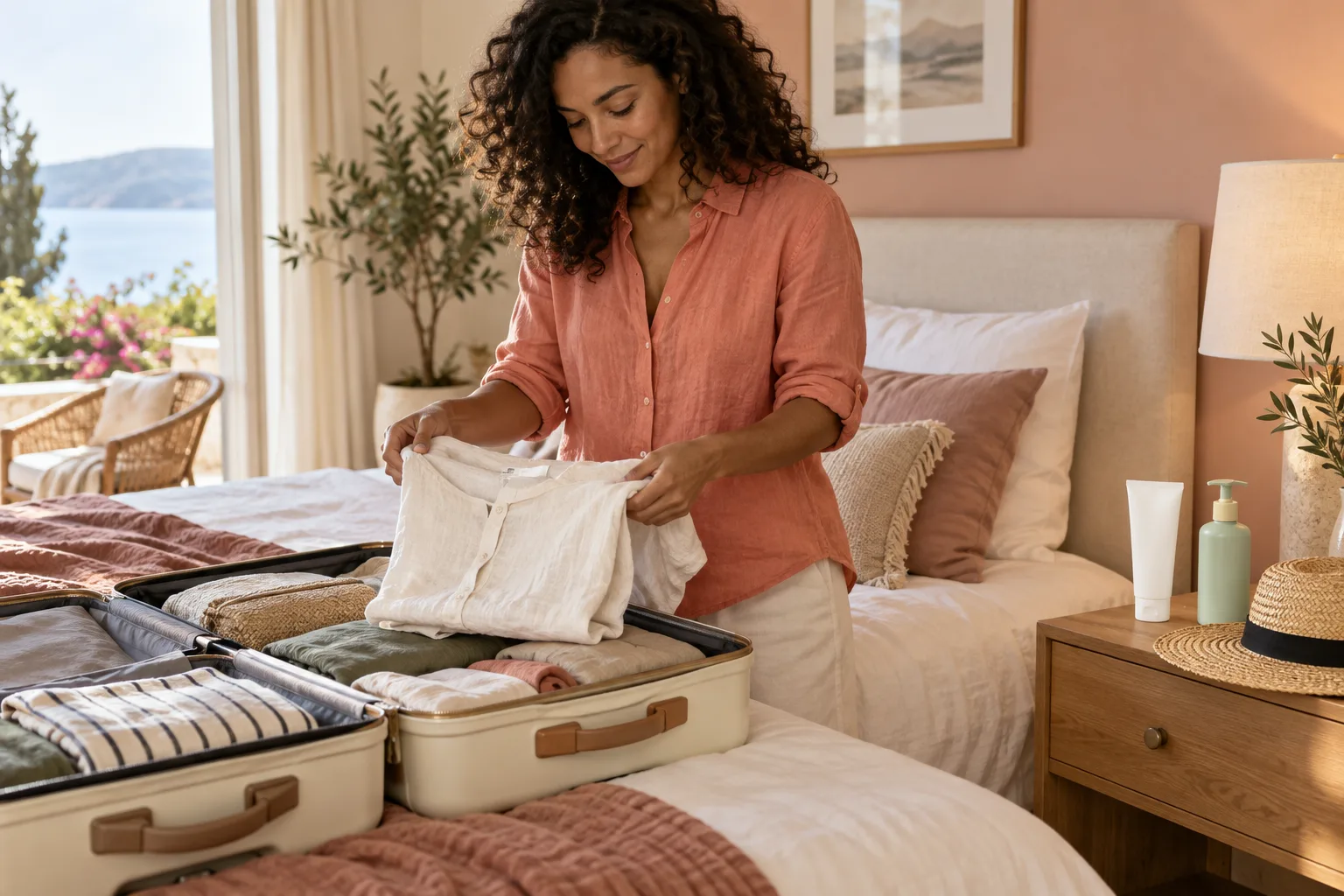
A boat excursion, a shaded lunch and an evening on a terrace can put sunscreen and insect repellent in the same day bag. Before packing, check which insects and diseases matter along your route, then choose products with directions you can follow during those activities. A bottle bought for a short garden dinner may not suit a full day away from the hotel.
Start with the stops and activities
CDC advises checking its destination pages for health risks and possible vaccines or medicines. Hiking, camping and visits to forested areas or farms can increase bite exposure. [1]
Make a short itinerary for the travel appointment: countries, regions, dates, accommodation and excursions. Include the overnight stop between flights and the inland tour added after booking the beach hotel. Bring the route you intend to follow, rather than only the name of the arrival airport.
Ask which bite precautions apply throughout the trip and whether an activity needs a different approach. Mention pregnancy, breastfeeding or conception plans so the discussion includes both destination suitability and individual prevention advice.
A useful booking note has four fields: location, activity, expected time outdoors and access to supplies. For a guided hike, ask whether you can return to the vehicle during the outing. For a boat day, ask where bags stay and whether you will have a dry place to use them.
Choose by label, insect and protection time
CDC recommends EPA-registered repellents containing DEET, picaridin, IR3535, oil of lemon eucalyptus, PMD or 2-undecanone. When used as directed, registered repellents are considered safe and effective, including during pregnancy and breastfeeding. [2]
Look for the registration number and read the directions before buying. Check the listed insects, intended application sites, reapplication instructions and precautions. A familiar brand name can appear on different formulations; keep the exact bottle details in your packing note.
EPA's finder lets you search by mosquitoes, ticks or both, protection time and active ingredient. EPA cautions that protection times vary with testing conditions and that inclusion is not an endorsement. The page reviewed for this article says its database was last updated in June 2019, so use it as a starting point and confirm the current product label. [3]
Compare the quantity in the bottle with the trip length and how many people will share it. Decide who carries the backup. If both bottles stay in one person's suitcase, separating for an excursion can leave the other person without either.
CDC's Yellow Book distinguishes formulated oil-of-lemon-eucalyptus repellents from the unformulated essential oil, which it does not recommend as a substitute. It also describes repellent wristbands, vitamin B and garlic as ineffective bite-prevention methods. [4]
Keep sunscreen and repellent separate
The Yellow Book recommends separate products because sunscreen may need more frequent and heavier reapplication than the repellent. Apply sunscreen first, then repellent. Limited data cited there found that DEET applied over sunscreen reduced its SPF by about one-third; that finding is not a personal SPF calculation or a reason to omit either product. [4]
The American Academy of Dermatology recommends broad-spectrum, water-resistant sunscreen with SPF 30 or higher. Apply before outdoor exposure, cover exposed skin and reapply every two hours outdoors and immediately after swimming or sweating, following the label. [5]
Read the repellent directions separately. A sunscreen reminder does not automatically mean another repellent application is due. Write the instructions for both products on the packing note instead of creating one combined timer.
For a practice outing before departure, pack the actual bottles and use them as directed. Check whether the cap leaks, whether you can read the directions without glasses and whether the products fit in the bag you will carry. Keep them in their labeled containers so the instructions remain available.
After swimming, drying off or changing clothes, review which skin is exposed and what each label requires. Keep a cover-up and hat accessible while you sort out supplies rather than leaving them under towels in the hotel room.
Choose a suitable place to apply it
EPA advises applying repellent only to exposed skin or clothing as directed, never underneath clothing or over cuts, wounds or irritated skin. For the face, spray onto hands first rather than spraying directly; avoid eyes and mouth and use sparingly around ears. Avoid inhaling sprays, enclosed application spaces and food. Wash treated skin and clothes after returning indoors. [6]
At breakfast, leave the bottle closed until you are away from the food and have a suitable place to apply it. A crowded shuttle is also a poor moment to start spraying. Put the application step before the pickup time so you are not trying to do it while boarding.
Keep a photograph of the label on your phone, including the product name and registration number. If a direction becomes unreadable after the bottle gets wet, you will still have a copy. That photograph can also identify the product if you need advice about a reaction.
Pack clothing for the outing you booked
CDC recommends loose-fitting long sleeves and pants. Mosquitoes can bite during both day and night, so a daytime excursion still needs attention. [2]
Lay out an excursion outfit separately from the dinner clothes. Check sleeves, trouser length and footwear against the activity briefing. If the guide asks for closed shoes, confirm that your packed pair fits the route rather than assuming sandals will be accepted.
CDC describes 0.5% permethrin products for clothing and gear, or clothing bought already treated. Follow the product directions for application and how long protection lasts through washing. Do not apply permethrin to skin. [1]
Keep any clothing-treatment product separate from the skin-repellent bottle in your packing process. If treating items yourself, finish according to the directions before packing them. A last-minute spray onto clothes already being worn is not a substitute for reading those directions.
Ask about the room before arrival
CDC recommends lodging with air conditioning or window and door screens, and a mosquito net when appropriate screened accommodation is unavailable or you sleep outdoors. [1]
Ask the hotel about the specific room category you booked. An open-sided suite and an enclosed room elsewhere on the property can offer different sleeping arrangements. Request a description or photograph if the answer is only “mosquito protection provided.”
On arrival, check that the arrangement matches the reply. Report a torn screen or a door that will not close while staff can help. Keep the room information with the excursion bookings so both travelers know whom to contact.
Save a care contact before leaving
CDC recommends planning how to obtain medical care abroad and checking insurance coverage, including evacuation needs for remote travel. [7] Record the assistance number, a local care option and how you would reach it from your accommodation.
If you become unwell after travel, particularly with a fever, CDC advises contacting a healthcare provider and reporting where you traveled. [1] Keep trip dates and locations after you unpack. A clinician may need that information even when the photographs have already moved into an album.
Put the note where both travelers can find it. Before each outing, check the day's activity and take the supplies you chose for it.

Physical Book (No Download)
Bridegenic: The Glow-Up Guide for Brides on GLP-1s
$12.95 + Free Shipping
Order NowThis article provides general education, not a diagnosis or an individual treatment plan. Medication information refers to US sources. Talk with your prescriber, pharmacist or dermatologist about decisions for your care.
Read next
Honeymoon & BeyondYour Honeymoon on a GLP-1: How to Pack and Store Your Medicine→Face & SkinSunscreen Under Wedding Makeup: What to Test Before Outdoor Photos→Sources
- Avoid Bug BitesCDC Travelers’ Health↩ Back to text
- Preventing Mosquito BitesCDC↩ Back to text
- Find the Repellent that is Right for YouUS EPA↩ Back to text
- Mosquitoes, Ticks, and Other Arthropods, Yellow Book 2026CDC↩ Back to text
- How to apply sunscreenAmerican Academy of Dermatology↩ Back to text
- Using Insect Repellents Safely and EffectivelyUS EPA↩ Back to text
- Getting Health Care During TravelCDC Travelers’ Health↩ Back to text