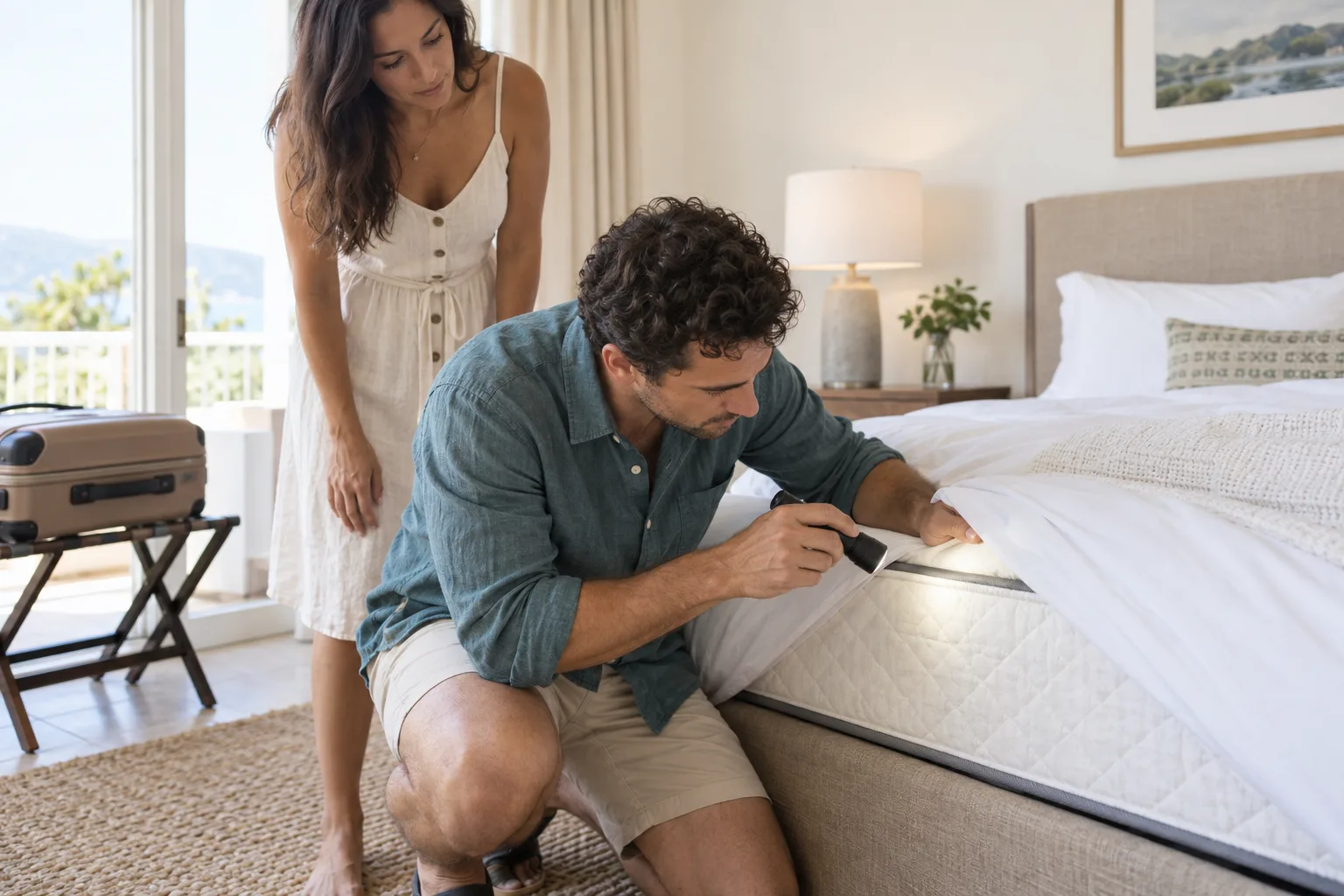
Check the honeymoon room before spreading clothes across the bed. A short inspection gives you a chance to raise concerns while your belongings are still packed. If you find a suspicious insect, involve the hotel and arrange identification before deciding how to handle the luggage.
Inspect before unpacking
EPA's travel advice, updated October 8, 2026, recommends checking the mattress and headboard before sleeping and inspecting luggage racks. A flashlight can help. It advises using a luggage rack for packing and unpacking, keeping luggage away from the bed instead of placing it on the bed or floor. [1]
Make that check part of arrival: one person handles the reservation details while the other looks at the sleeping area and rack. Keep the bags closed while you decide where they will sit.
EPA identifies mattress piping, seams and tags, box springs, bed frames and headboards as hiding places. Signs include live insects, shed skins, eggs, dark excrement spots and rusty or reddish stains. [2]
Look at accessible surfaces without dismantling furniture or electrical fittings. If a heavy headboard prevents inspection, ask staff for help. A quick look has limits: EPA notes that small infestations can be difficult to find and identify. [2] An inspection that finds nothing does not certify the room.
Repeat the arrival check when you change accommodation. Keep a flashlight and a few sealable bags accessible so the routine does not depend on unpacking a suitcase first.
Separate a skin reaction from identification
CDC says bedbugs can occur in five-star hotels and resorts; cleanliness does not determine whether they are present. They can travel in luggage seams, folded clothing and other belongings. [3] A room's price or polished appearance does not answer the inspection question.
Bite marks can resemble those from other insects. Some people have no visible reaction, while marks can take up to 14 days to develop. [3] A rash appearing at your second hotel cannot by itself establish which property, insect or exposure caused it.
CDC's diagnostic resource says the inflammatory reaction is not specific to bedbugs. Identification of an adult or nymph collected near the suspected exposure provides stronger confirmation. [4]
Photograph the insect or physical signs where you found them, with enough surrounding detail to show the location. Ask the hotel to arrange competent identification. If a specimen is collected, keep it securely contained and follow the identifier's handling instructions. Avoid sending an uncontained insect around the reception desk.
Record the room number, date, discovery location and staff contact. Keep observations separate from conclusions: “small insect at mattress seam” is a useful report even before identification.
Ask the hotel for a specific response
Contact reception or the duty manager before unpacking further. Ask who will inspect the room, how your belongings should be contained and what accommodation can be arranged while the finding is assessed.
Request written details of the response and retain photographs, messages and relevant receipts. Refunds, room changes and reimbursement depend on the booking terms and circumstances; this article does not establish an entitlement.
Discuss luggage handling before moving to another room or property. Ask staff for suitable sealed bags and a place to keep potentially exposed belongings while a plan is made. EPA's preparation guidance recommends sealed bags when transporting items between areas to avoid spreading insects. [5]
If laundry is offered, identify each item's care requirements before handing it over. Ask what process will be used, which items it can accommodate and how treated belongings will be kept separate. A promise to “wash everything” leaves important questions unanswered.
Keep essential medicines identifiable and within their own storage conditions. Tell staff which bags contain medicine, batteries, electronics or delicate wedding clothing before any treatment is proposed. Do not put the entire travel kit through a laundry process.
Match treatment to the item
For clothing, bedding and other items that can withstand a hot dryer, EPA describes a household dryer on high heat for 30 minutes to kill bedbugs and eggs. It cautions that washing alone may not suffice and recommends keeping clean items in sealed plastic bags. [5]
The heat-tolerance condition matters. A beaded dress, silk scarf, glued accessory or structured suitcase needs its own assessment. Ask a pest professional and, where appropriate, a garment-care specialist about an effective process that suits the item. Do not infer that a care label permitting washing also permits this dryer treatment.
Arrange the handling sequence before opening a potentially exposed bag: where it will be opened, which items can go into the agreed process, and where treated items will be placed. Keep the bags and containers in that discussion.
EPA warns that home freezing can be unreliable, and that turning up a thermostat or using space heaters will not provide an effective room treatment. It recommends experienced pest-control help when needed. [6] Leaving luggage in a cold garage or hot car should not be treated as a verified result.
If several items need professional assessment, make an inventory. Note the material, care label, contents and any temperature restrictions. That record is more useful than buying a device before checking what it can safely treat.
Avoid improvised sprays and heating
EPA warns that rubbing alcohol used for bedbug control has caused fires. It also cautions against homemade heating methods, pesticide use on surfaces not listed on the label and applying products to the body to prevent bedbug bites. EPA has not registered pesticides or repellents for use on human skin against bedbugs. [7]
The mosquito-repellent plan for an outdoor excursion is a different question. Do not extend its purpose to the hotel bed or spray it across clothing and sheets as a substitute for an inspection.
For a U.S. treatment, EPA advises using registered bedbug products according to the full label. [7] Overseas, ask the property and an appropriately qualified local professional about the applicable products and rules. Do not carry a hotel pesticide home for improvised use.
Give the professional the item inventory and ask about preparation, treatment limits, follow-up and how success will be assessed. Keep product and treatment records if anything has already been applied.
Plan the return before opening the suitcase
EPA advises carefully inspecting luggage after travel, unpacking clothes directly into a washing machine and storing suitcases away from the bedroom, such as in a garage or basement. It specifically advises against storing them under the bed. [1] Remember that washing alone does not establish that insects have been killed.
After suspected exposure, arrange the containment and item-specific treatment plan before reaching home. If you live in a small apartment, ask a pest professional where to inspect and handle belongings without spreading them through sleeping areas.
Do not open a questionable suitcase on the bed to sort everything into piles. Keep the travel note, photographs and treatment record together so the next professional can see what happened and what has been done.
For bite symptoms, CDC recommends avoiding scratching and maintaining hygiene to reduce secondary infection. It notes that treatment options for reactions have not been evaluated in clinical trials; severe reactions or secondary infection can need clinical treatment. [8] Ask a clinician or pharmacist about symptoms and suitable products rather than choosing an antibiotic or steroid from a travel bag.
Tell the clinician about the travel dates and any identified insect, while allowing assessment of other causes. A skin-care appointment cannot substitute for inspecting and addressing a suspected infestation.

Physical Book (No Download)
Bridegenic: The Glow-Up Guide for Brides on GLP-1s
$12.95 + Free Shipping
Order NowThis article provides general education, not a diagnosis or an individual treatment plan. Medication information refers to US sources. Talk with your prescriber, pharmacist or dermatologist about decisions for your care.
Read next
Honeymoon & BeyondYour Honeymoon on a GLP-1: How to Pack and Store Your Medicine→Dress & FittingsWedding Dress Cleaning and Storage: The Handoff After the Celebration→Sources
- Tips for Travel, updated October 8, 2026U.S. Environmental Protection Agency↩ Back to text
- How to Find Bed Bugs, updated September 8, 2026U.S. Environmental Protection Agency↩ Back to text
- About Bed Bugs, April 26, 2024Centers for Disease Control and Prevention↩ Back to text
- DPDx: Bed Bugs, reviewed June 3, 2024Centers for Disease Control and Prevention↩ Back to text
- Preparing for Treatment Against Bed Bugs, updated July 6, 2026U.S. Environmental Protection Agency↩ Back to text
- Top Ten Tips to Prevent or Control Bed Bugs, updated August 19, 2026U.S. Environmental Protection Agency↩ Back to text
- Stay Legal and Safe in Treating for Bed Bugs, updated August 31, 2026U.S. Environmental Protection Agency↩ Back to text
- Caring for Patients with Bed Bug Bites, April 30, 2024Centers for Disease Control and Prevention↩ Back to text